
ΑΙhub.org
 

Tutorial on fairness, accountability, transparency and ethics in computer vision

by
14 July 2020


share this:

CVPR FATE
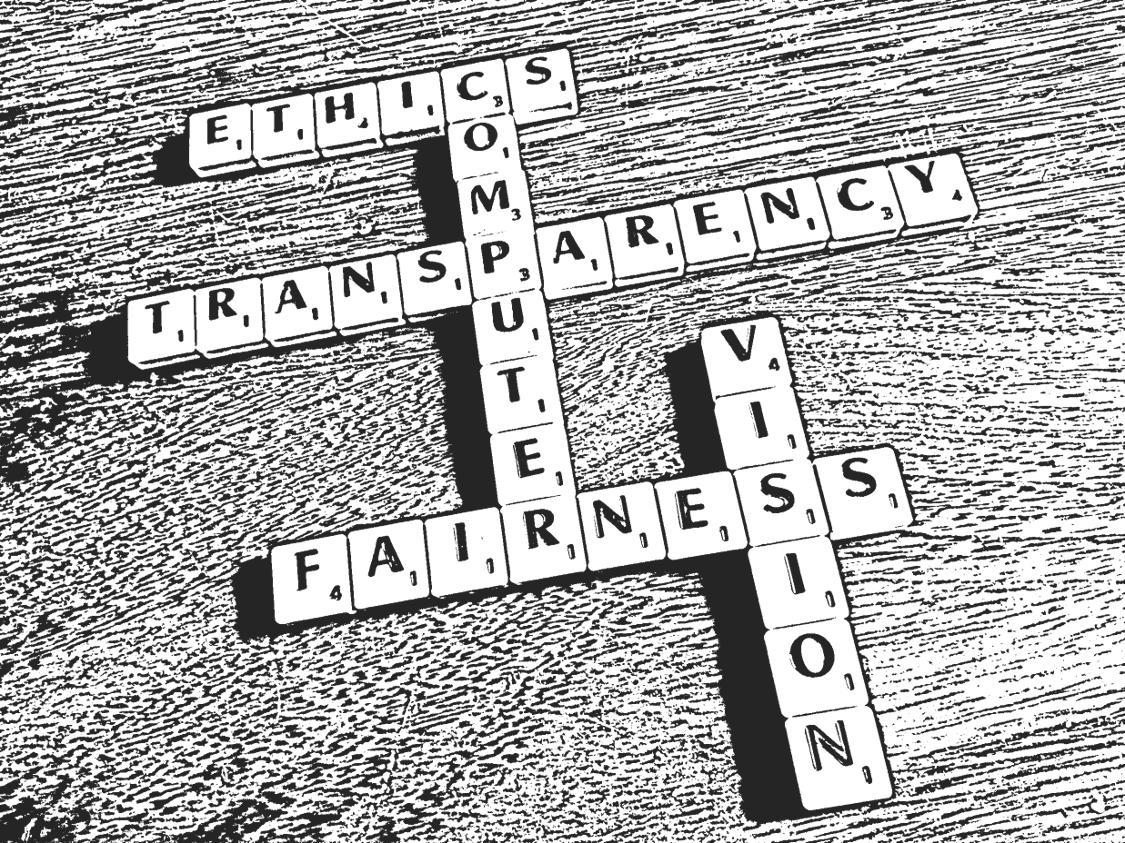
The Computer Vision and Pattern Recognition conference (CVPR) was held virtually on 14-19 June. As well as invited talks, posters and workshops, there were a number of tutorials on a range of topics. Timnit Gebru and Emily Denton were the organisers of one of the tutorials, which covered fairness, accountability, transparency and ethics in computer vision.

As the organisers write in the introduction to their tutorial, computer vision is no longer a purely academic endeavour; computer vision systems have been utilised widely across society. Such systems have been applied to law enforcement, border control, employment and healthcare.

Seminal works, such as the Gender Shades project (read the paper here), and organisations campaigning for equitable and accountable AI systems, such as The Algorithmic Justice League, have been instrumental in encouraging a rethink from some big tech companies regarding facial recognition systems, with Amazon, Microsoft and IBM all announcing that they would (for the time being) stop selling the technology to police forces.

This tutorial helps lay the foundations for community discussions about the ethical considerations of some of the current use cases of computer vision technology. The presentations also seek to highlight research which focusses on uncovering and mitigating issues of bias and historical discrimination.

The tutorial comprises three parts, to be watched in order.

Part 1: Computer vision in practice: who is benefiting and who is being harmed?

Speaker: Timnit Gebru

Part 2: Data ethics

Speakers: Timnit Gebru and Emily Denton

Part 3: Towards more socially responsible and ethics-informed research practices

Speaker: Emily Denton

Following the tutorial there was a panel discussion, moderated by Angjoo Kanazawa, which you can watch below.



AIhub is dedicated to free high-quality information about AI.

            AIhub is supported by:


Subscribe to AIhub newsletter on substack


Related posts :

The Good Robot podcast: what makes a drone “good”? with Beryl Pong

  20 Feb 2026
In this episode, Eleanor and Kerry talk to Beryl Pong about what it means to think about drones as “good” or “ethical” technologies.

Relational neurosymbolic Markov models

and   19 Feb 2026
Relational neurosymbolic Markov models make deep sequential models logically consistent, intervenable and generalisable

AI enables a Who’s Who of brown bears in Alaska

  18 Feb 2026
A team of scientists from EPFL and Alaska Pacific University has developed an AI program that can recognize individual bears in the wild, despite the substantial changes that occur in their appearance over the summer season.

Learning to see the physical world: an interview with Jiajun Wu

and   17 Feb 2026
Winner of the 2019 AAAI / ACM SIGAI dissertation award tells us about his current research.

3 Questions: Using AI to help Olympic skaters land a quint

  16 Feb 2026
Researchers are applying AI technologies to help figure skaters improve. They also have thoughts on whether five-rotation jumps are humanly possible.

AAAI presidential panel – AI and sustainability

  13 Feb 2026
Watch the next discussion based on sustainability, one of the topics covered in the AAAI Future of AI Research report.

How can robots acquire skills through interactions with the physical world? An interview with Jiaheng Hu

  12 Feb 2026
Find out more about work published at the Conference on Robot Learning (CoRL).

From Visual Question Answering to multimodal learning: an interview with Aishwarya Agrawal

and   11 Feb 2026
We hear from Aishwarya about research that received a 2019 AAAI / ACM SIGAI Doctoral Dissertation Award honourable mention.


AIhub is supported by:


Subscribe to AIhub newsletter on substack


©2026.02 - Association for the Understanding of Artificial Intelligence