ΑΙhub.org
Radical AI podcast: featuring Beth Singler
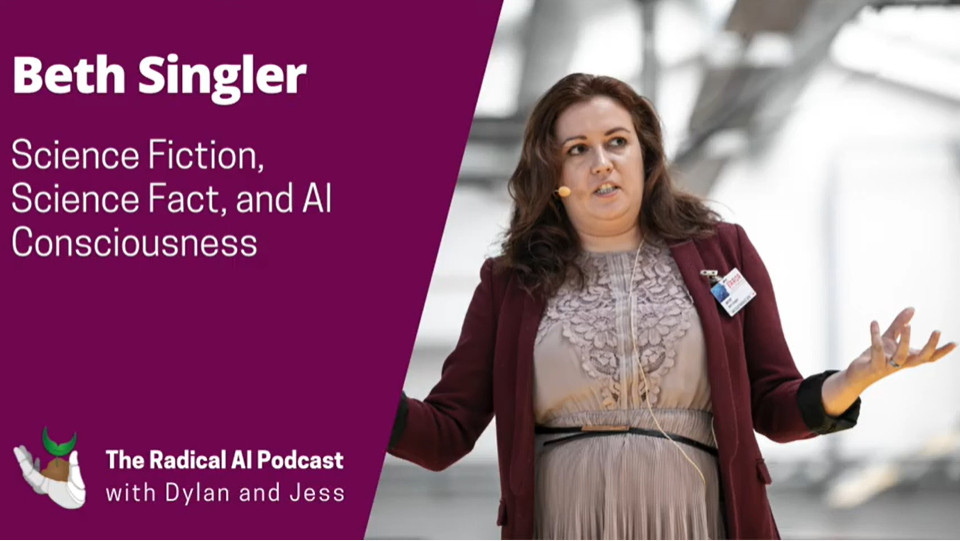
Hosted by Dylan Doyle-Burke and Jessie J Smith, Radical AI is a podcast featuring the voices of the future in the field of artificial intelligence ethics. In this episode Jess and Dylan chat to Beth Singler about “Science fiction, science fact and AI consciousness”.
Science fiction, science fact and AI consciousness with Beth Singler
How can Science Fiction be used to get the public involved in the AI Ethics conversation? What are religious studies and how can they relate to AI? Why is it important to distinguish between Science Fiction and Science Fact when it comes to the future of AI? To answer these questions and more we welcome Dr Beth Singler to the show. Dr Beth Singler is a Junior Research Fellow in Artificial Intelligence at the University of Cambridge. Previously, Beth was the post-doctoral Research Associate on the “Human Identity in an age of Nearly-Human Machines” project at the Faraday Institute for Science and Religion. Through her research, Beth explores the social, ethical, philosophical, and religious implications of advances in Artificial Intelligence and robotics. Full show notes for this episode can be found at Radical AI.
Listen to the episode below:
About Radical AI:
Hosted by Dylan Doyle-Burke, a PhD student at the University of Denver, and Jessie J Smith, a PhD student at the University of Colorado Boulder, Radical AI is a podcast featuring the voices of the future in the field of Artificial Intelligence Ethics.
Radical AI lifts up people, ideas, and stories that represent the cutting edge in AI, philosophy, and machine learning. In a world where platforms far too often feature the status quo and the usual suspects, Radical AI is a breath of fresh air whose mission is “To create an engaging, professional, educational and accessible platform centering marginalized or otherwise radical voices in industry and the academy for dialogue, collaboration, and debate to co-create the field of Artificial Intelligence Ethics.”
Through interviews with rising stars and experts in the field we boldly engage with the topics that are transforming our world like bias, discrimination, identity, accessibility, privacy, and issues of morality.
To find more information regarding the project, including podcast episode transcripts and show notes, please visit Radical AI.

AUAI is supported by: