
ΑΙhub.org
Grace Wahba awarded the 2025 International Prize in Statistics
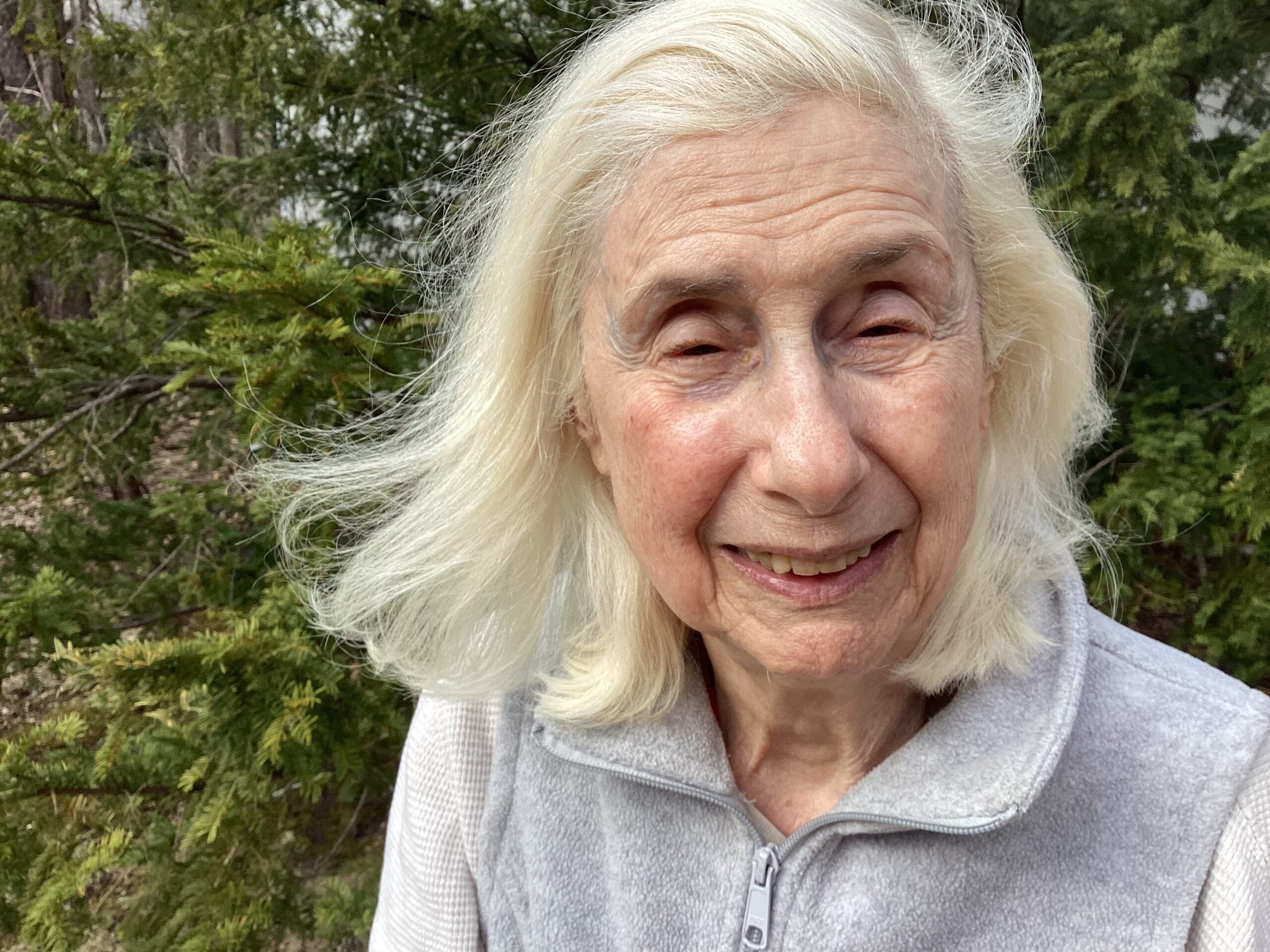 Grace Wahba. Photo by David Callan, 2025.
The International Prize in Statistics Foundation has awarded Grace Wahba the 2025 prize for “her groundbreaking work on smoothing splines, which has transformed data analysis and machine learning”.
Professor Wahba was among the earliest to pioneer the use of nonparametric regression modeling. Recent advances in computing and availability of large data sets have further popularized these models, especially under the guise of machine learning algorithms such as gradient boosting and neural networks. Nevertheless, the use of smoothing splines remains a mainstay of nonparametric regression.
In seminal research that began in the early 1970s, Wahba developed theoretical foundations and computational algorithms for fitting smoothing splines to noisy data. Her sustained contributions led to a rigorous mathematical framework and practical techniques for extracting meaningful patterns from imperfect observations, a challenge that lies at the heart of statistical analysis.
Her joint work on reproducing kernel Hilbert spaces (RKHS) and the famous “Representer Theorem” showed that optimizing functions over infinite-dimensional spaces could be reduced to finite-dimensional problems, making previously intractable computations feasible. She also developed “generalized cross-validation” (GCV), a regularization method now widely used for automatically selecting optimal smoothing parameters, solving a critical practical problem in data analysis.
“Grace Wahba’s contributions have had a profound and lasting impact on statistical methodology and practice,” said Jessica Utts, chair of the International Prize in Statistics Foundation. “Her early insights into regularization and smoothing have become essential tools used daily by statisticians and data scientists working across nearly every scientific field.”
Wahba’s work has seen practical applications in fields ranging from climate science to medical imaging. Her techniques have been used to analyze spatial patterns in global temperature data, predict disease risk factors, and enhance image reconstruction in various medical contexts. Her work has also been recognized as foundational in modern machine learning. Wahba’s methods form a pillar of contemporary artificial intelligence and were instrumental in the development of popular kernel-based algorithms such as support vector machines.
“Grace has been an inspiration and a role model to me ever since I first met her 50 years ago,” said Sir Bernard Silverman, past president of the Royal Statistical Society and Institute of Mathematical Statistics. “She was one of the pioneers of genuinely applicable computational statistics and always spent time talking to people in applied fields, as well as in statistics…She knew, and demonstrated to her graduate students and collaborators, that the only way to do proper interdisciplinary work was to get a proper understanding of the substantive field.”
About Grace
Wahba earned her PhD in statistics from Stanford University in 1966 and joined the University of Wisconsin-Madison in 1967 as the first female faculty member in the department of statistics. She remained there for 51 years, before retiring in 2018 as I.J. Schoenberg-Hilldale Professor Emerita.
Wahba’s achievements have been recognized with numerous honors, including membership in the National Academy of Sciences and American Academy of Arts and Sciences. In 2021, the Institute of Mathematical Statistics established the Grace Wahba Award and Lecture in her honor.
About the prize
The International Prize in Statistics is awarded every two years by a collaboration among five leading international statistics organizations. The prize recognizes a major achievement by an individual or team in the statistics field, particularly an achievement of powerful and original ideas that has led to practical applications and breakthroughs in other disciplines.
Professor Wahba will receive the prize, which includes an $80,000 award, in October 2025 at the World Statistics Congress, organized by the International Statistical Institute.
Find out more about Grace and her work
- A Conversation with Grace Wahba
- Dr Grace Wahba: Distinguished Statistician Colloquium
- Grace Wahba webpage
tags: quick read

AUAI is supported by: