
ΑΙhub.org
Competition open for images of “digital transformation at work”
by Better Images Of AI and Digit (ESRC Digital Futures at Work Research Centre)
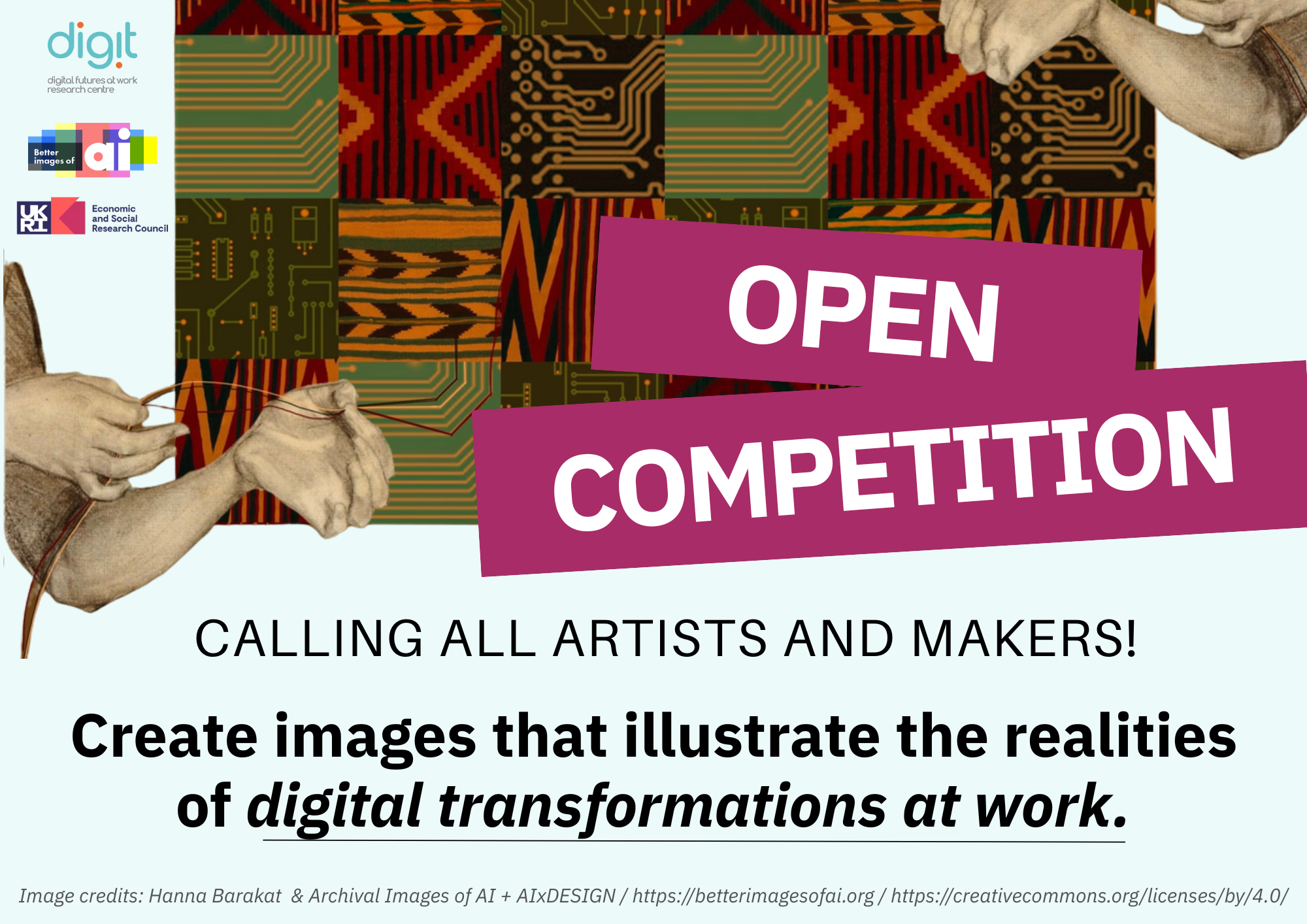
The ESRC Digital Futures at Work Research Centre (Digit) and Better Images of AI (BIoAI) are delighted to announce a competition to reimagine the visual communication of how work is changing in the digital age, including through the adoption of AI. Digit has undertaken a significant five-year research programme culminating in insights about real-world digital transformations currently impacting people’s daily lives.
The research undertaken by Digit between 2020 and 2025 points to the fact that adoption of technologies like AI is still patchy across the UK, and investment in digital skills is low. There are examples of AI being used to substitute or automate repetitive tasks, but this has not, as yet, resulted in significant job losses. Furthermore, technology adoption is facilitating experimentation with how, when, and where people work which presents new opportunities, but also challenges to our existing institutional and regulatory governance frameworks. Finally, as digitalisation becomes embedded in our workplaces, Digit’s research shows how new and existing forms of exclusion can arise from a lack of skills and resources, data poverty, reliance on smartphones and intermediaries. However, there can also be ways that digitalisation builds inclusionary ways of working that benefit women, disabled people, and ethnic minorities.
However, the stock images used to represent digital transformation or the future of work are not reflective of the realities of how people and organisations are using or being impacted by AI and other digital technologies at work. An emphasis on inaccurate representations of AI (glowing brains and robots), on young ‘digital nomads’ in beautiful locations, sanitised high-tech warehouses, or white-collar business environments distorts public debate. We urgently need better images that help society to visualise real-world transformations that are already underway—and how this impacts people in their working and daily lives.
This competition aims to fill this gap by opening the floor for submissions of images that more realistically portray ‘digital transformation at work’, building upon the findings of Digit’s Report. The competition aims to capture a diverse range of visuals from across the globe and from creators with different creative approaches. Drawing upon Digit’s report, there are four themes to the competition:
- Digital adoption
Digital adoption is still patchy and investment in digital skills training is low. - Digital inclusion
Digital exclusion is creating and exacerbating new forms of inequality but in parallel digitalisation can also enable flexibility and new possibilities for inclusion. - Changing employment contracts and conditions
Technology adoption is facilitating experimentation with how, when and where people work, as firms adopt new business models and/or working time arrangements. - Digital dialogues
Supporting more extensive, society-wide, inclusive, ‘digital dialogues’ will be key to improve productivity, wellbeing and inclusion.
Images should relate to one or more of these themes and they should also reflect the realities of digital transformation rather than hype and speculation about AI (more information can be found in the Better Images of AI Guide). There will be 8 winners across these categories and also one Grand Prize, each with a monetary prize between £300-£600 up for grabs.
“We really need better, authentic, and innovative images of digitalisation at work that are not hackneyed stereotypes. The aim of the competition is to invite a wide audience of contributors to illustrate the findings from our research. This can collectively enable a broader public debate around the digital transformation of work and the way we are thinking about these changes in new and creative ways.”
– Jacqueline O’Reilly (Co-Director of Digit)
The competition closes on Sunday 18th May 2025 (23:00 UTC). It is open to anyone over the age of 18 regardless of experience, creative field, and geographic location. There is a detailed brief which summaries the competition, entry conditions, and important research underpinning the project.
Selected entries will have the opportunity for their work to be made available in the Better Images of AI library on a Creative Commons license 4.0. Winning entries will be required to transfer the ownership of copyright to the University of Sussex (Digit Centre).
Entries will be shortlisted and judged by a panel of experts in different fields including creative, communications, technical, digital, and work.
An online briefing session was held on Thursday 17th April. You can watch a recording of this session here, and slides are available here.
For more information about the competition you can access the brief here. It is necessary to read the brief in full before submitting your images.
Submit your images by Sunday 18th of May (23:00 UTC) here.


AUAI is supported by:








