
ΑΙhub.org
Interview with Janice Anta Zebaze: using AI to address energy supply challenges

In this interview series, we’re meeting some of the AAAI/SIGAI Doctoral Consortium participants to find out more about their research. Janice Anta Zebaze is using AI to address energy supply challenges and she told us more about the research she’s carried our so far, her plans for further investigations, and what inspired her to pursue a PhD in the field.
Tell us a bit about your PhD – where are you studying, and what is the topic of your research?
I am currently pursuing my PhD in Physics at the University of Yaounde I in Cameroon, with a focus on renewable energy systems, tribology, and artificial intelligence. The aim of my research is to address energy supply challenges in developing countries by leveraging AI to evaluate resource availability and optimize energy systems.
Could you give us an overview of the research you’ve carried out so far during your PhD?
So far, I have been investigating empirical, statistical, and AI-based methods for evaluating wind energy potential and power losses in wind turbine gearboxes. This includes fitting probability distributions to wind speed data, applying machine learning models, and comparing their performance. On the mechanical side, I study gearbox power losses using both physical models and AI-based predictive models, with the goal of improving real-time efficiency predictions and better resource management.
Is there an aspect of your research that has been particularly interesting?
One particularly interesting and challenging aspect of my research is the nature of my dataset. Typically, large language models (LLMs) are trained on textual data, but in my case, the focus is on numerical data, which is much harder for LLMs to interpret. I am therefore working on developing suitable datasets and strategies that allow LLMs to better process and learn from numerical data for predictive analysis and decision-making.
What are your plans for building on your research so far during the PhD – what aspects will you be investigating next?
Next, I plan to extend the implementation of LLMs to other renewable energy sources, particularly solar and hydropower. I am currently exploring this direction through another Open Research Knowledge Graph (ORKG) curation grant. My goal is to broaden the applicability of my approach and contribute to practical solutions for energy resource management and improving energy access.
What made you want to do research in the field of AI?
What drew me to AI was seeing how quickly it’s becoming part of so many areas of life and research. I was fascinated by its flexibility and started to ask myself how it could also be used to tackle energy challenges in developing countries. When I worked on my first ORKG curation grant, organizing and analyzing papers on wind energy, I realized just how powerful AI could be in shaping solutions for energy access and efficiency. That mix of curiosity and purpose is what drives my research today.
What advice would you give to someone thinking of doing a PhD in the field?
I would tell the person to choose a topic they have a strong interest in, because the road is challenging and passion, discipline and consistency is what keeps you going. Also to put an accent on progress and not perfection and get done with your work. Finally, I recommend attending seminars and conferences, since they not only keep you up to date with the latest research but also help you build a strong academic community.
Could you tell us an interesting (non-AI related) fact about you?
Sure! I love reading African literature, especially the works of Cheikh Anta Diop. I also enjoy creative arts like crochet, zentangles, and drawing, which allow me to relax and escape from everyday routines.
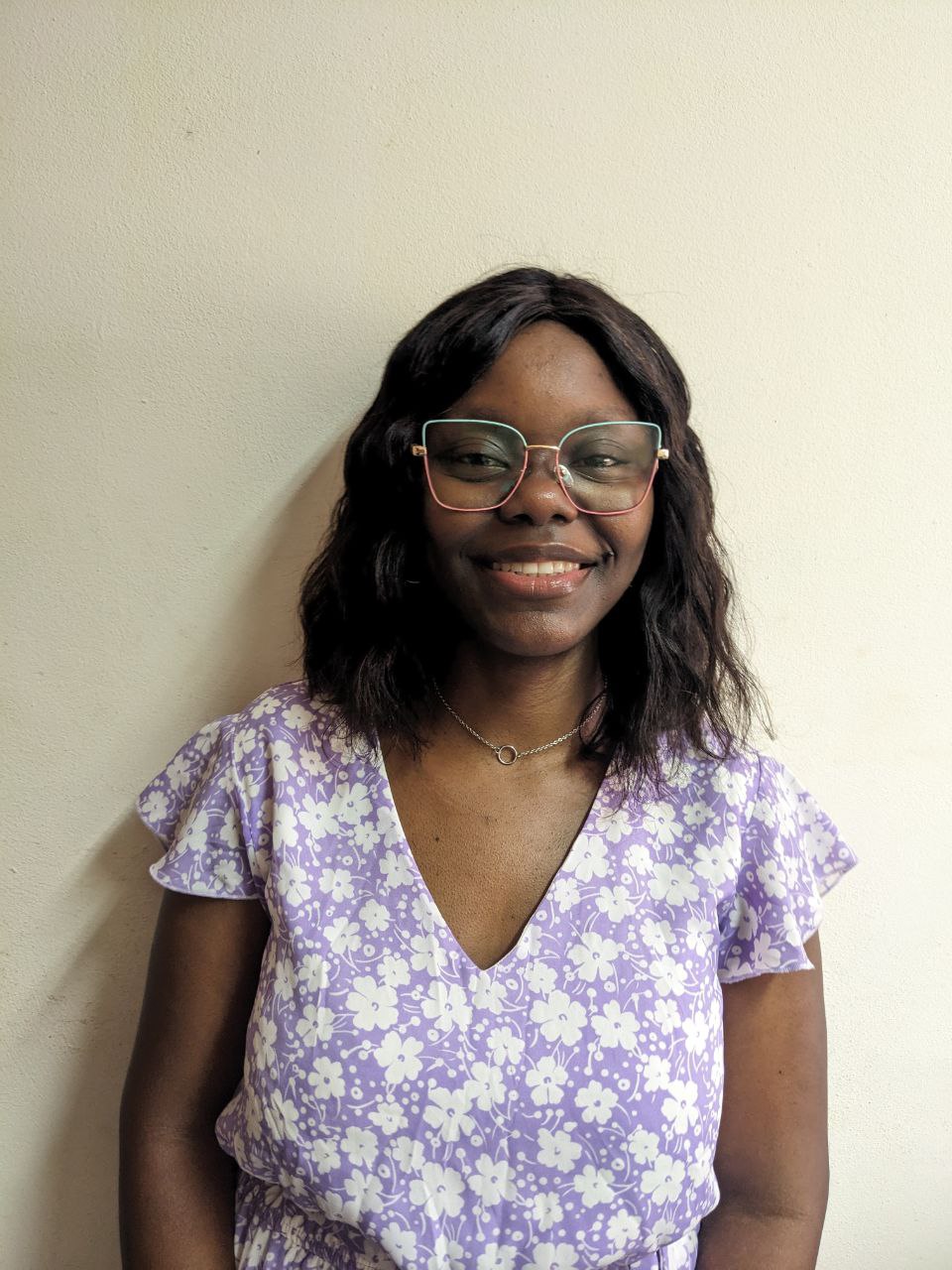
About Janice
|
I am a Ph.D. candidate in Physics at the University of Yaounde I, Cameroon. My research lies at the intersection of renewable energy systems, tribology, and artificial intelligence. More precisely on assessing wind energy potential using statistical and machine learning methods, as well as predicting rolling bearing power losses in wind turbine gearboxes through both physical and AI-based approaches. Recently, I have been exploring how large language models can be adapted to numerical datasets for predictive analysis and decision-making in energy systems. My long-term goal is to develop AI-driven solutions that improve energy access and efficiency in developing countries. |
tags: AAAI, AAAI Doctoral Consortium, AAAI2025, ACM SIGAI

AUAI is supported by:








