ΑΙhub.org
As a ‘book scientist’ I work with microscopes, imaging technologies and AI to preserve ancient texts
By Christina Dinh Nguyen, University of Toronto
Cultural heritage is constantly under threat. In recent years, we’ve witnessed the destruction of museums, archives and libraries around the world — from wildfires in California to bombing in Gaza and wars in Ukraine and Iran.
Meanwhile, book scientists are working tirelessly with an array of technologies — including microscopes, multispectral imaging and artificial intelligence — to recover, understand and preserve many valuable ancient texts.
This approach transforms what we can know about the past, as we learn how old books were made and how they change over time. It also helps us to care for fragile collections at a moment when climate change and mass digitization are reshaping cultural heritage work.
I work in this space as a PhD student at the University of Toronto as part of the Old Books New Science Lab and the Matrix Functionalization and Phenotyping Lab. I collaborate with conservators and heritage scientists to study parchment manuscripts and imaging-based approaches to preservation.
From papyrus roll to palm leaf
Across cultures and millennia, “books” have taken many forms, each shaped by local materials and technologies.
A book can be a papyrus roll, a palm leaf manuscript or a clay tablet.
Books can be made from animal skins, stretched thin to provide a writing surface. They can include pigments ground from minerals and plants, or metallic inks that corrode the surface beneath them.
Faded texts become legible
A 13th century Jewish manuscript held at the University of Toronto was recently transformed through the process of multispectral imaging — one of the most visible and compelling tools in book science.
This is a process whereby researchers take many images of a page at different wavelengths, including ultraviolet and infrared. When they combine these images, the faded inks, erased writing and water-damaged text can become legible again.
This manuscript is a valuable She’elot u-teshuvot. Water damage made it unreadable by the naked eye for many years.
Excitingly, researchers at the Andrews Book Science Hub succeeded in using 16 wavelengths of light to reveal those lost words for scholars to ponder and research once more.
In moments like this, science gives damaged books a second chance to speak while also keeping them safe. We have the opportunity to glimpse into the past once again.
The study of collagen fibres
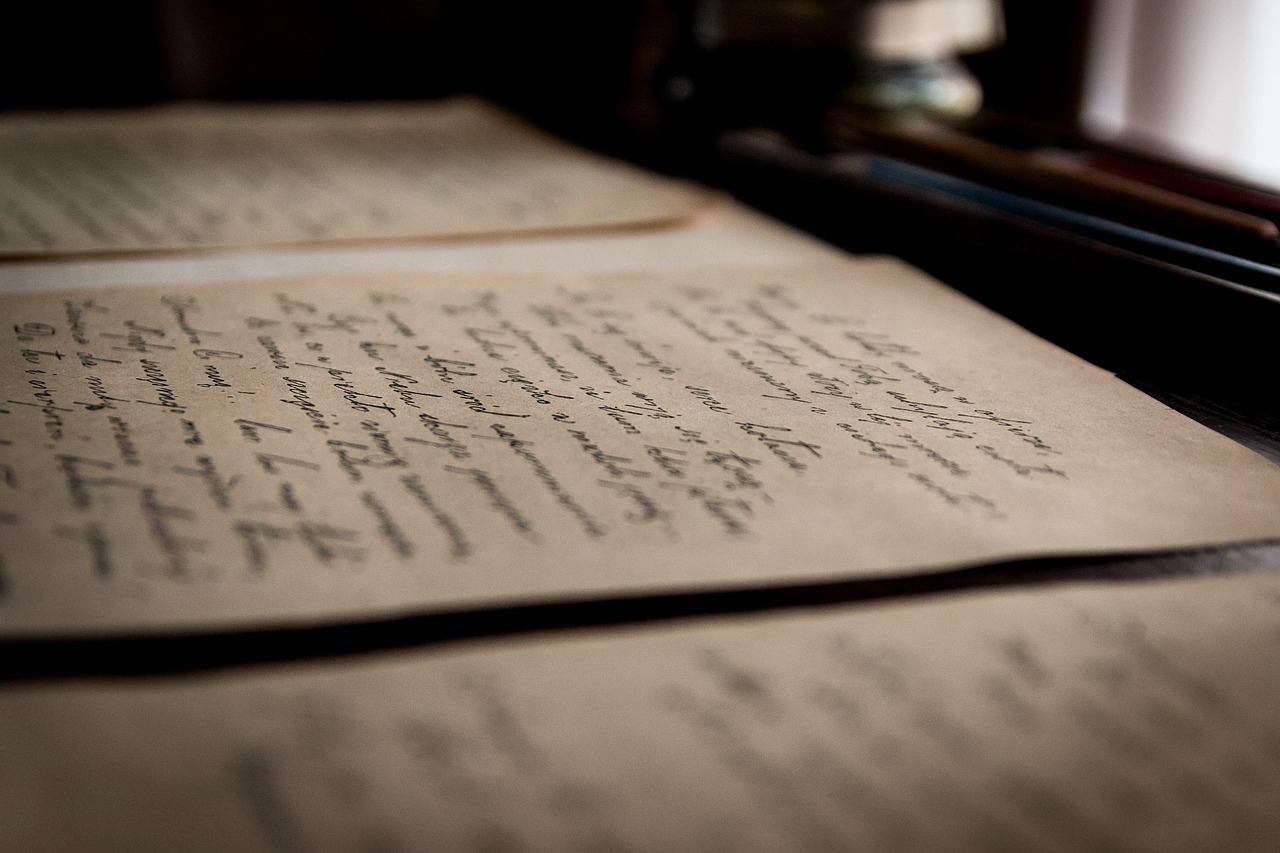
Many medieval manuscripts, like the Jewish manuscript above, are written on parchment, a material made from untanned animal skin. This means they are biological objects, built largely from collagen — the same protein found in human connective tissue.
Collagen is durable, but sensitive. Heat, humidity and light can cause parchment to stiffen, shrink or slowly turn gelatinous. Under poor storage conditions, pages may warp, become brittle or translucent, sometimes beyond repair.
With microscopes, researchers can now study collagen fibres at microscopic scales and detect early signs of deterioration long before damage is visible to the eye. That information helps conservators determine which manuscripts are most at risk and how environments can be adjusted to slow decay.
As climate change increases temperature and humidity extremes worldwide, this kind of scientific insight is becoming essential for the future of library and archive collections.
AI transcribes endangered languages
Scientific tools don’t just serve specialists. They also expand access.
Artificial intelligence systems are increasingly being trained to help transcribe difficult scripts (handwriting fonts) and endangered languages found in manuscript collections.
For example, tools developed for reading Geʽez, the classical language of Ethiopian Coptic manuscripts, are helping scholars and religious communities engage more easily with texts that were previously difficult to decipher.
Combined with high quality imaging, these systems can dramatically reduce barriers to reading, teaching and sharing cultural heritage.
Old books, new discoveries
Many people will never hold an ancient manuscript or scroll. We encounter these objects in museums, libraries and online collections. Book science helps ensure that what we see — and what future generations will see — remains available.
It also reminds us that books record more than words. They preserve evidence of craft, trade, environment, human use and care. They are archives of biological and material history as much as intellectual history.
For anyone who loves books, museums or the past, this shift is profound. It means the next major historical discovery may not come from finding a new document, but from looking at an old one in a new way. This is book science.
Christina Dinh Nguyen, PhD student, Faculty of Information, University of Toronto
This article is republished from The Conversation under a Creative Commons license. Read the original article.
AUAI is supported by: