
ΑΙhub.org
Cybersecurity, evolutionary game theory, and AI safety: an interview with Adeela Bashir
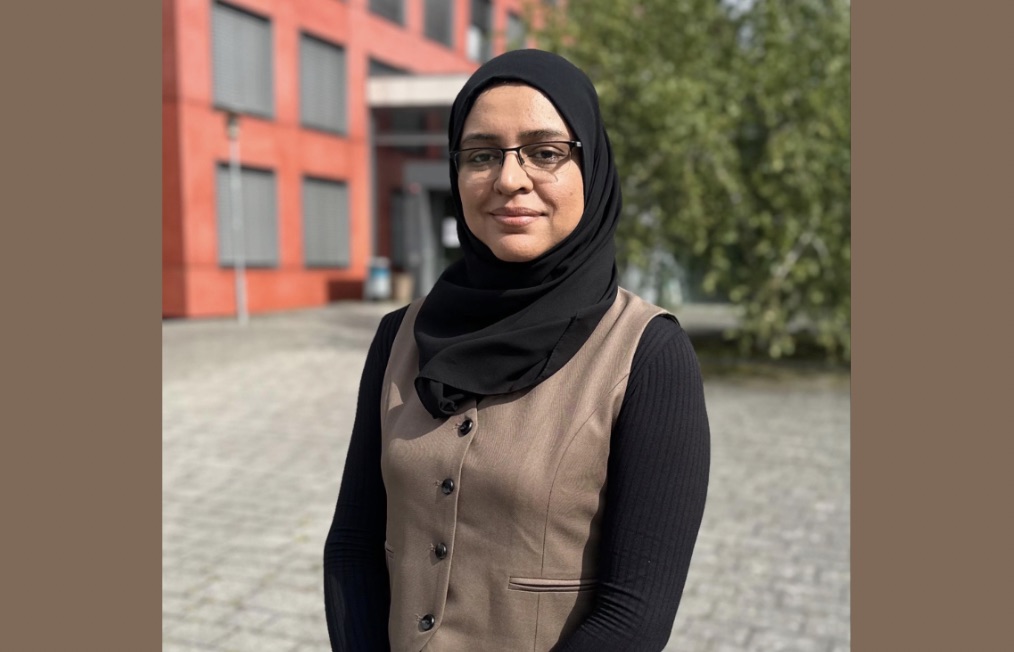
In a new series of interviews, we’re meeting some of the PhD students that were selected to take part in the Doctoral Consortium at the International Joint Conference on Artificial Intelligence and the 29th European Conference on Artificial Intelligence (IJACI-ECAI 2026). This time, we meet Adeela Bashir to find out how she is contributing to the field of cybersecurity.
Tell us a bit about your PhD – where are you studying, and what is the topic of your research?
I am a PhD researcher at SCEDT, Teesside University in the UK, working at the intersection of Cybersecurity, Evolutionary Game Theory (EGT), and AI safety.
My PhD asks a central question: How can we understand and mitigate cyber threats when the adversaries are adaptive? In other words, can AI defend itself when the attackers are evolving too?
As AI systems become more autonomous and multi-agent systems become increasingly capable of collaboration, a fundamental cybersecurity question emerges: what happens when the AI agents we trust to make decisions can themselves be manipulated or evolve their behaviour in response to defence?
My research approaches this problem through Evolutionary Game Theory, asking not only whether an attack can succeed, but why attack or defence behaviours persist, how they evolve through interaction, and whether we can design AI-enabled defence that adapts before unsafe behaviour becomes established.
This connects two questions that are becoming increasingly important: How do we keep AI systems safe when their agents can strategically interact? And how can cybersecurity move from reacting to attacks towards anticipating how threats will evolve?
Traditional cybersecurity often treats attacks as individual events, but real cyber ecosystems are dynamic. Attackers change their strategies, defenders respond, and the way agents interact can influence which behaviours survive over time. I use Evolutionary Game Theory to study these dynamics, including well-mixed and structured populations, finite populations, unequal access to AI defence, and strategic incentives.
More recently, I have extended this work to multi-agent AI, where AI agents can interact and potentially coordinate to influence each other’s decisions. This led to my research on collusion and false consensus, where coordinated AI agents can manipulate another agent’s decision-making process.
Overall, my research aims to understand how strategic behaviour evolves, how interaction structure shapes it, and how we can design systems that remain safe as adversaries adapt.
Could you give us an overview of the research you’ve carried out during your PhD?
My research has developed progressively from mathematical models of cyber conflict toward increasingly realistic and AI-driven environments.
First, I studied how attackers and defenders co-evolve using EGT. I developed evolutionary game models of cyber attack and defence and used replicator dynamics to investigate which secure or insecure behaviours become stable in infinite populations. This work, Co-evolutionary dynamics of attack and defence in cybersecurity, was published in the journal Knowledge-Based Systems.
I then moved from idealised infinite populations to finite and heterogeneous cyber ecosystems, where organisations have different resources and unequal access to advanced AI defence. Using stochastic evolutionary dynamics, I studied how costs, committed defenders, and targeted incentives can influence collective cybersecurity. This work, Strategic commitments shape collective cybersecurity under AI inequality was published in Chaos, Solitons & Fractals.
I then extended the work from well-mixed populations to structured and networked cyber environments. In Network Reciprocity Shapes Evolutionary Cybersecurity Dynamics, I studied how local interactions between cyber agents shape long-term attack and defence behaviour. This work showed how network structure can help defensive behaviour form resilient clusters and suppress persistent attacks. This led to a broader question: if the way agents interact can shape the evolution of cybersecurity behaviour, what happens when the agents themselves become intelligent, adaptive, and capable of strategic coordination? This became the bridge from evolutionary cybersecurity to AI safety, where intelligent AI agents can interact with each other and influence the behaviours.
Thus, I began studying multi-agent AI systems in which LLM-based agents interact to support a central decision-maker. In Many-to-One Adversarial Consensus: Exposing Multi-Agent Collusion Risks in AI-Based Healthcare, I first demonstrated that multiple AI assistants can coordinate to manipulate a central AI decision-maker, creating a false consensus around an unsafe recommendation. I then expanded this work across multiple LLMs, different coalition sizes, and public clinical datasets. Most importantly, I brought the EGT perspective from my earlier cybersecurity research into the multi-agent AI setting, allowing me to study not only whether collusion occurs, but when collusion can become strategically stable and how verification can shift the system towards safer behaviour. I presented this work at the IJCAI-ECAI, 2026 ETHICAIA Workshop.
So, overall, my PhD has progressed from understanding evolutionary cyber behaviour, to modelling realistic and structured cyber ecosystems, and finally to understanding strategic risks in multi-agent AI and moving towards the development of safer systems. My PhD research was accepted for presentation at IJCAI-ECAI, 2026 Doctoral Consortium.
Is there an aspect of your research that has been particularly interesting?
The aspect of my research that I find most interesting is the idea that cybersecurity is not just about stopping attacks — it is about understanding how attack and defence behaviours evolve.
Traditional cybersecurity often looks at an attack as an event: an attacker finds a vulnerability, an organisation detects it, and a defence mechanism responds. But in a real cyber ecosystem, the situation is much more dynamic. Attackers learn from defences, change their strategies, exploit new weaknesses and adapt to what works. Defenders are doing the same. This means that the security of a system is not determined only by the strength of a particular defence, but also by which behaviours are able to survive and spread over time.
That is where Evolutionary Game Theory became particularly powerful for my research. Instead of only asking whether an attack can succeed, I can study the conditions under which attack or defensive behaviours establish, persist, or disappear. This gives us a way to move from simply reacting to attacks towards understanding the evolutionary forces that shape future threats.
This became even more important as AI started to transform both sides of the cybersecurity problem. AI can make defence faster and more intelligent, but it can also give attackers the ability to discover vulnerabilities, adapt strategies and coordinate at a speed that is difficult for traditional defences to match. In other words, if the attacker is evolving, a static defence may eventually fall behind.
This leads to one of the most important ideas emerging from my research: we need defensive AI that can adapt and evolve as quickly as the threats it is trying to stop. Rather than designing a defence for today’s attack and waiting for tomorrow’s attack to appear, we should understand the factors that make certain attacks successful and persistent, detect those evolutionary patterns early, and allow defensive agents to adapt before the threat becomes dominant.
My more recent work on multi-agent AI has extended this idea into AI safety. I found that when AI agents interact, their collective behaviour can create new risks—for example, multiple agents can coordinate and produce a false consensus around an unsafe recommendation. This showed me that the same principle applies beyond conventional cyber attacks: we cannot understand the safety of intelligent systems by looking at individual agents alone; we also need to understand how their behaviours evolve through interaction.
Ultimately, what excites me most is the possibility of moving cybersecurity from reactive defence to anticipatory and adaptive defence. Thus, building AI systems that can recognise how threats are evolving, adapt their strategies, and potentially counter unsafe behaviour before it becomes established. For me, that is where evolutionary thinking and AI safety come together: if we can understand how behaviours evolve, we have a better chance of shaping that evolution towards safer outcomes.
What are your plans for building on your research so far during the PhD – what aspects will you be investigating next?
Building on this work, my next step is to develop adaptive defence agents that can learn from changing attack strategies and adjust their behaviour over time. I am particularly interested in systems that can learn, evolve and recover as threats evolve, while avoiding the creation of new collective risks.
The longer-term goal is to move towards self-adaptive and self-healing cyber defence because we cannot build resilient cybersecurity by only reacting to attacks. We need to understand how attack behaviours evolve and build AI-enabled defence that can adapt ahead of them.
What made you want to study AI?
I first became interested in AI when it was much more basic than what we see today. I remember learning about AI logic and experimenting with Prolog, and I was fascinated by the idea that we could give a machine rules and knowledge and enable it to reason about things that it had not been explicitly told. I kept wondering: how far can we take the idea of making machines think and learn?
Seeing how rapidly AI has developed since then has been remarkable. With generative AI and autonomous agents, we are now moving towards systems that can reason, interact, adapt and collaborate.
But this progress also made me interested in the risks that come with it. At one point, I was reading the Cooperative AI Foundation’s report on Multi-Agent Risks from Advanced AI. It highlighted risks that can emerge when AI agents interact, including collusion and new security vulnerabilities specific to multi-agent systems. As a member of the AI Safety Community Researchers at the Future of Life Institute, I have also had the opportunity to engage with a community focused on addressing the AI safety challenges. This has further strengthened my interest in thinking about AI not only in terms of what these systems can do, but also how we can make increasingly capable AI systems safe and beneficial.
The idea of collusion between AI agents caught my attention. I found it fascinating that agents designed to work together could potentially coordinate in ways that make an AI system less safe. That became the starting point for my recent research. I wanted to understand how collusion can happen, how dangerous it can become, and how we can build AI systems that remain safe even when some of the agents cannot be trusted.
Could you tell us an interesting (non-AI related) fact about you?
Outside research, I love travelling, cooking, and swimming. Travelling is probably my favourite because I enjoy discovering new places and experiencing different cultures. Cooking and swimming are my ways of switching off from research and taking a break from the technical side of my work.
I also enjoy contributing to the wider community beyond academia. I currently serve as a Student Ambassador with Cyber North and Research Volunteer with Youth Focus NE, which have given me opportunities to engage with young people, the cybersecurity community, and wider initiatives around skills, education, and inclusion. I really value these experiences because they allow me to share what I learn through research while also learning from people outside my immediate academic environment.
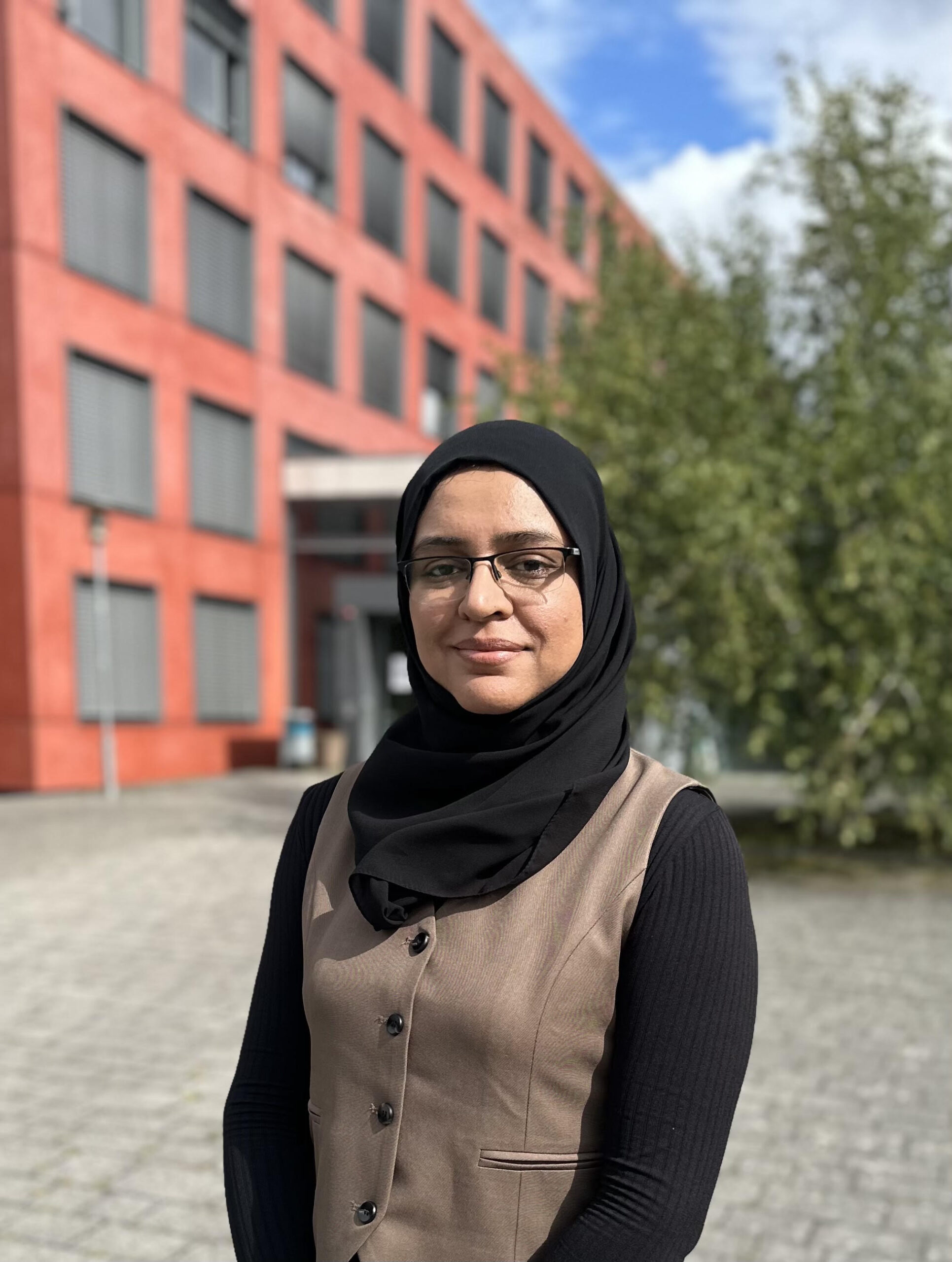
About Adeela
|
Adeela Bashir is a Computing PhD researcher at Teesside University, specializing in AI Safety, cybersecurity, and Evolutionary Game Theory, with a focus on adaptive attacker–defender dynamics and mitigating emerging risks in AI systems. With extensive academic experience as a university and IT lecturer in Saudi Arabia, she combines teaching expertise with interdisciplinary research. Her research has been published in leading academic venues, including Elsevier journals and MIT Press proceedings, alongside Innovate UK-funded projects, focused on trustworthy AI, intelligent decision-making, and supply-chain security. She also contributes to the research community as a peer reviewer and conference program committee reviewer, while actively supporting diversity and responsible innovation in cybersecurity. |
tags: ECAI, ECAI2026, IJCAI, IJCAI2026

AUAI is supported by: