ΑΙhub.org
“With AI, we need to reconsider what it means to learn”
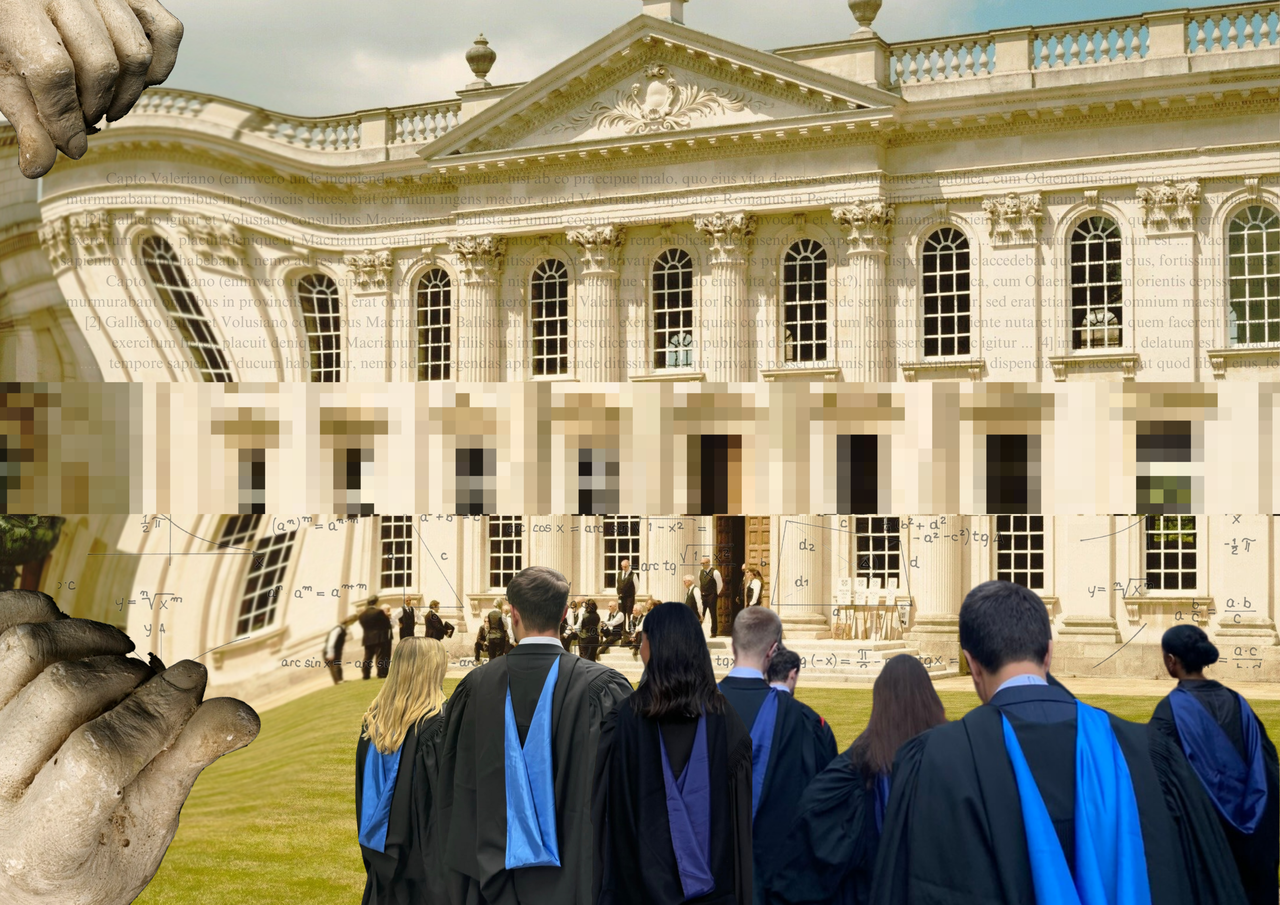 Zoya Yasmine / The Two Cultures / Licenced by CC-BY 4.0
By Cécilia Carron
Artificial intelligence is forcing universities to reinvent how they teach and assess students’ knowledge. According to Dan Schwartz, an expert in learning science at Stanford, the challenge goes well beyond deciding whether to let AI into the classroom – teachers need to think long and hard about what students should really learn.
Generative AI has worked its way into every field over the past four years and is prompting us to reconsider our habits. At universities, students are using it to write, find information and solve problems, while scientists have already incorporated it largely into their research. Teachers are being called on to rethink how they do their job now that AI programs can complete – in just seconds – a number of tasks traditionally assigned to students. That’s blurring the line between giving the right answer and actually learning something.
These are just some of the questions we explore in our special online report on AI at universities, published at the start of this new school year. These are also questions that Schwartz – a professor of educational technology at the Stanford Graduate School of Education and a faculty director at the Stanford Accelerator for Learning – has been studying for the past few years. He was in Switzerland in early September to give the keynote at the launch event of CLUE, an EPFL-ETH Zurich joint research center for learning science. We caught up with him to get his take on these issues.
Should we view AI as a disruptive innovation for universities, or is it an incremental one along the lines of calculators, computers and search engines?
Back in the 5th century B.C., Socrates was worried that writing would destroy human memory and people’s ability to distinguish fact from fiction. That sounds a lot like some of the concerns we hear about AI today. At universities, many different attitudes coexist. Faculty members use AI for their research, and it would make sense that they employ the same tools for their teaching. Some professors have developed programs highly specific to their fields, such as a model that can compare a video of a beginner surgeon with that of an expert in order to pinpoint differences in their movements. In that case, AI is used as a learning tool. But other professors are hesitant to bring AI into their teaching practice and instead focus on preventing students from cheating. And then there are those who adopt an attitude similar to Socrates’, eager to ban AI out of a fear that it would destroy everything in its path.
Are students one step ahead of teachers?
Teachers were quick to adopt AI for research purposes since it’s already transforming nearly all fields. Students use AI in their everyday lives and naturally bring it into the classroom. The catch is that AI programs are particularly good at doing the types of assignments traditionally given to students. So there’s a kind of gap – students are ahead for some learning tasks, and professors are ahead when it comes to research and more complicated problems.
How can we tell whether AI helps students actually learn or just get better grades?
First, we need to bear in mind that students will use AI in their careers. So why shouldn’t we also let them use it on their final exams – and rethink how we structure those exams? We’ve got to design exams that are smart enough. A similar debate occurred when calculators first emerged. The technology forced teachers to think about what students must absolutely be able to do on their own. Do we want to assess whether students have grasped the material we taught them, or measure their ability to learn what comes next? Those are two very different forms of assessment. For instance, we could observe how a student learns as they’re solving a problem. An AI program could track the student’s attempts and identify when they constantly repeat the same strategy, even though it isn’t working, and whether they’re capable of trying a new one. That would be very interesting information about the student’s capacity for learning.
If AI can instantly provide all the facts we need, is there anything we should still learn by heart?
You’ve got to have enough knowledge to be able to interpret the output from an AI program. If I give a medical problem to a chatbot and it replies using terminology that I’m not familiar with, then all those facts provided by the chatbot aren’t very helpful. Also, there are some things we should know automatically. When you read a word, for example, you shouldn’t have to think very much about what it means. By the same token, there are key fundamental concepts that students must understand thoroughly. Good examples of this in the field of math are proportionality, percentage and ratios. We tend to add a lot of content to the curriculum even though it doesn’t necessarily contribute to students’ full comprehension. If something is just a procedure with no underlying fundamental concept, then perhaps we could leave it to AI.
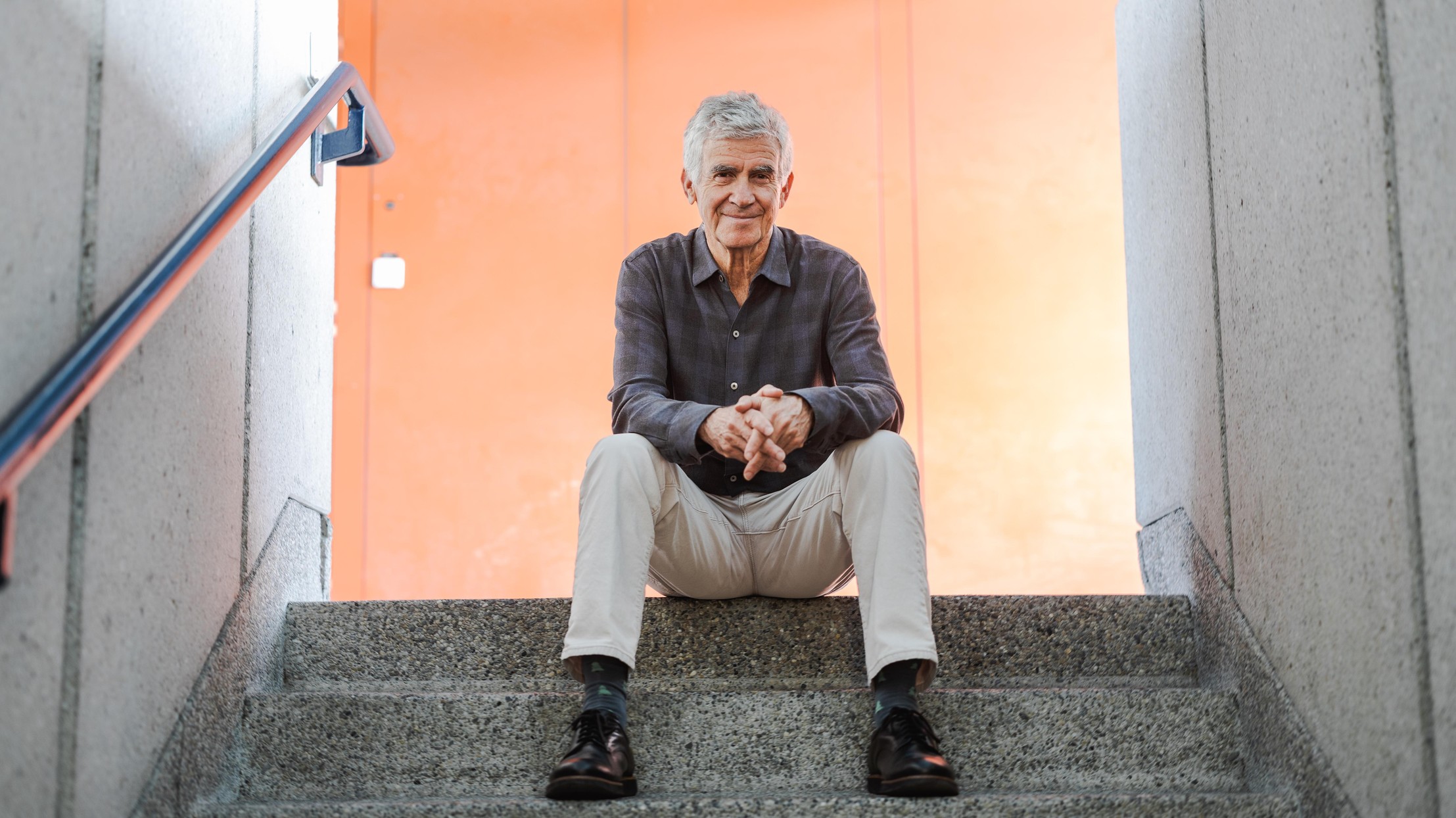 Dan Schwartz, an expert in learning science at Stanford. Image credit: 2026 EPFL/Lundi13 Niels Ackermann CC-BY-SA 4.0.
What would an effective class with AI look like?
We’re still trying out different approaches. What I’m interested in are situations where AI can help a human being rather than substitute for one. If I’m giving an hour-long lecture to a large class, then students can use AI to take notes – but that’s not very helpful. If, on the other hand, I ask students to work on assignments in small groups instead of passively listening to my lecture, then AI can play a much more interesting role. An AI program could identify when one student in a group dominates the conversation, for example, and encourage another student to ask a question. Or AI could be used to support teachers who are just starting out. These are promising forms of human-AI collaboration. The real question is whether teachers are ready to change their teaching habits. Restructuring an entire class is a huge amount of work. But at some point, our old ways of doing things will no longer work.
Isn’t one risk that students will submit their questions to an AI chatbot instead of their teachers?
I’m not sure that would necessarily be bad. I’ve done it myself, when I have a medical question that seems a little dumb – I’d rather ask a chatbot than my doctor. And if AI can give students immediate answers to their basic questions, then why not? But if AI answers are consistently good enough to get by in a class, then there’s a problem with how that class is designed.
How can we prepare students for a world where knowledge and technology are changing so quickly?
The hardest part about adapting isn’t necessarily learning something new – it’s recognizing what’s needed in a given situation. When the pandemic hit, everyone knew they had to adapt. But in real life, change can be much more subtle. We interpret a given situation based on what we already know, and we may not realize that there’s a new factor at play that should change how we think about that situation. So it’s important to encourage students to have an open mind and to give them strategies for learning and making sense of new information. Students must also have a sufficiently sound knowledge base to be able to recognize when a new factor is important.
Can AI also make education more inclusive?
This is an aspect we don’t hear much about, and which I believe is extremely important. To give an example, an English teacher with a deaf family member used AI to develop software that can read a text and create a character using sign language. A large company probably wouldn’t develop such a targeted application because the market is too small. But someone who is familiar with a specific problem can now use AI to start building a solution. It’s opening up a vast space for innovation, and that might just be where some of the most interesting possibilities lie.
What would be a successful education in the age of AI?
One that lands you a higher-paying job? Or gives you a thorough understanding of the world? Or lets you appreciate a work of art in a way that you couldn’t without an education? I’ve been teaching for many years, and what gives me the greatest satisfaction is seeing the light-bulb moment – that instant when a student truly understands something. Perhaps one critical thing that a university can provide is precisely that – the experience of having truly understood something well. Once you have that, then you’ll know what it means to learn.
Then, when you come across a new subject, you’ll be able to tell whether you know enough and can stop here, or if there’s still something you haven’t grasped and need to dig deeper. Now that machines can give us answers almost instantly, being able to make this distinction has become more important than ever.

AUAI is supported by: