
ΑΙhub.org
Interview with Sukanya Mandal: Developing a cognitive digital twin framework for smart cities

In this interview series, we’re meeting some of the AAAI/SIGAI Doctoral Consortium participants to find out more about their research. The Doctoral Consortium provides an opportunity for a group of PhD students to discuss and explore their research interests and career objectives in an interdisciplinary workshop together with a panel of established researchers. In this latest interview, we hear from Sukanya Mandal about her PhD so far.
Tell us a bit about your PhD – where are you studying, and what is the topic of your research?
I am Sukanya Mandal, a PhD student at Dublin City University in Dublin, Ireland. My research focuses on developing “A privacy-preserving federated learning (PPFL)-based cognitive digital twin (CDT) framework for smart cities”. This interdisciplinary project lies at the intersection of three key areas: 1) utilising knowledge graphs to represent and reason over heterogeneous smart city data from various domains; 2) building cognitive digital twins on top of these knowledge graphs; and 3) enhancing the privacy of this architecture by applying principles from privacy-preserving federated learning.
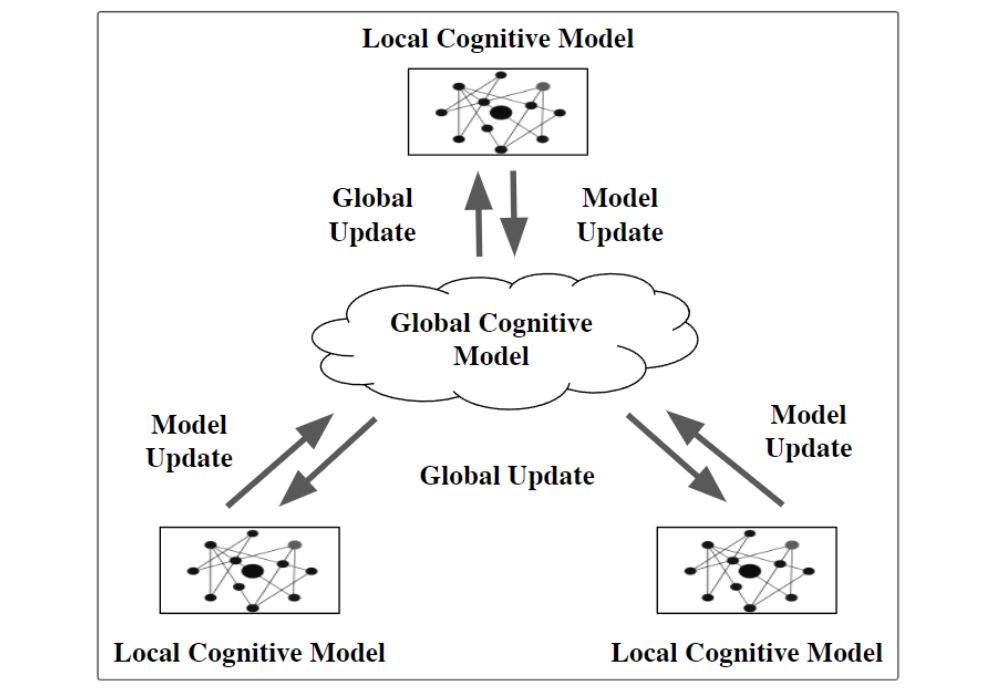 Figure 1: Motivation of privacy-preserving federated learning (PPFL)-based cognitive digital twin (CDT) framework
Could you give us an overview of the research you’ve carried out so far during your PhD?
As a second-year PhD student, I have made significant progress in my research journey thus far. I began by conducting a comprehensive literature review to gain a deep understanding of the state-of-the-art in my field. This enabled me to formulate well-defined research questions and hypotheses that guide my work. I have also designed a system architecture for the PPFL-based CDT framework. In parallel, I have been taking relevant courses to expand my knowledge of existing approaches that could be leveraged in building this system. Currently, I am in the process of implementing the system based on the proposed architecture.
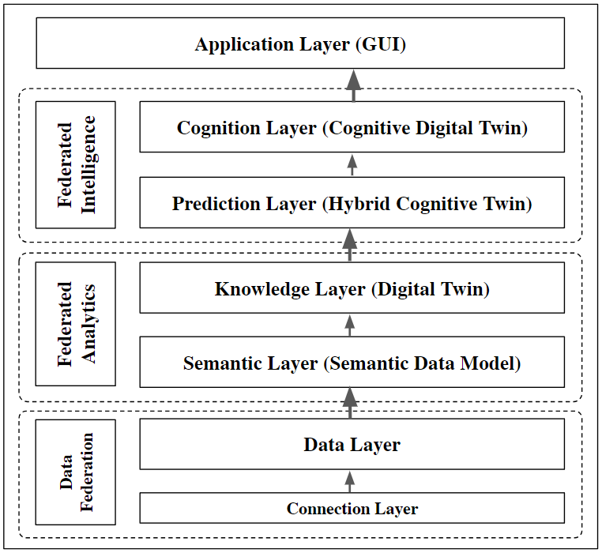 Figure 2: Layered architecture
Is there an aspect of your research that has been particularly interesting?
One particularly fascinating aspect of my research is the application of cognitive architectures in developing cognitive digital twins. CDTs incorporate advanced capabilities such as reasoning, perception, planning, and persistent memory, drawing inspiration from human cognition. Integrating these cognitive capabilities with knowledge graphs adds a unique layer of complexity and presents stimulating research challenges.
Do you have plans for what you will be investigating next?
As I progress in my PhD journey, I plan to delve deeper into various reasoning capabilities within the realm of computational cognition. Exploring how different reasoning mechanisms can be effectively incorporated into the CDT framework will be a key focus of my upcoming research.
Are there any books, talks, or other resources that have been particularly helpful to you so far?
Two particular resources (along with many others) have been instrumental in shaping my research direction and providing valuable insights. The “Knowledge-Based AI” course on Udacity, taught by Professor Ashok Goel from Georgia Tech, offered a comprehensive introduction to the field with respect to computational cognition. Additionally, the seminal textbook “Artificial Intelligence: A Modern Approach” by Stuart Russell and Peter Norvig has been a go-to reference for understanding fundamental AI concepts and techniques. Beyond these academic resources, the real-world applications of digital twins in various industrial use cases serve as a constant source of inspiration, highlighting the practical impact and potential of my research.
What made you want to study AI?
My journey into the world of AI began after completing my undergraduate degree in Electronics and Communication Engineering. As I embarked on my professional career at a large technology company, I was exposed to the fascinating realms of data and AI. Starting with business intelligence, I gradually progressed through various domains such as on-premise data engineering, modern cloud-based data engineering, data science, machine learning, knowledge graphs, and federated learning. As I delved deeper into these areas, I became increasingly captivated by the intricacies and potential of AI, motivating me to pursue a PhD to contribute to the advancement of this field.
Could you tell us an interesting (non-AI related) fact about you?
Beyond my academic pursuits, I am passionate about martial arts. I currently hold a brown belt and am diligently working towards achieving my black belt. The discipline, focus, and perseverance required in martial arts have been invaluable traits that I strive to apply in my research endeavours as well.

|
Sukanya Mandal is a Data and AI Strategist and Execution Specialist, and a researcher at Dublin City University, Ireland. Her research develops cognitive digital twin frameworks for smart cities, combining knowledge graphs, cognitive architectures, and privacy-preserving federated learning. With a decade of experience in AI and data science, her work appears at AAAI 2024, IJCAI 2025, IEEE WF-IoT 2024, and IEEE SWC 2023 |
Find out more
A Privacy Preserving Federated Learning (PPFL) Based Cognitive Digital Twin (CDT) Framework for Smart Cities, Sukanya Mandal, Proceedings of the AAAI Conference on Artificial Intelligence, 2024.
Collaborate with Sukanya
Sukanya and colleagues are actively seeking collaboration opportunities for their research project. There are several ways in which interested parties can contribute and engage, and here is more information about this from the team:
- Smart City Owners and Executives: If you are a Smart City owner or executive in possession of relevant data pertaining to our research domain, we would be highly interested in exploring potential data sharing agreements. Your valuable data could significantly enhance the depth and scope of our research findings.
- Researchers: We invite researchers from academia and industry to collaborate with us on topics aligned with our research objectives. By combining our expertise and resources, we can work towards advancing the state-of-the-art in this field and produce high-impact research outcomes.
- Industry Professionals: If you are an industry professional seeking to apply research-oriented use cases in domains similar to ours, we welcome the opportunity to collaborate. Together, we can bridge the gap between academic research and real-world applications, driving innovation and delivering tangible benefits to stakeholders.
If you are interested in collaborating on this project, please do not hesitate to contact me. I look forward to discussing potential collaboration opportunities and exploring how we can work together to achieve our shared research goals.
tags: AAAI, AAAI Doctoral Consortium, AAAI2024, ACM SIGAI

AUAI is supported by:








