ΑΙhub.org
How AI changes human decision-making
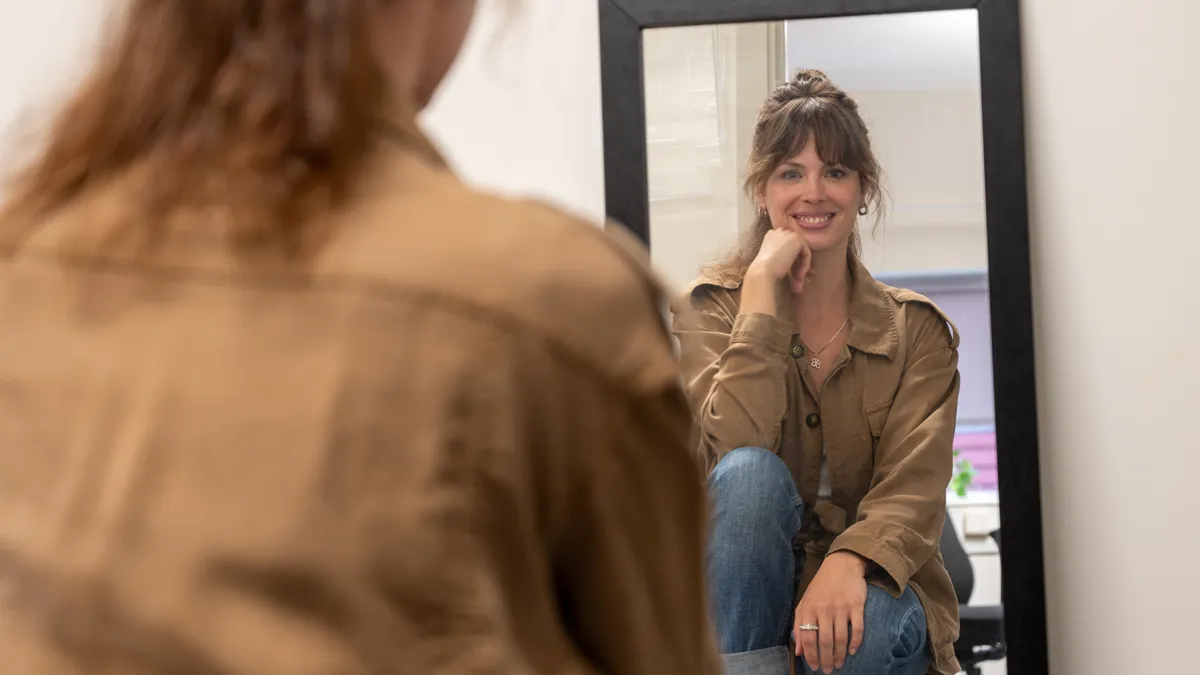 Bijona Troqe holds a PhD in Industrial Engineering and Management from Linköping University. Photo credit: Teiksma Buseva.
By Teiksma Buseva
AI can identify patterns that people miss and bring new information into decision-making. However, this does not automatically lead to better decisions. In her doctoral thesis, Bijona Troqe at Linköping University investigated what happens when humans and AI make decisions together.
AI is becoming part of everyday decision-making in many organisations. In healthcare, it can help professionals analyse large amounts of information, identify patterns and assess complex cases. But introducing AI does more than add a new tool. It can also change what people pay attention to, how they understand a problem and how a decision is reached.
This is what Bijona wanted to understand in her doctoral research. Instead of asking whether AI makes better decisions than humans, she studied what happens when humans and AI contribute to the same decision-making process. “I want to understand human-AI decision-making from an organisational perspective. I don’t study the technology itself or try to optimise the tools.”
Her research focuses on decision-making in organisations where many people, different types of knowledge and uncertainty are involved.
The roles are not fixed
Bijona studied three settings within Swedish personalised medicine: AI-assisted breast cancer screening, personalised medicine development and data-driven care. Her research included interviews as well as focus groups, observations, site visits and document analysis.
One of her main findings is that humans and AI do not have fixed roles. Who contributes what can change with the situation, the available information and the level of risk.
In breast cancer screening, for example, an AI-generated risk score can influence how a mammography case is handled and whether it needs further review. In other situations, the AI and the radiologist contribute at different stages of the process.
“What I saw was a more distributed and fluid form of collaboration. Within the same workflow, the collaboration can take different forms.”
AI can analyse large amounts of data and find patterns. People contribute professional experience and knowledge of the situation that the AI system may not have. Their strengths can therefore complement each other.
AI changes what we pay attention to
The research also shows that AI can affect a decision before the final choice is made. By sorting information, identifying patterns and producing risk scores, AI can influence what people notice and how they understand a problem.
One example comes from data-driven healthcare. Healthcare professionals were asked which factors they thought were important for predicting whether patients would return to an emergency department after being discharged. When a predictive model analysed the data, it identified some factors that the professionals had ranked as less important, as well as factors they had not considered.
“AI can bring forward things that decision-makers haven’t considered before.”
Organisations therefore need to consider both what AI makes more visible and what may receive less attention as a result.
“It’s not always better. That’s why we need to understand more about how we collaborate and interact with these technologies.”
Start with the problem
Organisations considering AI should first define the decision they want to improve and the problem they want to solve, Bijona argues. The technology should not be the starting point.
They must also consider who makes the decisions, what professional knowledge they use, the organisation’s goals and the technical and organisational conditions.
“Be very aware of why you want to implement AI. What is the actual need? What are you trying to solve? I would start from there.’
Although the research is based on healthcare, the findings may also apply to other organisations where decisions involve many people, several types of knowledge and uncertainty.
“Decisions are never isolated. They are always embedded in a context.”
Bijona applied her work in three settings:
- AI-assisted breast cancer screening. The case study showed how radiologists and AI can take different roles in the decision-making process depending on factors such as the AI risk score and the characteristics of the case.
- Personalised medicine development. Studying an organisation that develops personalised medicines and was exploring how AI and other technologies could become part of its work. The case provided insights into how organisations prepare for new technology and connect it to existing needs and ways of working.
- Data-driven care in Region Halland. Studying several examples of AI and predictive models used to support healthcare decisions. These included tools for identifying risks, prioritising patients and highlighting patterns in patient data that healthcare professionals might not otherwise have considered.
About Bijona Troqe
Bijona Troqe studied strategic management at Linköping University, where her interest in AI and decision-making began. Her master’s thesis explored AI in recruitment, which later led her to doctoral research on human-AI decision-making.
As a PhD student at the Department of Management and Engineering at Linköping University, she was part of a research group with other doctoral students. She was also part of the WASP-HS graduate school, which brought together PhD students researching AI and society from across Sweden.
Today, Bijona works at Sweden AI Factory, part of NAISS, where she works with AI infrastructure and international collaborations.

AUAI is supported by: