
ΑΙhub.org
Marvin Minsky Medal for outstanding achievements in AI goes to Libratus team
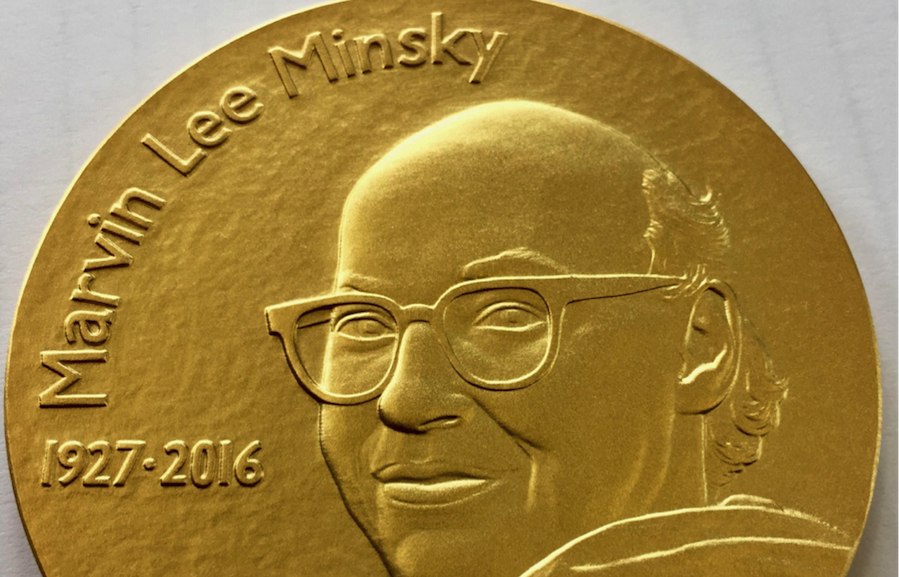 The team behind the Libratus program were today announced as the latest recipients of the Marvin Minsky Medal, given by the IJCAI organisation for Outstanding Achievements in AI. Libratus made headlines in January 2017 when it beat a team of champion human poker players in a 20-day no-limit tournament.
“Poker is an important challenge for AI because any poker player has to deal with incomplete information”, said Professor Michael Wooldridge, Chair of the IJCAI Awards Committee. “Incomplete information makes the computational challenge orders of magnitude harder. Libratus used fundamentally new techniques for dealing with incomplete information, which have exciting potential applications far beyond games”.
“We are delighted and honored to receive this prestigious award. Marvin Minsky was a broad thinker and inventor, and an AI pioneer. ” said Professor Tuomas Sandholm of Carnegie Mellon University, who led the team. “I believe that computational techniques for solving imperfect-information games will have large numbers of applications in the future since most real-world settings have more than one actor and imperfect information. These settings require totally different solving techniques than perfect- information games, and game-theoretic reasoning is necessary for generating strong strategies. I believe that this is a tipping point toward applications now that the best AI has reached superhuman level, as measured on the main benchmark in the field. I believe in applications of these kinds of techniques so strongly that I have founded Strategic Machine, Inc. and Strategy Robot, Inc. to commercialize such techniques.”.
The Minsky Medal is named for Marvin Minsky (1927-2016), one of the founders of the field of AI; the award was initiated with the full support of the Minsky family.
The award was presented at the IJCAI 2019 conference in Macao this week.

AUAI is supported by:








