
ΑΙhub.org
AI is helping astronomers make new discoveries and learn about the universe faster than ever before
By Chris Impey, University of Arizona
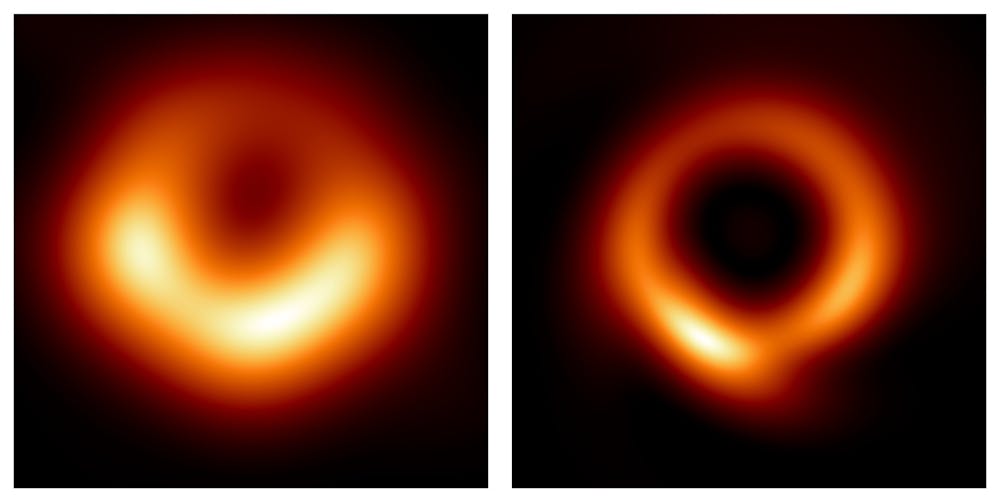
The famous first image of a black hole just got two times sharper. A research team used artificial intelligence to dramatically improve upon its first image from 2019, which now shows the black hole at the center of the M87 galaxy as darker and bigger than the first image depicted.
I’m an astronomer who studies and has written about cosmology, black holes and exoplanets. Astronomers have been using AI for decades. In fact, in 1990, astronomers from the University of Arizona, where I am a professor, were among the first to use a type of AI called a neural network to study the shapes of galaxies.
Since then, AI has spread into every field of astronomy. As the technology has become more powerful, AI algorithms have begun helping astronomers tame massive data sets and discover new knowledge about the universe.
Better telescopes, more data
As long as astronomy has been a science, it has involved trying to make sense of the multitude of objects in the night sky. That was relatively simple when the only tools were the naked eye or a simple telescope, and all that could be seen were a few thousand stars and a handful of planets.
A hundred years ago, Edwin Hubble used newly built telescopes to show that the universe is filled with not just stars and clouds of gas, but countless galaxies. As telescopes have continued to improve, the sheer number of celestial objects humans can see and the amount of data astronomers need to sort through have both grown exponentially, too.
For example, the soon-to-be-completed Vera Rubin Observatory in Chile will make images so large that it would take 1,500 high-definition TV screens to view each one in its entirety. Over 10 years it is expected to generate 0.5 exabytes of data – about 50,000 times the amount of information held in all of the books contained within the Library of Congress.
There are 20 telescopes with mirrors larger than 20 feet (6 meters) in diameter. AI algorithms are the only way astronomers could ever hope to work through all of the data available to them today. There are a number of ways AI is proving useful in processing this data.
Picking out patterns
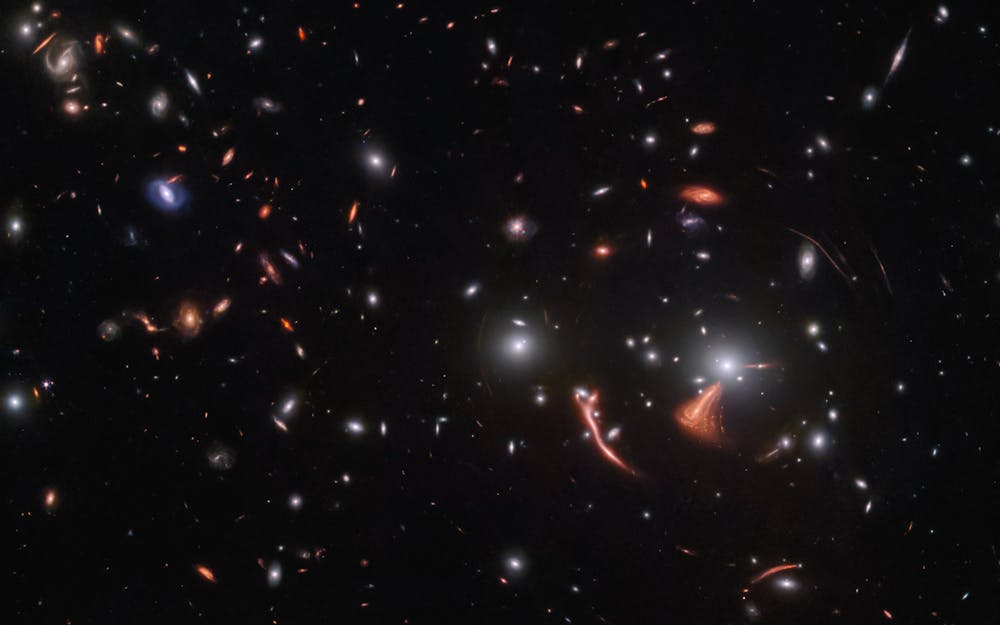
Astronomy often involves looking for needles in a haystack. About 99% of the pixels in an astronomical image contain background radiation, light from other sources or the blackness of space – only 1% have the subtle shapes of faint galaxies.
AI algorithms – in particular, neural networks that use many interconnected nodes and are able to learn to recognize patterns – are perfectly suited for picking out the patterns of galaxies. Astronomers began using neural networks to classify galaxies in the early 2010s. Now the algorithms are so effective that they can classify galaxies with an accuracy of 98%.
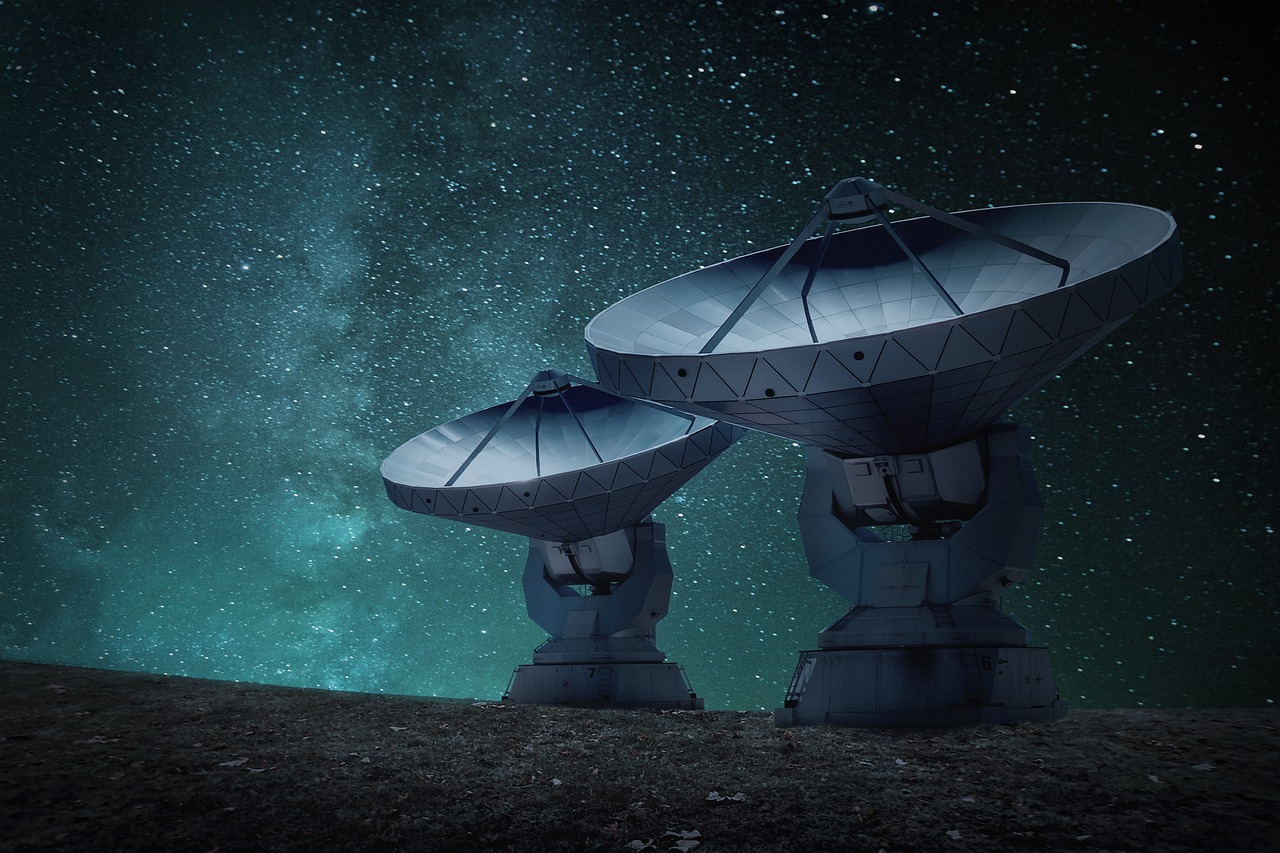
This story has been repeated in other areas of astronomy. Astronomers working on SETI, the Search for Extraterrestrial Intelligence, use radio telescopes to look for signals from distant civilizations. Early on, radio astronomers scanned charts by eye to look for anomalies that couldn’t be explained. More recently, researchers harnessed 150,000 personal computers and 1.8 million citizen scientists to look for artificial radio signals. Now, researchers are using AI to sift through reams of data much more quickly and thoroughly than people can. This has allowed SETI efforts to cover more ground while also greatly reducing the number of false positive signals.
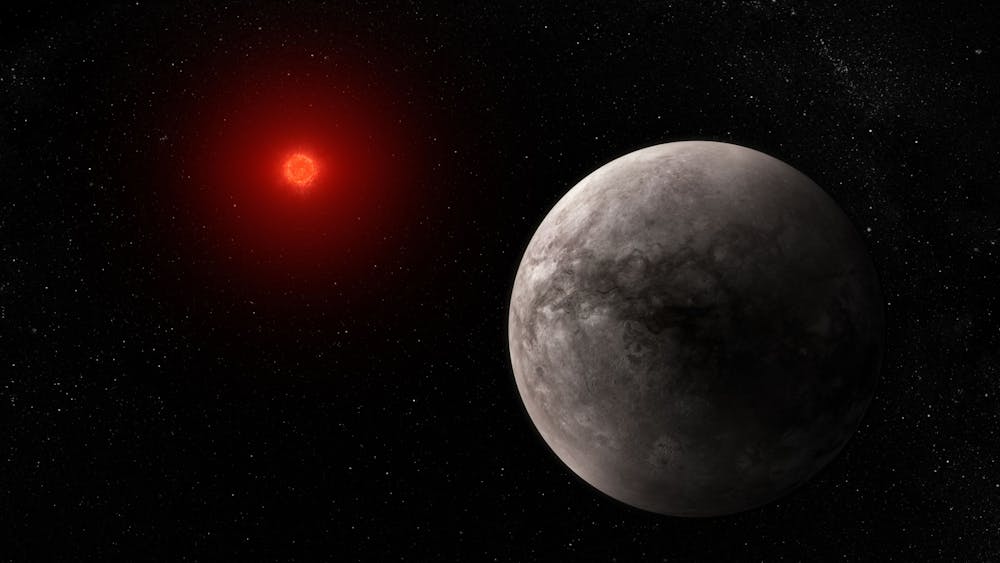
Another example is the search for exoplanets. Astronomers discovered most of the 5,300 known exoplanets by measuring a dip in the amount of light coming from a star when a planet passes in front of it. AI tools can now pick out the signs of an exoplanet with 96% accuracy.
Making new discoveries
AI has proved itself to be excellent at identifying known objects – like galaxies or exoplanets – that astronomers tell it to look for. But it is also quite powerful at finding objects or phenomena that are theorized but have not yet been discovered in the real world.
Teams have used this approach to detect new exoplanets, learn about the ancestral stars that led to the formation and growth of the Milky Way, and predict the signatures of new types of gravitational waves.
To do this, astronomers first use AI to convert theoretical models into observational signatures – including realistic levels of noise. They then use machine learning to sharpen the ability of AI to detect the predicted phenomena.
Finally, radio astronomers have also been using AI algorithms to sift through signals that don’t correspond to known phenomena. Recently a team from South Africa found a unique object that may be a remnant of the explosive merging of two supermassive black holes. If this proves to be true, the data will allow a new test of general relativity – Albert Einstein’s description of space-time.
Making predictions and plugging holes
As in many areas of life recently, generative AI and large language models like ChatGPT are also making waves in the astronomy world.
The team that created the first image of a black hole in 2019 used a generative AI to produce its new image. To do so, it first taught an AI how to recognize black holes by feeding it simulations of many kinds of black holes. Then, the team used the AI model it had built to fill in gaps in the massive amount of data collected by the radio telescopes on the black hole M87.
Using this simulated data, the team was able to create a new image that is two times sharper than the original and is fully consistent with the predictions of general relativity.
Astronomers are also turning to AI to help tame the complexity of modern research. A team from the Harvard-Smithsonian Center for Astrophysics created a language model called astroBERT to read and organize 15 million scientific papers on astronomy. Another team, based at NASA, has even proposed using AI to prioritize astronomy projects, a process that astronomers engage in every 10 years.
As AI has progressed, it has become an essential tool for astronomers. As telescopes get better, as data sets get larger and as AIs continue to improve, it is likely that this technology will play a central role in future discoveries about the universe.
Chris Impey, University Distinguished Professor of Astronomy, University of Arizona
This article is republished from The Conversation under a Creative Commons license. Read the original article.

AUAI is supported by: