
ΑΙhub.org
Agent Teaming in Mixed-Motive Situations – an AAAI Fall symposium
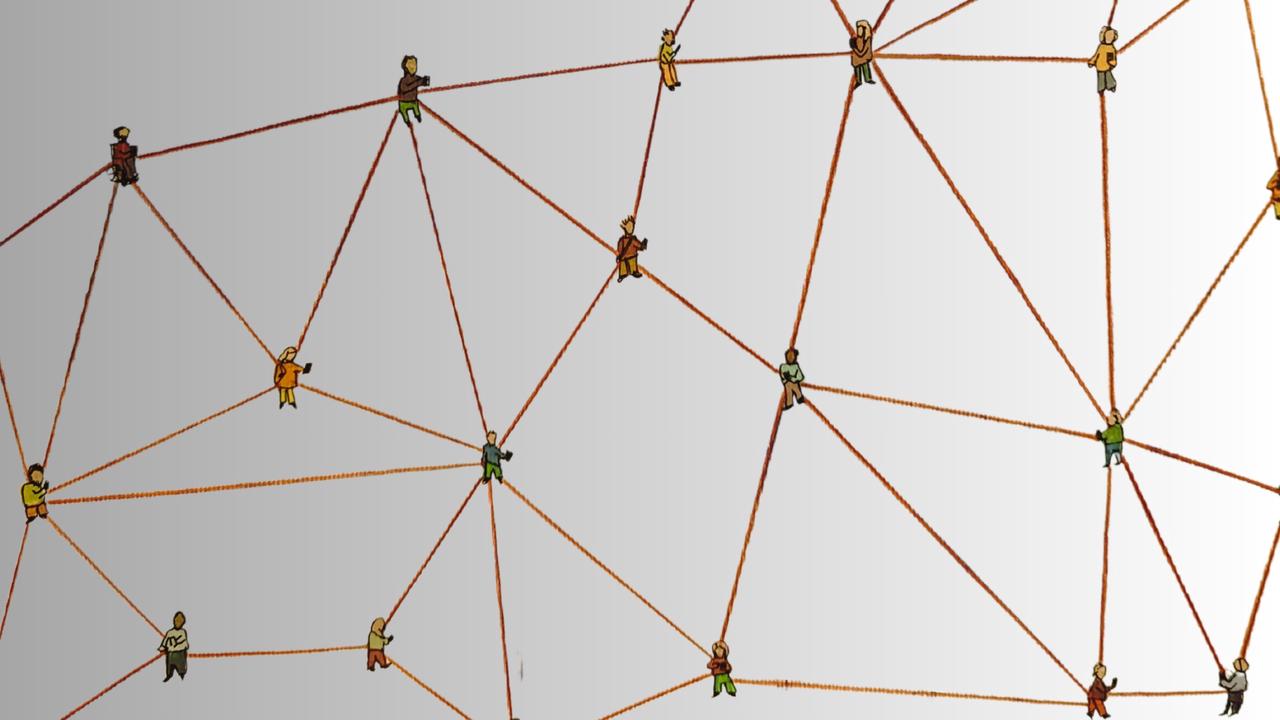 Image by Jamillah Knowles & Reset.Tech Australia / © https://au.reset.tech/ / Better Images of AI / Detail from Connected People / Licenced by CC-BY 4.0
The AAAI Symposium on Agent Teaming in Mixed-Motive Situations, held from October 25-27, 2023, showcased the challenges and innovations in multi-agent interactions with varying goals and decision-making processes. The event featured experts from diverse backgrounds, including multi-agent systems, AI, and organizational behavior. Key highlights include:
- Professor Subbarao Khambhampati’s (Arizona State University) keynote discussed the dual nature of mental modeling in cooperation and competition. The importance of obfuscatory behavior, controlled observability planning, and the use of explanations for model reconciliation was emphasized, particularly regarding trust-building in human-robot interactions.
- Professor Gita Sukthankar’s (University of Central Florida) talk focused on challenges in teamwork, using a case study on software engineering teams. Innovative techniques for distinguishing effective teams from ineffective ones were explored, setting the stage for discussions on the complexities of mixed-motive scenarios.
- Dr Marc Steinberg (Office of Naval Research) moderated an interactive discussion exploring research challenges in mixed-motive teams, including modeling humans, experimental setups, and measuring and assessing mixed-motive situations. This discussion provided diverse perspectives on the evolving landscape of agent teaming.
- Accepted papers covered a wide range of topics, including maximum entropy reinforcement learning, multi-agent path finding, Bayesian inverse planning for communication scenarios, hybrid navigation acceptability, and safety. Talks also delved into challenges in human-robot teams and the importance of aligning robot values with human preferences.
- Panel sessions explored themes such as team structure, collaboration within diverse teams, the role of game theory, and explicit and implicit communication within teams. Meta-level parameters for multi-agent collaboration and the importance of context in human-agent communication in mixed-motive settings were discussed.
- Breakout group discussions focused on consensus and negotiation in mixed-motive groups, considering intragroup and intergroup dynamics. The impact of consensus on trust and future work in mixed-motive teaming, including interdisciplinary collaborations and resource identification, were explored.
- The symposium successfully brought together a community actively addressing challenges in agent teaming within mixed-motive situations. The discussions highlighted the complexities of collaboration, trust-building, and decision-making in diverse multi-agent scenarios. Ongoing research and continued collaboration were emphasized to advance understanding in this field.
Useful links
- Agent Teaming in Mixed-Motive Situations – symposium page.
- AAAI Fall Symposium 2023 – central webpage with links to all symposia.
- Assured and Trustworthy Human-centered AI – an AAAI Fall symposium – summary from the organisers.
tags: AAAI, AAAI Fall Symposium 2023

Suresh Kumaar Jayaraman
is a postdoctoral researcher at the Robotics Institute at Carnegie Mellon University.
Suresh Kumaar Jayaraman
is a postdoctoral researcher at the Robotics Institute at Carnegie Mellon University.
AUAI is supported by:








Related posts :
How AI changes human decision-making
Linköping University
23 Oct 2026
AI can identify patterns that people miss and bring new information into decision-making. However, this does not automatically lead to better decisions.
Competing in RoboCup@Home and winning the 2026 best paper award: an interview with Raphael Memmesheimer
Lucy Smith
22 Oct 2026
Hear more about Raphael's research and his involvement in the RoboCup@Home league.
AI is distorting archaeology and flattening Indigenous Knowledge
Pursuit, University of Melbourne
21 Oct 2026
While AI can help archaeologists, it can also spread pseudoscientific claims and false histories, stripping Indigenous Knowledge of context, consent and community control.
ACM SIGAI Autonomous Agents Award 2027 open for nominations
ACM SIGAI
20 Oct 2026
Nominations are solicited for the 2027 ACM SIGAI Autonomous Agents Research Award.
AI is helping ease competition for scarce space on the airwaves
The Conversation
19 Oct 2026
Every time you make a phone call, stream a video or connect to Wi-Fi, your device is sending and receiving invisible signals through the air.
How AI is helping cities tackle invisible pollution
Horizon
16 Oct 2026
Researchers are designing AI-powered virtual cities to help authorities predict street-level pollution and act where it is needed most.
#AIES2026 social media round-up
AIhub
15 Oct 2026
Find out what participants got up to at the Conference on Artificial Intelligence, Ethics, and Society.
Credit fairness: lending resources without losing out
Seyed Majid Zahedi and Rupert Freeman
14 Oct 2026
Studying the allocation of shared resources among agents with time-varying demands.
