ΑΙhub.org
Andrew Barto and Richard Sutton win 2024 Turing Award
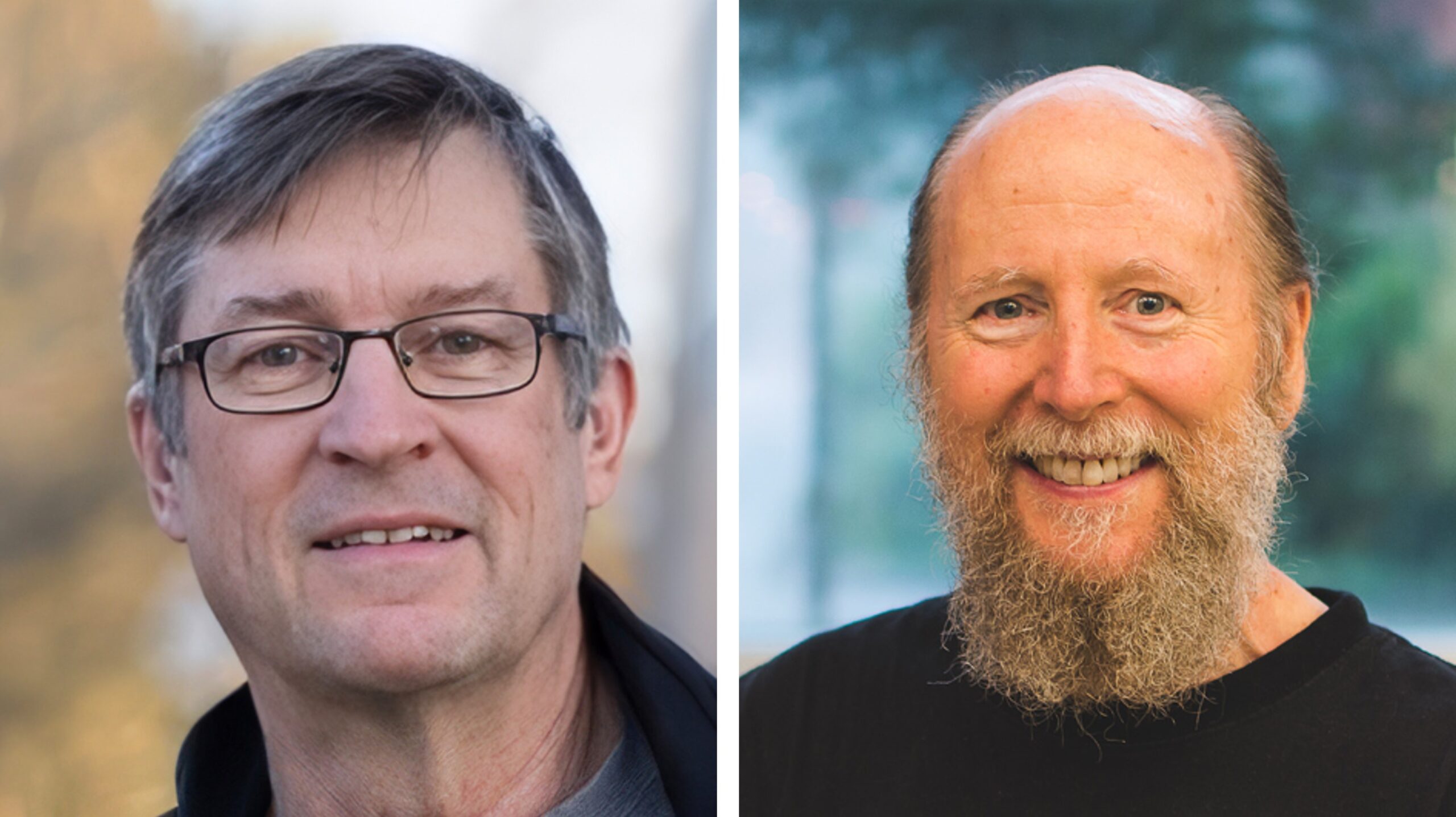 Andrew Barto and Richard Sutton. Image credit: Association for Computing Machinery.
The Association for Computing Machinery, has named Andrew Barto and Richard Sutton as the recipients of the 2024 ACM A.M. Turing Award. The pair have received the honour for “developing the conceptual and algorithmic foundations of reinforcement learning”. In a series of papers beginning in the 1980s, Barto and Sutton introduced the main ideas, constructed the mathematical foundations, and developed important algorithms for reinforcement learning.
The Turing Award comes with a $1 million prize, to be split between the recipients. Since its inception in 1966, the award has honoured computer scientists and engineers on a yearly basis. The prize was last given for AI research in 2018, when Yoshua Bengio, Yann LeCun and Geoffrey Hinton were recognised for their contribution to the field of deep neural networks.
Andrew Barto is Professor Emeritus, Department of Information and Computer Sciences, University of Massachusetts, Amherst. He began his career at UMass Amherst as a postdoctoral Research Associate in 1977, and has subsequently held various positions including Associate Professor, Professor, and Department Chair. Barto received a BS degree in Mathematics (with distinction) from the University of Michigan, where he also earned his MS and PhD degrees in Computer and Communication Sciences.
Richard Sutton is a Professor in Computing Science at the University of Alberta, a Research Scientist at Keen Technologies (an artificial general intelligence company based in Dallas, Texas) and Chief Scientific Advisor of the Alberta Machine Intelligence Institute (Amii). Sutton was a Distinguished Research Scientist at Deep Mind from 2017 to 2023. Prior to joining the University of Alberta, he served as a Principal Technical Staff Member in the Artificial Intelligence Department at the AT&T Shannon Laboratory in Florham Park, New Jersey, from 1998 to 2002. Sutton received his BA in Psychology from Stanford University and earned his MS and PhD degrees in Computer and Information Science from the University of Massachusetts at Amherst.
The two researchers began collaborating in 1978, at the University of Massachusetts at Amherst, where Barto was Sutton’s PhD and postdoctoral advisor.
Find out more
tags: quick read

AUAI is supported by: