
ΑΙhub.org
The Machine Ethics podcast – DeepDive: AI and the environment
Hosted by Ben Byford, The Machine Ethics Podcast brings together interviews with academics, authors, business leaders, designers and engineers on the subject of autonomous algorithms, artificial intelligence, machine learning, and technology’s impact on society.
DeepDive: AI and the environment
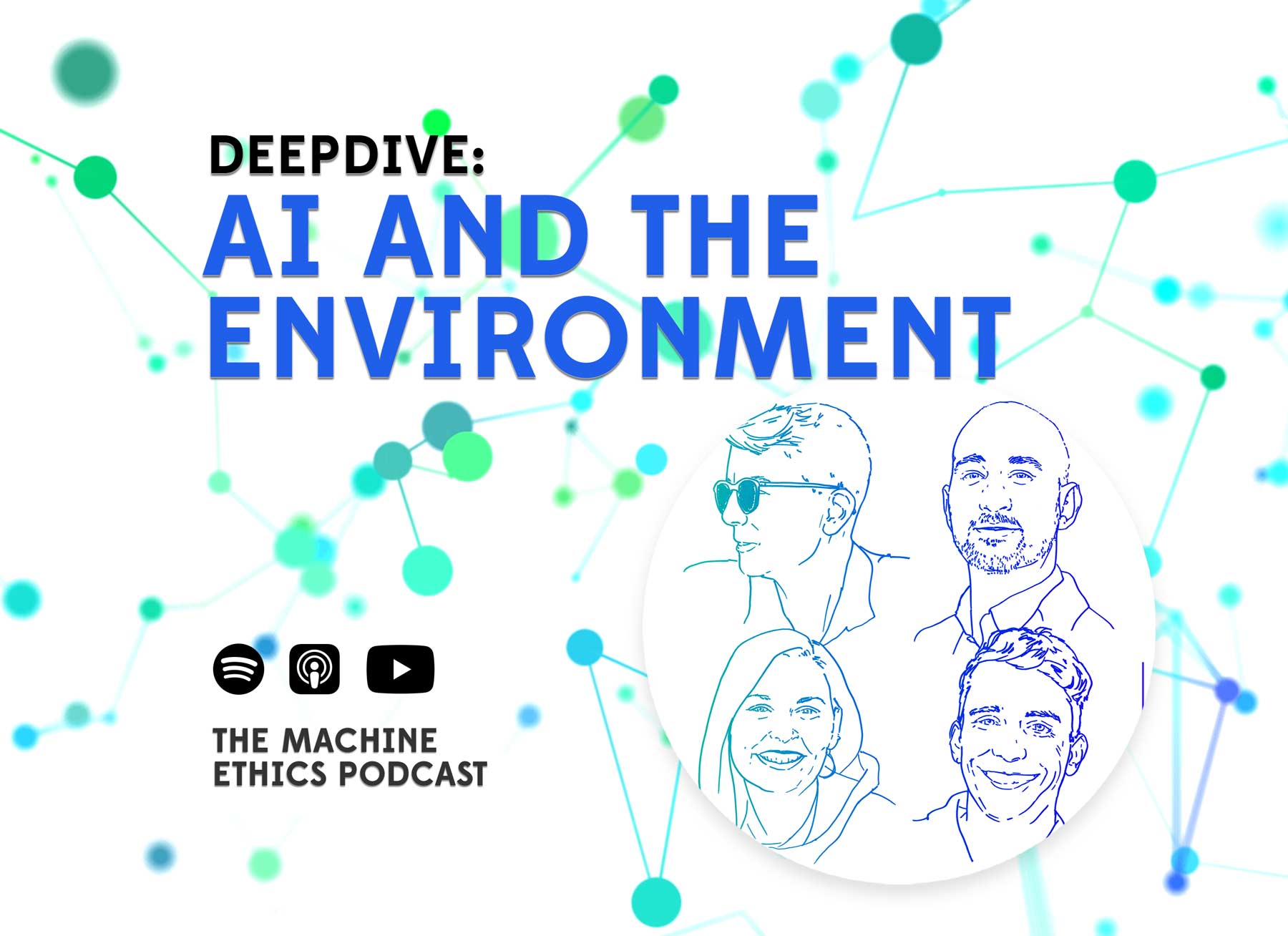
This is our 100th episode! A super special look at AI and the environment, we interviewed four experts for this DeepDive episode. We chatted about water stress, the energy usage of AI systems and data centres, using AI for fossil fuel discovery, the geo-political nature of AI, GenAI vs other ML algorithms for energy use, demanding transparency on energy usage for training and operating AI, more AI regulation for carbon consumption, things we can change today like picking renewable hosting solutions, publishing your data, when doing “responsible AI” you must include the environment, considering who are the controllers of the technology and what do they want, and more…
Listen to the episode here:
Episode speakers in order:
Hannah Smith is Director of Operations for Green Web Foundation and co-founder of Green Tech South West.
She has a background in Computer Science. She previously worked as a freelance WordPress developer, and also for the Environment Agency, where she managed large business change projects. She lives in the temperate rainforest in Exmoor National Park, UK.
- Green Tech South West
- Green Web report on AI environment impact
- Within bounds: Joint statement on limiting AI’s environmental impact
Boris Gamazaychikov is the Head of AI Sustainability at Salesforce and a recognized leader in the intersection of technology and climate action, named to The Independent’s 2024 Climate 100. Boris aims to serve as a bridge between the AI and climate communities, fostering collaboration to make the AI industry sustainable while advancing solutions that align with planetary boundaries. At Salesforce, Boris focuses on reducing the environmental impact of the company’s internal AI operations while working to make the broader AI ecosystem more sustainable. Boris is a frequent speaker, board member, and thought leader on the topic of AI Sustainability and beyond.
With over a decade of experience solving technical environmental challenges, Boris has developed decarbonization strategies for some of the world’s largest companies, reduced the pollution footprint of the Pentagon, and advanced sustainable practices in building material supply chains. He holds a degree in Environmental Engineering from the University of Maryland and continues to bridge his expertise in engineering, climate science, and AI to accelerate the transition to a sustainable future.
Will Alpine is an AI product management leader working at the intersection of technology, policy, and climate. He is the co-founder of the Enabled Emissions Campaign, advocating for the alignment of technology use with climate science.
During his four-year tenure at Microsoft, he led the development of Responsible AI platform features, co-founded Green Software Engineering initiatives such as the open-source Carbon Aware SDK, and co-authored Microsoft’s Accelerating Sustainability with AI playbook.
Will holds an M.S. in Technology Innovation (Connected Devices) from the University of Washington, a B.S. in Mechanical Engineering from Virginia Commonwealth University, and holds four patents from his time at SolarCity (Tesla Energy).
Outside of work, he finds inspiration in nature, often exploring the rugged landscapes of the Pacific Northwest as a plant-based adventure athlete.
Mél Hogan is Associate Professor of Film & Media at Queen’s University (Canada). Her research focuses on data infrastructure as understood from within the contexts of planetary catastrophes and collective anxieties about the future. Host of The Data Fix podcast and Editor of Heliotrope. On Bluesky at @melhogan.bsky.social.
About The Machine Ethics podcast
This podcast was created and is run by Ben Byford and collaborators. The podcast, and other content was first created to extend Ben’s growing interest in both the AI domain and in the associated ethics. Over the last few years the podcast has grown into a place of discussion and dissemination of important ideas, not only in AI but in tech ethics generally. As the interviews unfold on they often veer into current affairs, the future of work, environmental issues, and more. Though the core is still AI and AI Ethics, we release content that is broader and therefore hopefully more useful to the general public and practitioners.
The hope for the podcast is for it to promote debate concerning technology and society, and to foster the production of technology (and in particular, decision making algorithms) that promote human ideals.
Join in the conversation by getting in touch via email here or following us on Twitter and Instagram.

AUAI is supported by: