
ΑΙhub.org
RWDS Big Questions: how do we highlight the role of statistics in AI?
By Annie Flynn
Artificial intelligence may be today’s headline act, but behind many of its most powerful systems lies something older, deeper, and quietly essential: statistics. Earlier this month, the RSS released a landmark position paper titled AI is Statistics. Introducing the paper, Donna Philips, Chair of the Society’s AI Task Force which led its development, argues: “AI systems are built on statistical pattern recognition. They need to be developed, evaluated and governed with rigorous statistical precision.”
That this is not widely understood is problematic for many reasons. If AI is seen as magic rather than applied statistics, it becomes easier to believe it is objective, infallible, or autonomous—when in reality it is probabilistic and assumption-driven. Organisations may prioritise tools and branding over rigorous data collection, experimental design, and evaluation. Without a statistical lens, questions like “How certain are we?”, “Compared to what?”, and “Under what conditions?” are less likely to be asked. And, ultimately, the demand for “AI talent” may overlook the statistical expertise required to build reliable systems.
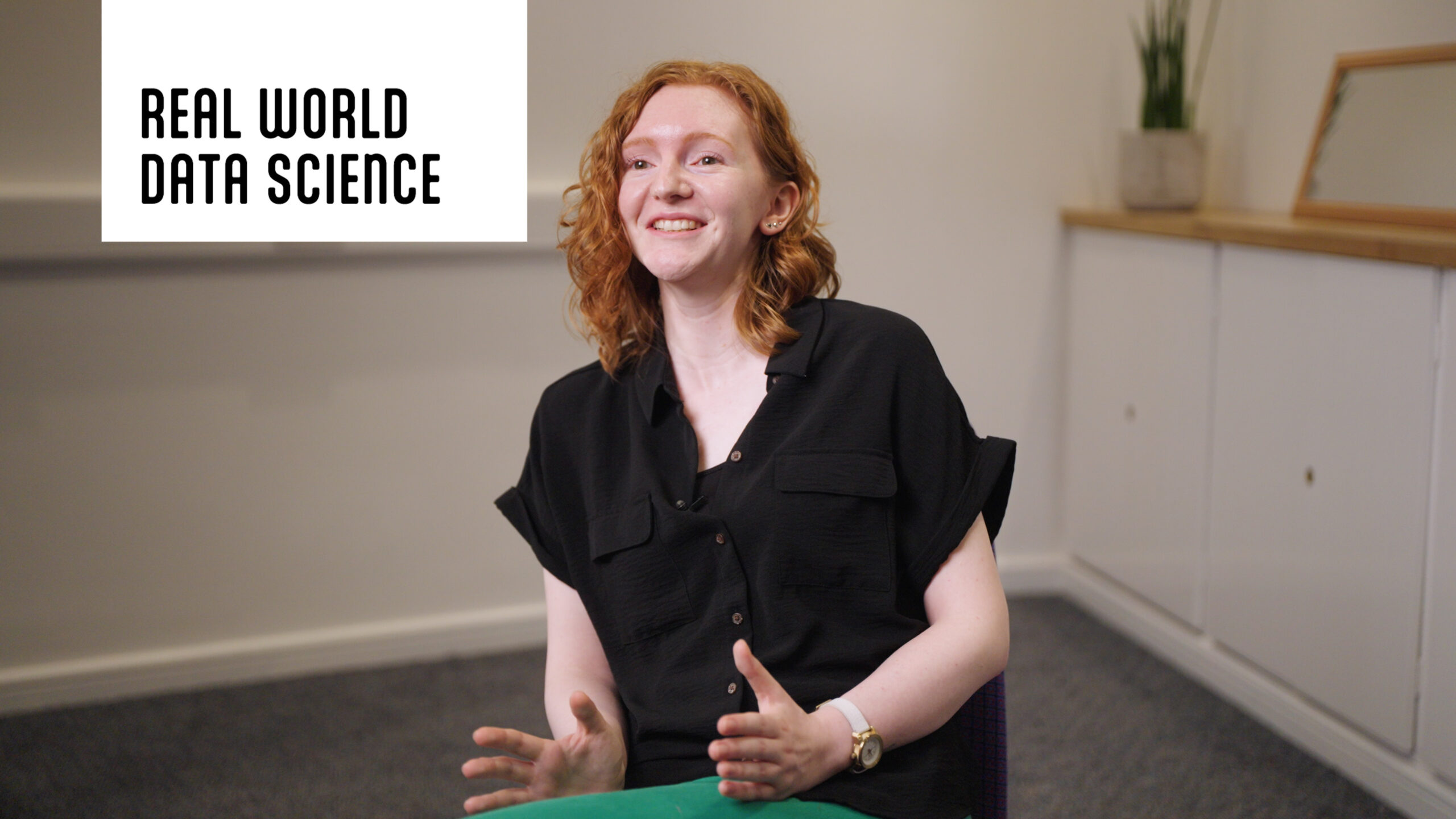
In this latest episode of Real World Data Science Big Questions, our expert panel tackles a deceptively simple question: How can we better highlight the role of statistics in AI? Watch below, and read on for some key takeaways and analysis.
Watch the discussion
Takeaways at a glance
- AI is built on statistical thinking – even when it’s not labelled that way.
- Job titles change; core skills don’t.
- Statistics sometimes undersells itself by focusing on mechanics over impact.
- Communication and visualisation are central, not peripheral, to modern statistical work.
- Kindness, collaboration, and trust are professional assets.
- The future belongs to skill-based identities, not title-based ones.
Key themes and analysis
The “rebranding” meme
The panel opens with a familiar joke: take statistics, put a new frame around it, call it machine learning or AI, and suddenly everyone pays attention. It’s humorous—but revealing.
Many roles advertised today as “AI” or “data science” positions are deeply statistical at heart. They involve modelling uncertainty, validating assumptions, managing bias, evaluating performance, and interpreting results. In other words: core statistical competencies.
Rather than resisting this relabelling, the panel suggests recognising it as part of the natural evolution of fields. The key question becomes not “What should we call ourselves?” but “What value are we delivering?”
Identity versus skills
One of the strongest messages from the discussion is this: don’t over-identify with a job title.
“Statistician,” “data scientist,” “AI specialist” are all potentially transient labels, whereas the skills underpinning them remain the same:
- Framing problems carefully
- Questioning assumptions (“Are you sure? Are you sure-sure-sure?”)
- Quantifying uncertainty
- Designing analyses that are robust and defensible
The panel suggests that the healthiest professional stance is to focus less on identity and more on what you can do and what you care about.
The communication gap: loving the sausage-making
Statisticians, the panel observes, sometimes make things harder than they need to be—at least in how they explain their work.
“We’re too interested in the mechanics,” one panellist notes. “Nobody cares how you made the sausage.”
This doesn’t mean rigour is unimportant. It means that impact must lead the narrative. Instead of focusing first on models, methods, and diagnostics, statisticians might begin with:
- What problem was solved?
- How did this make life easier, safer, or better?
- What decision did this enable?
AI has been marketed effectively because it is framed in terms of transformation and possibility. Statistics can claim that space too, without sacrificing integrity.
Visualisation and bringing data to life
Visualisation is a key bridge between statistical thinking and real-world impact. Good visualisation:
- Makes uncertainty legible
- Builds trust
- Enables decision-making
- Tells stories grounded in evidence
In a world flooded with dashboards and generative outputs, the ability to present data clearly and responsibly is not a soft skill. It is core infrastructure.
Trust, collaboration, and professional culture
People want to work with statisticians they trust, which flows not only from technical competence but from clarity, openness, and collaboration.
As AI systems become more powerful—and more controversial—the professionals who can explain, contextualise, and responsibly deploy them will be in
From background discipline to visible foundation
If AI continues to evolve—as it surely will—so too will the labels attached to those who work in it. But uncertainty, inference, modelling, and critical thinking aren’t going anywhere.
We would love to receive contributions to the site that tackle this issue.
Is statistics undervalued in the AI conversation, or quietly thriving?
Where, in your experience, does statistical thinking most visibly shape AI work?
And where is it least acknowledged?
Have you seen statistical work rebranded as AI in your organisation?
We are actively seeking submissions on these topics so, if you would like to be part of the conversation, get in touch.
This article is republished from Real World Data Science under a Creative Commons Attribution 4.0 (CC BY 4.0) International licence. Read the original article here.

AUAI is supported by:








