
ΑΙhub.org
#RoboCup2024 – daily digest: 19 July
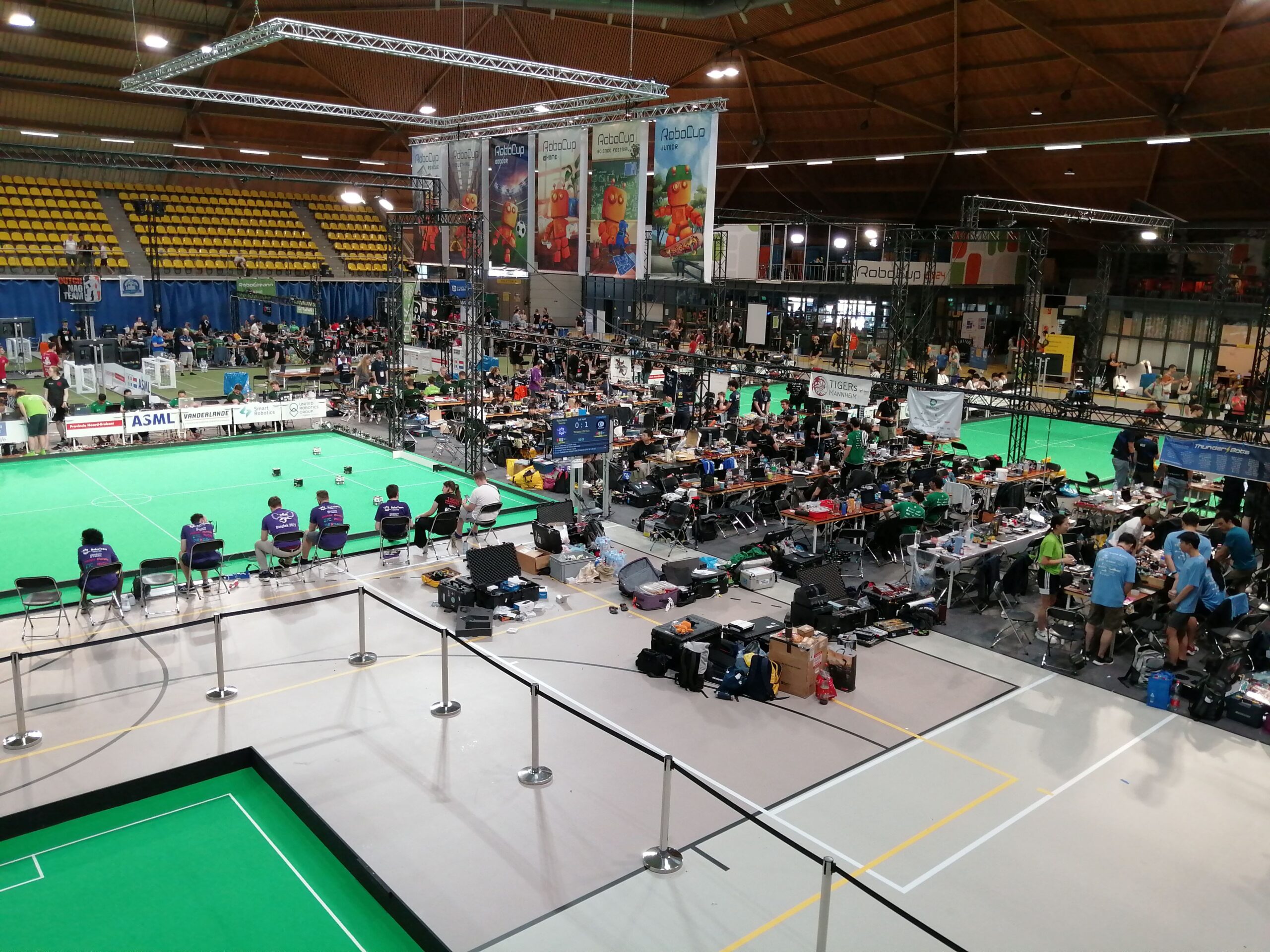 The main soccer arena.
RoboCup is an international scientific initiative with the goal to advance the state of the art of intelligent robots. As part of this initiative, a series of competitions and events are held throughout the year. The main showcase event is an international affair with teams travelling from far and wide to put their machines through their paces.
This year, RoboCup is being held in three arenas in the Genneper Parken, Eindhoven, The Netherlands. The organisers are expecting over 2,000 participants, from 45 different countries, with around 300 teams signed up to take part in the various competitions.
Although RoboCup started out as a football (or soccer) playing competition, other leagues have since been introduced, focussing on robots in industrial, rescue, and home settings. There is even a dedicated league for young roboticists – RoboCupJunior – where participants can take part in either football, rescue, or artistic events.
I am lucky enough to be able to attend this year, and, for the next three days, I’ll be bringing you a daily digest of some of the exciting happenings from Eindhoven.
Today, 19 July, sees the competition in full swing. The main soccer arena, boasting multiple pitches, hosts a number of the different leagues which form RoboCupSoccer.
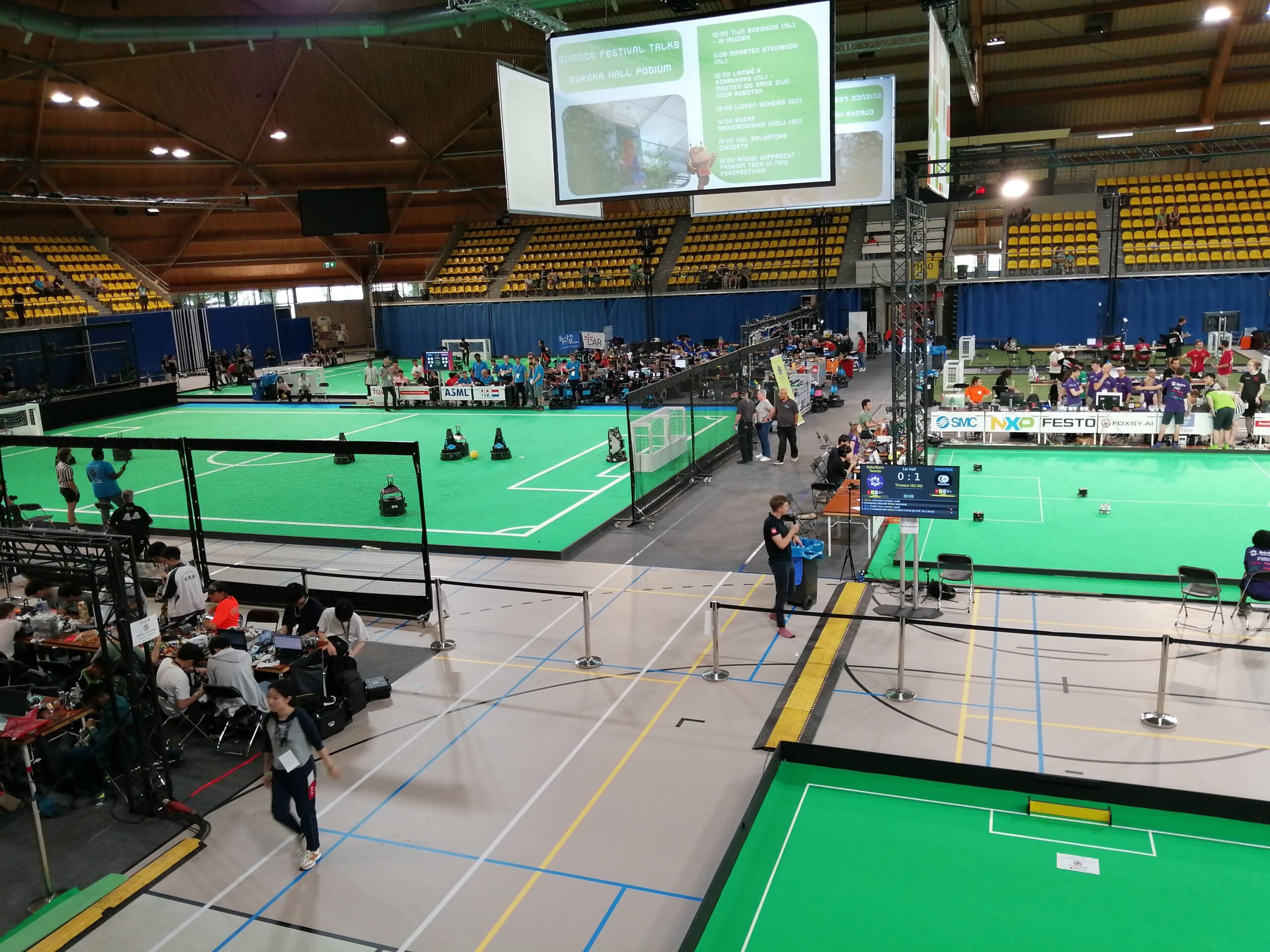 Some of the pitches in the main soccer arena.
My first port of call was the Standard Platform League, where the round 5 champions cup match between SPQR Team vs rUNSWift was taking place. SPQR ran out winners and advance to round 6. In this league, all teams compete with identical robots (currently the humanoid NAO by Aldebaran). The robots operate fully autonomously, meaning that there is no external control from neither humans nor computers.
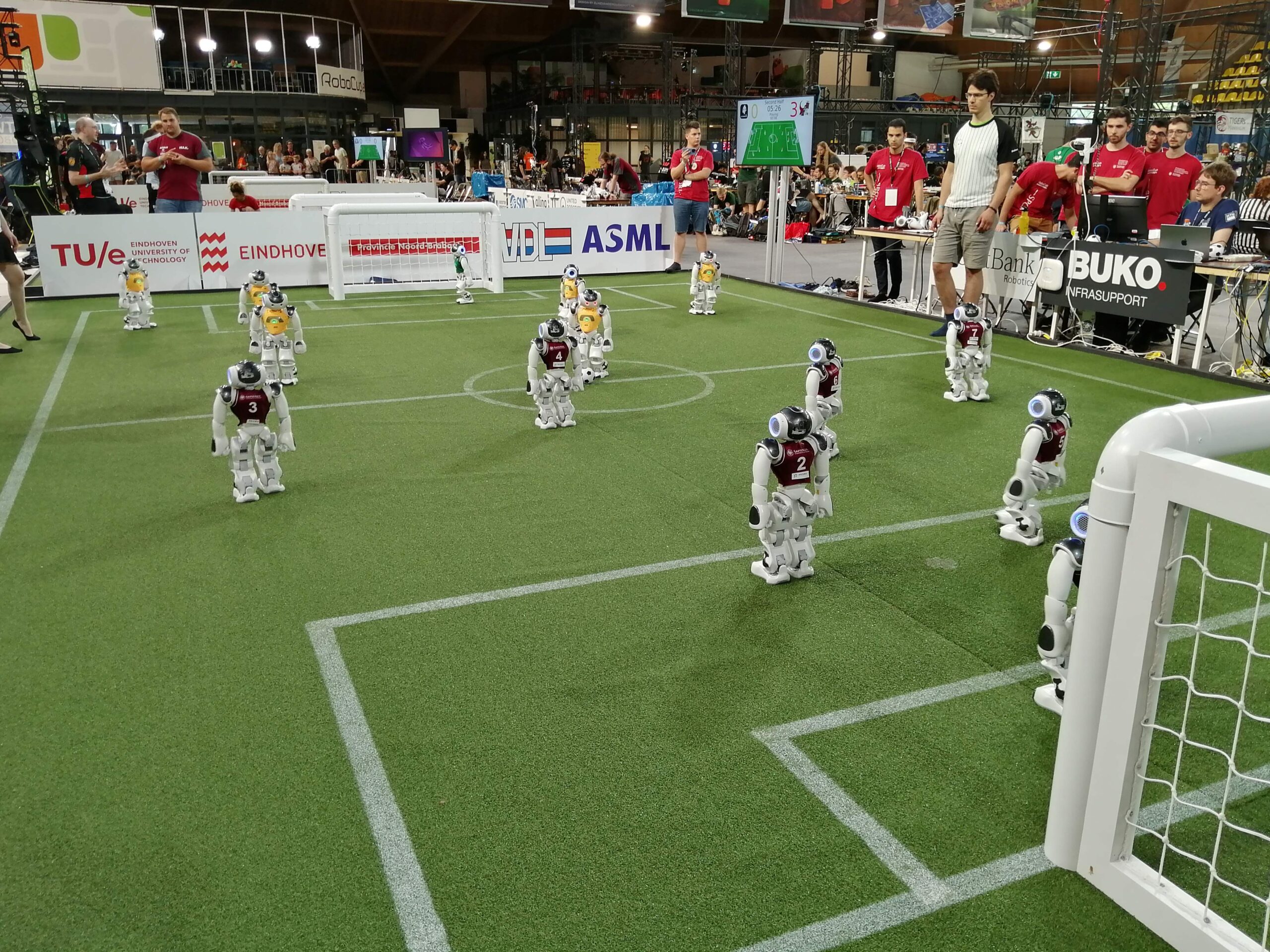 Standard platform league. Round 5 champions cup match between SPQR Team vs rUNSWift.
Goal! pic.twitter.com/dMfNDUKNZc
— AIhub (@aihuborg) July 19, 2024
The Humanoid AdultSize league is arguably the most challenging of the leagues, with many constraints placed on the robots to make them as human-like as possible. For example, they must have roughly human-like body proportions, they need to walk on two legs, and they are only allowed to use human-like sensors (up to two cameras to sense the environment). In this AdultSize competition, two robots from each team compete, and the team members walk behind the robots to catch them in case of a fall. Such a mishap could prove costly in terms of potential hardware damage.
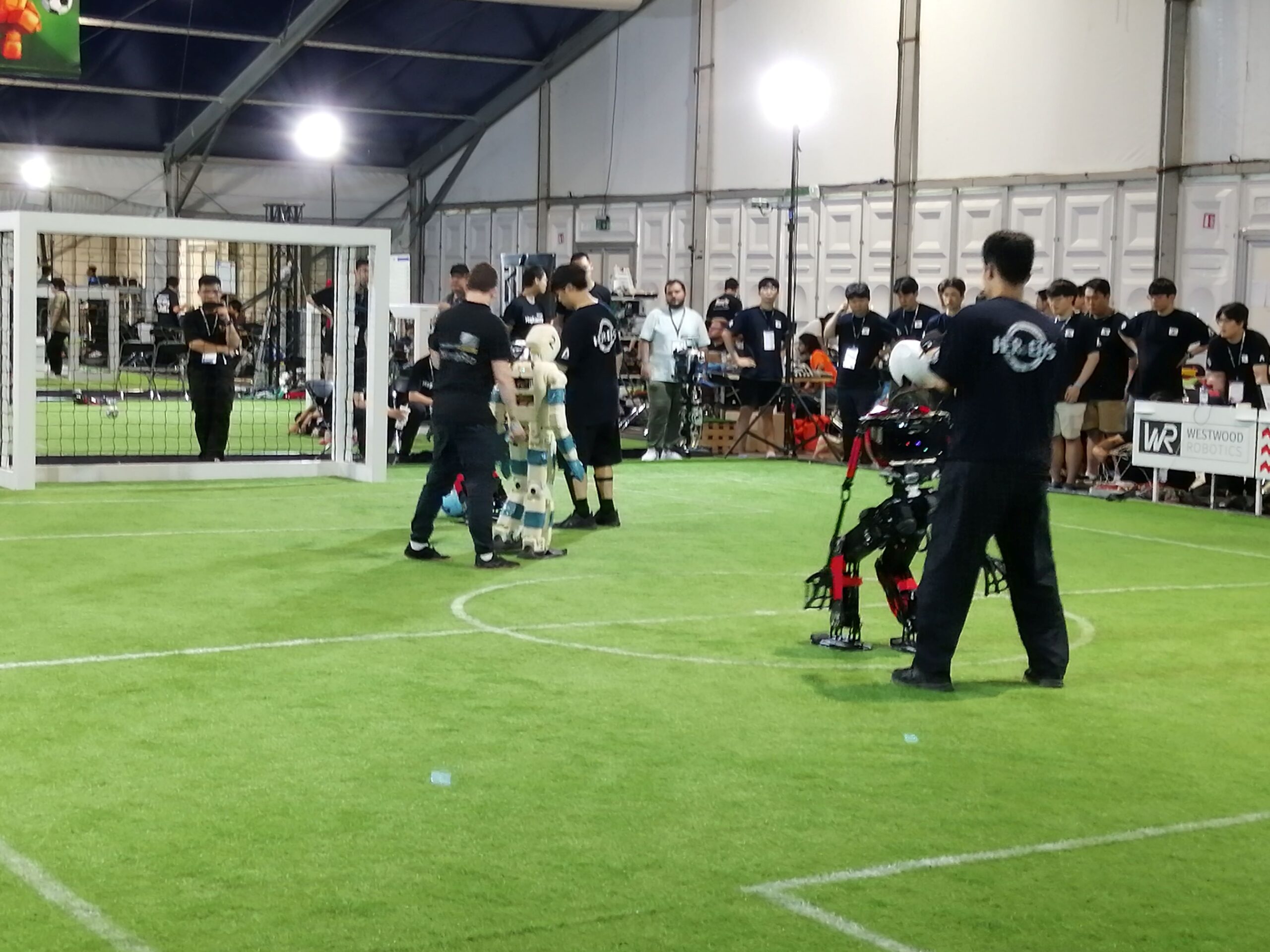 Action from the Humanoid AdultSize League.
The RoboCup Rescue Robot League sees teams developing robotic systems with the goal of enabling emergency responders to perform extremely hazardous tasks from safer stand-off distances. During the competition, teams compete in a round-robin, putting their robots through their paces on a number of different challenges. The leading teams following this initial phase progress to the finals on Sunday. The tasks include navigating in complex environments, opening doors, and sensing. Teams may run the machines completely autonomously, or with some assistive control. More points are awarded for completely autonomous operation.
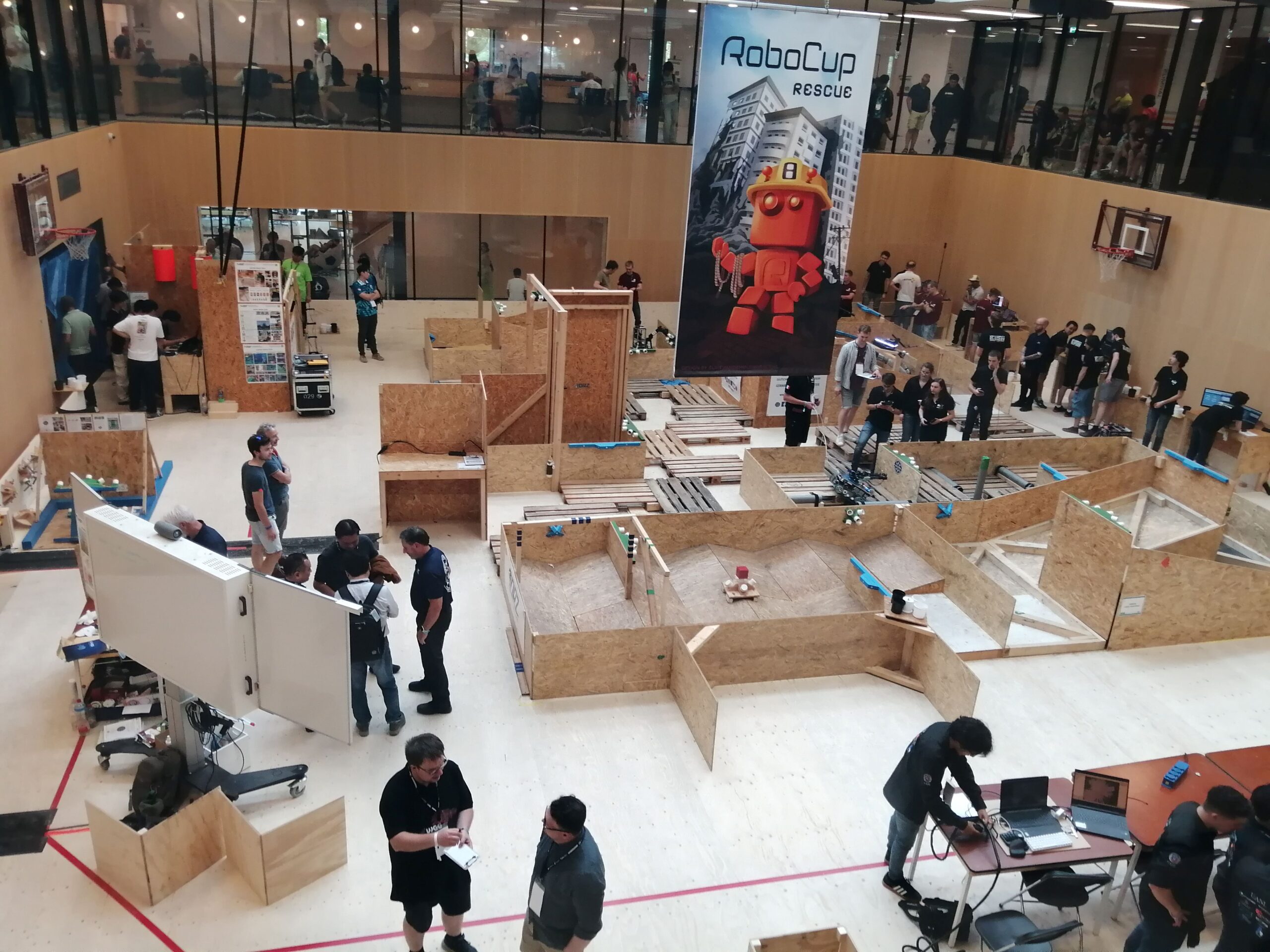 RoboCup Rescue arena from above.
Some action from the @robocup_org #RoboCup2024 Rescue league, where teams compete in a variety of challenges.
Team Hector Darmstadt in the "Obstacles: pallets with pipes" challenge pic.twitter.com/4Ll75uENjM
— AIhub (@aihuborg) July 19, 2024
KMUTNB navigate rough terrain, including gravel and sand pic.twitter.com/rsI7NliEwd
— AIhub (@aihuborg) July 19, 2024
You can keep up with more RoboCup2024 news here.
tags: RoboCup, RoboCup2024

AUAI is supported by: