
ΑΙhub.org
Interview with Erica Kimei: Using ML for studying greenhouse gas emissions from livestock
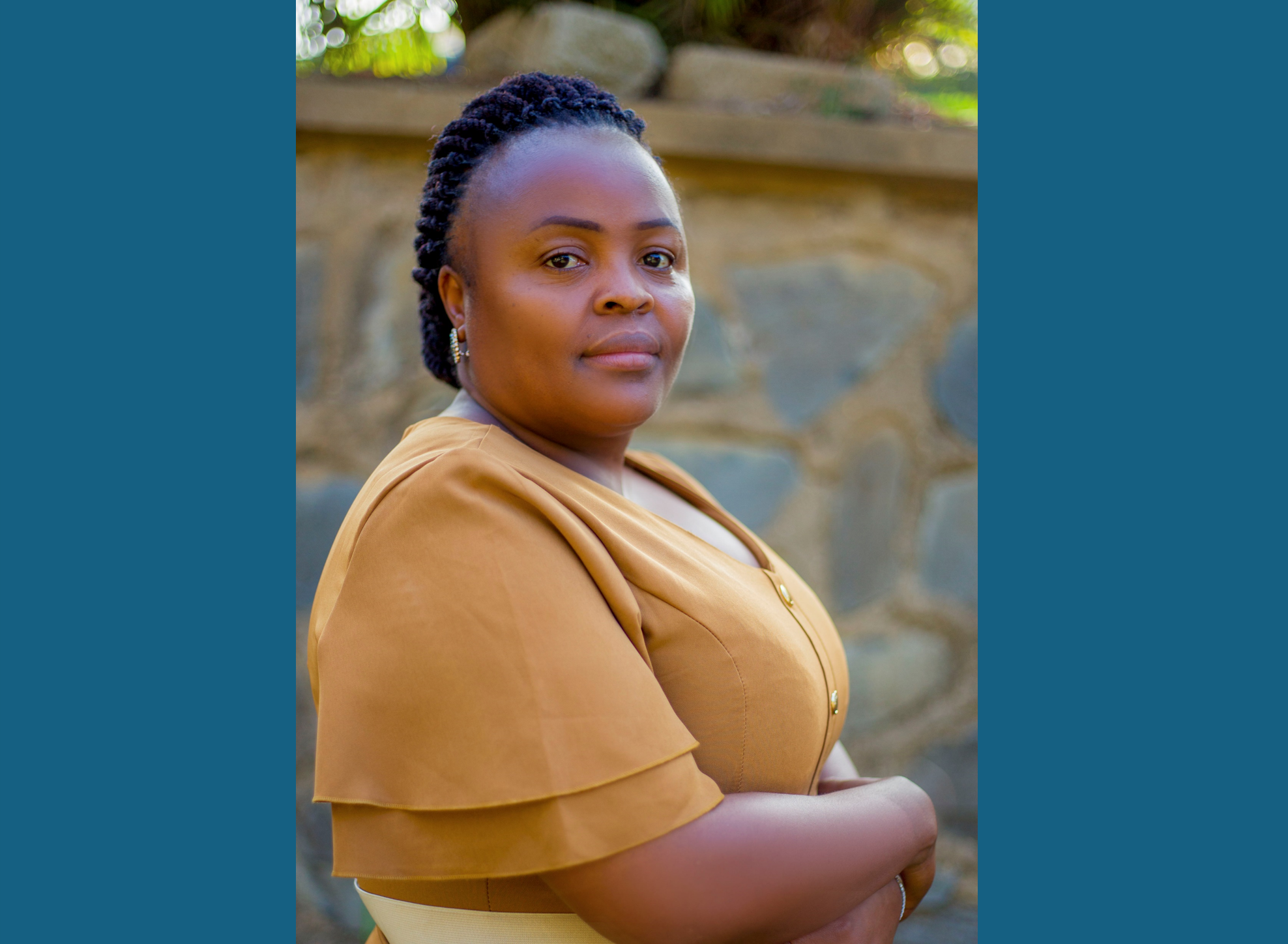 Erica Kimei
Greenhouse gas emissions are a key driver of climate change. Erica Kimei’s work focusses on studying gas emissions from agriculture, specifically ruminent livestock. We asked Erica about her work, and her experience at the AfriClimate AI workshop at the Deep Learning Indaba, where her research won an award.
Tell us a bit about you – where are you working and what is the focus of your research?
I am Erica Kimei, a PhD candidate at the Nelson Mandela African Institution of Science and Technology in Tanzania (NM-AIST), and an assistant lecturer at the National Institute of Transport. My research focuses on leveraging machine learning and remote sensing technology to monitor and forecast greenhouse gas emissions from ruminant livestock. This work aims to contribute to sustainable agricultural practices by enabling better management of emissions and addressing the climate impacts of livestock farming.
At the AfriClimate AI workshop at the Deep Learning Indaba, you won a prize for your work “Time Series Machine Learning Model for Monitoring and Forecasting Greenhouse Gas Emissions from Ruminant Livestock.” Could you tell us about the problem you were investigating and why it is such an interesting area for study?
My research addresses the significant contribution of livestock, especially ruminants, to greenhouse gas emissions through enteric fermentation and manure management. These emissions, which include methane, nitrous oxide, and carbon dioxide, have a critical impact on climate change. This area is compelling because it brings together agriculture, environmental science, and advanced data analytics to solve a real-world issue that affects both climate stability and food security. Through my work, I aim to provide actionable insights for mitigating emissions in ways that are both sustainable and technologically feasible for farmers.
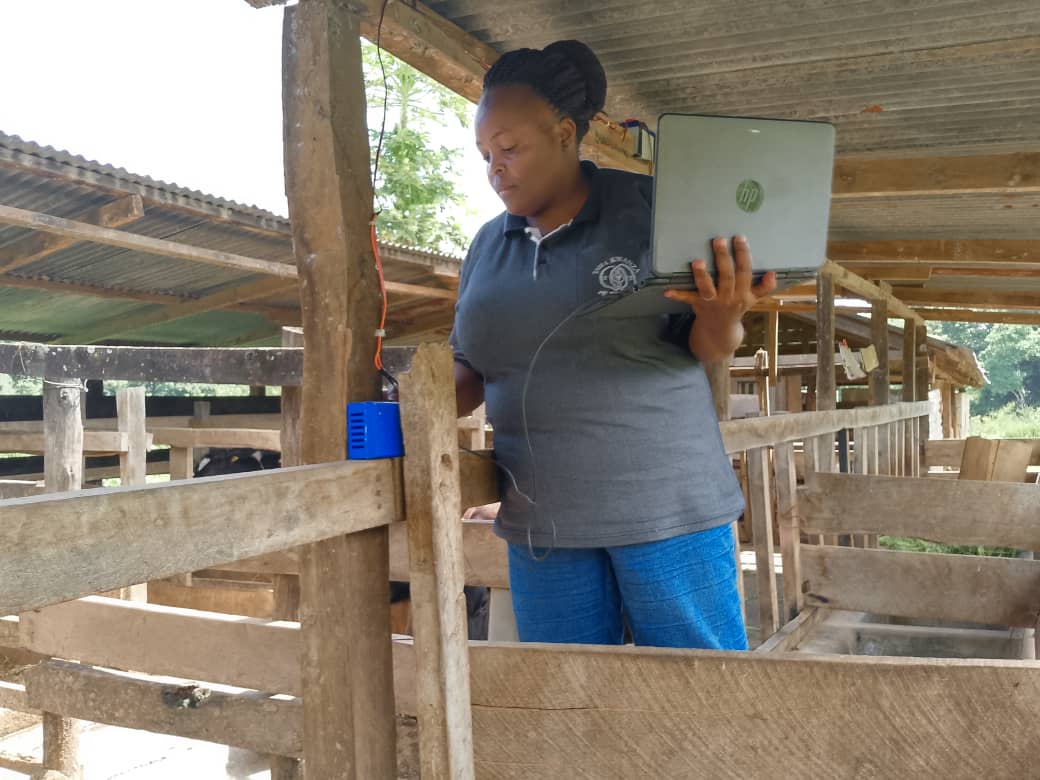
 Sensing hardware used by Erica in her research.
Could you talk about the methodology you used in this work and outline your main results?
To monitor and forecast emissions, we collected over 59,000 data points from the Tanzania Livestock Research Institute in Mbeya, capturing time-series data on methane, carbon dioxide, nitrous oxide, temperature, and humidity using ground-based sensors. The data were then pre-processed and aggregated to reduce noise. We developed models using LSTM, BiLSTM, and GRU architectures, evaluated based on metrics like Mean Squared Error, Mean Absolute Error, RMSE, and R². Each model performed differently across gases, with the GRU model excelling in methane prediction, while the LSTM model showed strength in forecasting carbon dioxide and nitrous oxide. These results are promising for implementing real-time monitoring and intervention strategies.
Do you have plans for further research on this topic?
Yes, I plan to refine the model by incorporating additional parameters, such as diet composition, livestock genetics, and advanced feature engineering techniques. Feature engineering will involve adding interaction terms between temperature and humidity, lag features, rolling averages, and time-of-day indicators enhancing model accuracy. Another exciting avenue is deploying the model through mobile and web applications, allowing real-time monitoring and emissions alerts for farmers. I also hope to expand my research to cover diverse farming practices and regional variations, aiming to build a robust, adaptable tool for sustainable livestock management across various contexts.
How was your experience attending the Deep Learning Indaba, and specifically the AfriClimate AI workshop?
Attending the Deep Learning Indaba, especially the AfriClimate AI workshop, was an inspiring experience. It provided a unique platform to share my work and engage with other researchers focused on using AI to address climate challenges. The workshop emphasized the potential for collective action against climate change and reinforced the idea that “together, we can all act on climate change.” Winning the prize for my research was a humbling and motivating experience, and connecting with like-minded individuals who are passionate about this cause was incredibly motivating.
Finally, could you tell us an interesting (non-AI-related) fact about you?
I am also in integrating advanced technologies like Internet of things (IoT) and remote sensing to address real-world challenges, website design, and development.
About Erica
Erica Kimei is a PhD candidate at the Nelson Mandela African Institution of Science and Technology in Tanzania (NM-AIST). She holds a Master’s degree in Information and Communication Science and Engineering with a specialization in Information Technology Systems Development and Management from NM-AIST, as well as a Bachelor’s degree in Information Technology from the Stefano Moshi Memorial University College (SMMUCo). In addition to her studies, she works as an assistant lecturer at the National Institute of Transport.
Erica’s research interests include artificial intelligence, machine learning, information systems, mobile apps, and the Internet of things, with a focus on using these technologies to address societal and industrial challenges. Her current PhD research aims to leverage machine learning and remote sensing technology to detect, quantify, and forecast greenhouse gas emissions from livestock farms. She has been awarded a partial scholarship for the 2022/2023 and 2023/2024 academic years from the AI4D (Artificial Intelligence for Development) Africa’s Anglophone Multidisciplinary Research Lab Ph.D. program.
In 2024, Erica won a prize at the AfriClimate AI Workshop, part of the Deep Learning Indaba, for her work titled “Time Series Machine Learning Model for Monitoring and Forecasting Greenhouse Gas Emissions from Ruminant Livestock.” This achievement highlights her commitment to addressing climate change through innovative technological solutions.
tags: AfriClimate AI

AUAI is supported by:








