ΑΙhub.org
Watch the panel discussions and invited talks from #AAAI20
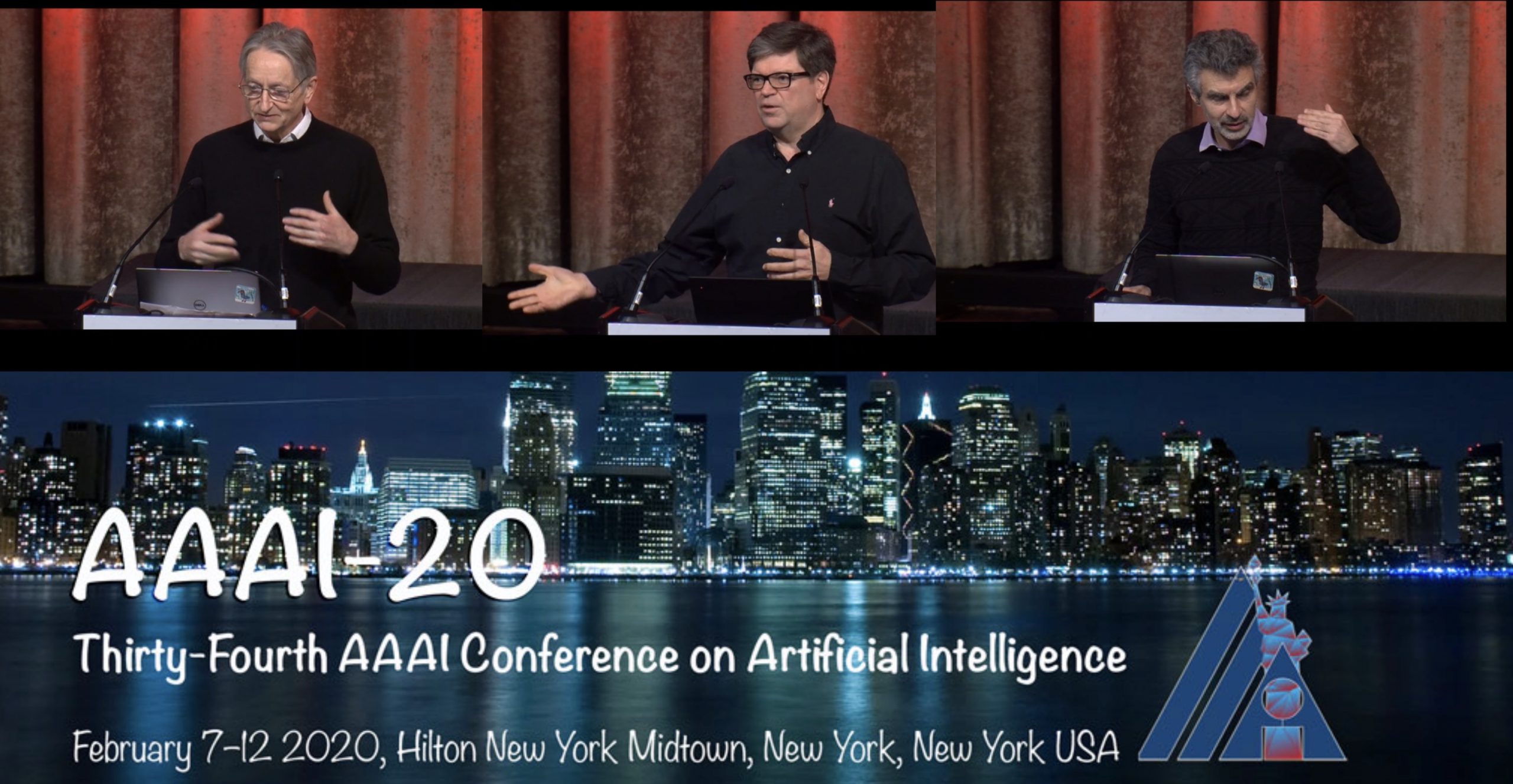
If you weren’t able to attend the AAAI20 conference in New York you can catch some of the invited talks and panel sessions via the livestreamed videos. Featured events include Yolande Gil’s presidential address and the Turing Award winners’ session.
Yolande Gil’s presidential address, where she asks: “Will AI write the scientific papers of the future?”:
The Turing Award winners’ session, featuring Yoshia Bengio, Yann LeCun and Geoffrey Hinton:
You can also watch the AI history panel. This was a much anticipated event, featuring none other than chess Grandmaster Garry Kasparov, and didn’t disappoint. The other panellists were Murray Campbell (IBM), Michael Bowling (University of Alberta), Hiroaki Kitano (Sony) and David Silver (Deepmind and University College London). They discussed the technology they developed, challenges they encountered, and how building expert game-playing machines furthers progress in AI techniques that can be applied to real-world problems.
Monday evening saw a light-hearted debate with the proposition: “Academic AI researchers should focus their attention on research problems that are not of immediate interest to industry”.
Based on a small sample size, here are the before and after votes (from Kevin Leyton-Brown’s Twitter poll):
Before
Time for the 2020 AAAI Debate! "Academic AI researchers should focus their attention on research problems that are not of immediate interest to industry." Vote here; then we'll vote again after 7PM to see if the debate changed any minds. #AAAI20debate #AAAI20
— Kevin Leyton-Brown (@k_leyton_brown) February 10, 2020
After
Part two of the 2020 AAAI Debate: "Academic AI researchers should focus their attention on research problems that are not of immediate interest to industry." Vote here; we'll compare to the first vote to see if the debate changed any minds. #AAAI20debate #AAAI20
— Kevin Leyton-Brown (@k_leyton_brown) February 11, 2020
You can find all of the videoed talks and sessions here.
tags: AAAI, AAAI2020

AUAI is supported by: