
ΑΙhub.org
How machine learning can help to future-proof clinical trials in the era of COVID-19
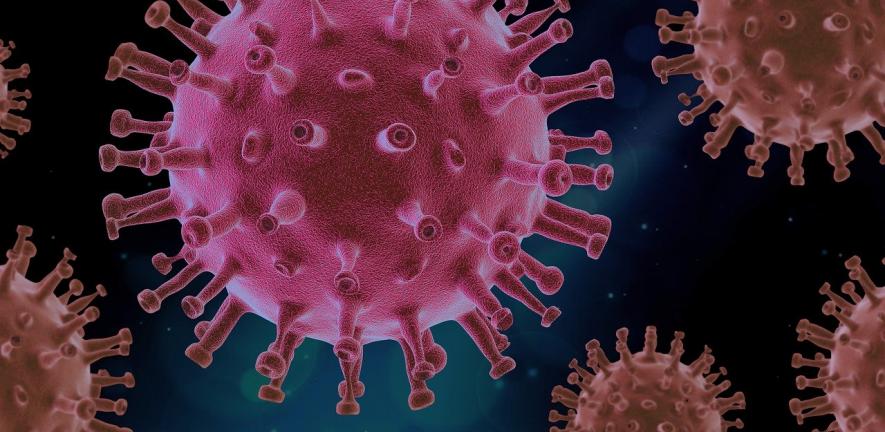
The COVID-19 pandemic is the greatest global healthcare crisis of our generation, presenting enormous challenges to medical research, including clinical trials. Advances in machine learning are providing an opportunity to adapt clinical trials and lay the groundwork for smarter, faster and more flexible clinical trials in the future.
In an article published in Statistics in Biopharmaceutical Research, an international collaboration of data scientists and pharmaceutical industry experts – led by the Director of the Cambridge Centre for AI in Medicine, Professor Mihaela van der Schaar of the University of Cambridge – describe the impact that COVID-19 is having on clinical trials, and reveal how the latest machine learning (ML) approaches can help to overcome challenges that the pandemic presents.
It is my hope that machine learning will not only improve the execution and evaluation of clinical trials in the COVID-19 era, but also well beyond that
Mihaela van der Schaar
The paper covers three areas of clinical trials in which ML can make contributions: in trials for repurposing drugs to treat COVID-19, trials for new drugs to treat COVID-19, and ongoing clinical trials for drugs unrelated to COVID-19.
The team, which includes scientists from pharmaceutical companies such as Novartis, notes that ‘the pandemic provides an opportunity to apply novel approaches that can be used in this challenging situation.’ They highlight the latest advances in reinforcement learning, causal inference and Bayesian approaches applied to clinical trial data.
The researchers considered it important to present the current state of the art in ML and to signpost how they used ML not only to address challenges presented by COVID-19 but also to take clinical trials in general to the next level, making them more efficient, robust and flexible.
In their paper, the researchers say that COVID-19 is:
- Reducing the ability/willingness of trial subjects and staff to access clinical sites, disrupting timely data collection or necessitating a move to virtual data collection.
- In some situations, causing delays or halting of clinical trials altogether.
- Revealing how the standard approach to clinical trials – time-consuming and inflexible randomised controlled trials in distinct trial phases – is inefficient, and not sufficient in a crisis such as this.
However, they say that machine learning can:
- Support in the creation of ‘virtual’ control groups. By integrating data across hospitals, data-driven methods can identify patients who have received standard treatments but are otherwise similar to patients who have received experimental treatments.
- Extract knowledge from the data of clinical trials suspended as a result of the pandemic to adjust design elements such as recruitment plans, sample sizes and treatment allocations.
- Improve the design, execution and evaluation of large, adaptive clinical trials for evaluating repurposed medications for COVID-19. Trials such as Solidarity (WHO 2020) and RECOVERY (Oxford 2020), which are underway, recruit patients at a multitude of sites randomly assigned across available treatment arms.
- Play an important role in finding patterns and signatures in COVID-19’s biomolecular behaviour, facilitating the identification and repurposing of existing drugs, as well as validating, in silico, whether new medicines may be effective.
- Exploit the large body of data generated by the experimental and compassionate use of drugs to treat COVID-19 to select future drug target for further clinical trials. ML methods for causal inference from observational data are especially well-suited to this task.
- Break the multi-phase paradigm of standard RCTs and convert the trial process into a more efficient, continuous and adaptive trial-collection-retrial loop. Use ML methodologies to learn simultaneously about toxicity and efficacy of a new drug, reducing learning time, making it particularly useful for time-sensitive clinical trials of COVID-19 treatments.
“The coronavirus pandemic represents the greatest global healthcare challenge of our generation,” said van der Schaar. “Now, and in the immediate future, the need is to identify, approve and distribute treatments and vaccines for COVID-19. Our recent work in machine learning for clinical trials has shown enormous promise. And while many of the technical issues discussed in our paper are particularly acute in the context of a pandemic, they are also highly relevant to ongoing clinical practice. It is my hope that machine learning will not only improve the execution and evaluation of clinical trials in the COVID-19 era, but also well beyond that.”
“Artificial intelligence is already making significant impact in several areas of medicine,” said co-author Professor Frank Bretz from Novartis. “Machine learning algorithms have proven to be equivalent or superior to expert clinicians in interpreting X-ray and MRI images and slides, for example. This new work aims to bridge the gap between the machine learning community and the data scientists who are engaged in clinical trials that are affected by or related to COVID-19. Adopting these new methods is critical to the pharmaceutical industry well beyond the current pandemic. What we learn in this effort will yield benefits that affect the entire future course of drug development and change the lives of patients across the world.”
Reference:
William R. Zame et al. Machine Learning for Clinical Trials in the Era of COVID-19 Statistics in Biopharmaceutical Research (2020).

AUAI is supported by:








