ΑΙhub.org
Summary of the #IJCAI2024 doctoral consortium
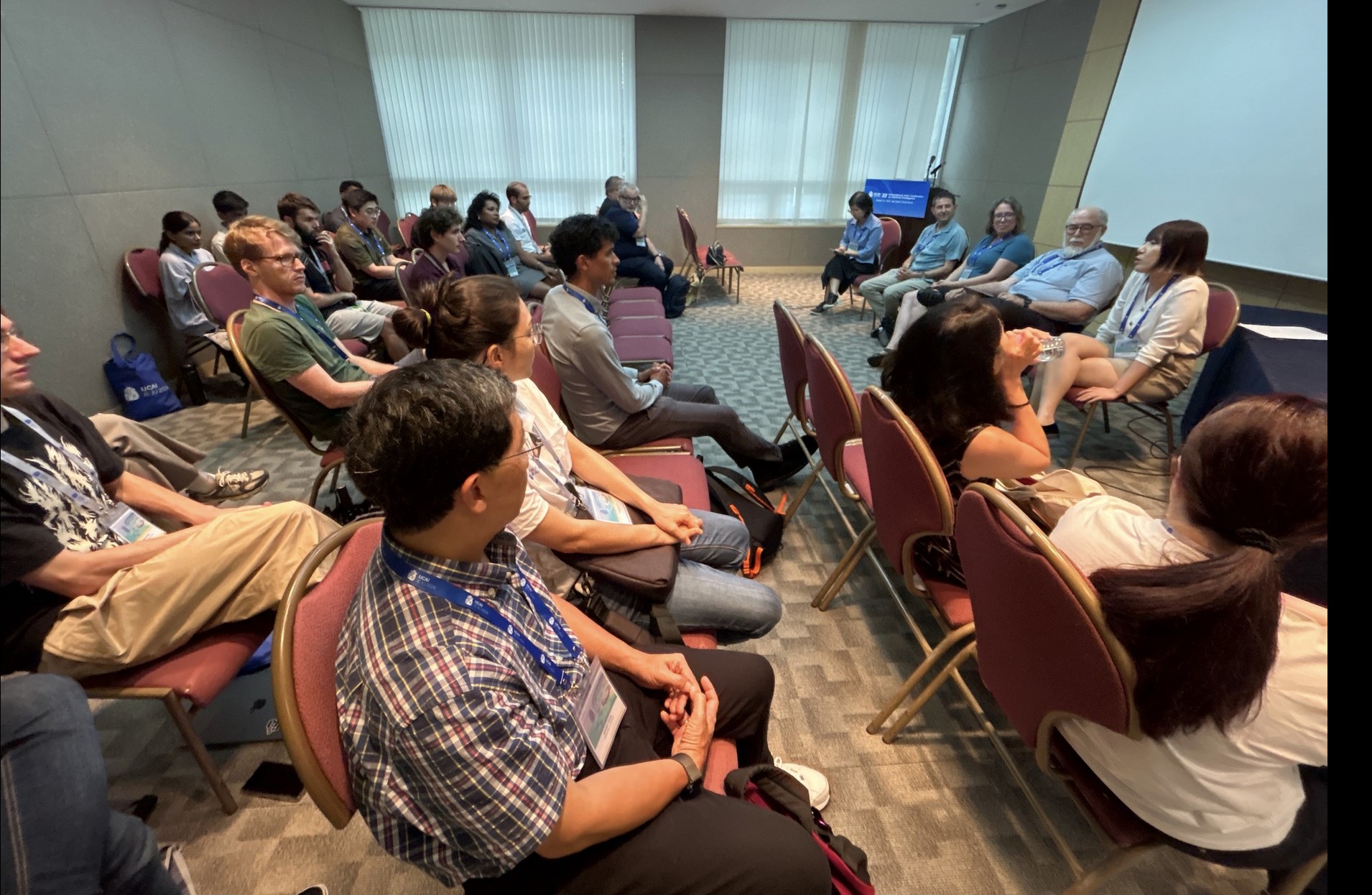 The career panel session.
We successfully hosted the doctoral consortium event on August 5th, followed by a poster session on August 6th, at the International Joint Conference on Artificial Intelligence (IJCAI 2024) in Jeju Island, South Korea. We received over a hundred submissions from participants across six continents. Of the eligible submissions, the acceptance rate was 26.54%, with 17 abstracts selected for presentations, 16 of which were delivered during the event. We were fortunate to have the expertise of 65 program committee members from academia, industry, and government, as well as 17 mentors who generously agreed to hold one-on-one meetings with the participants.
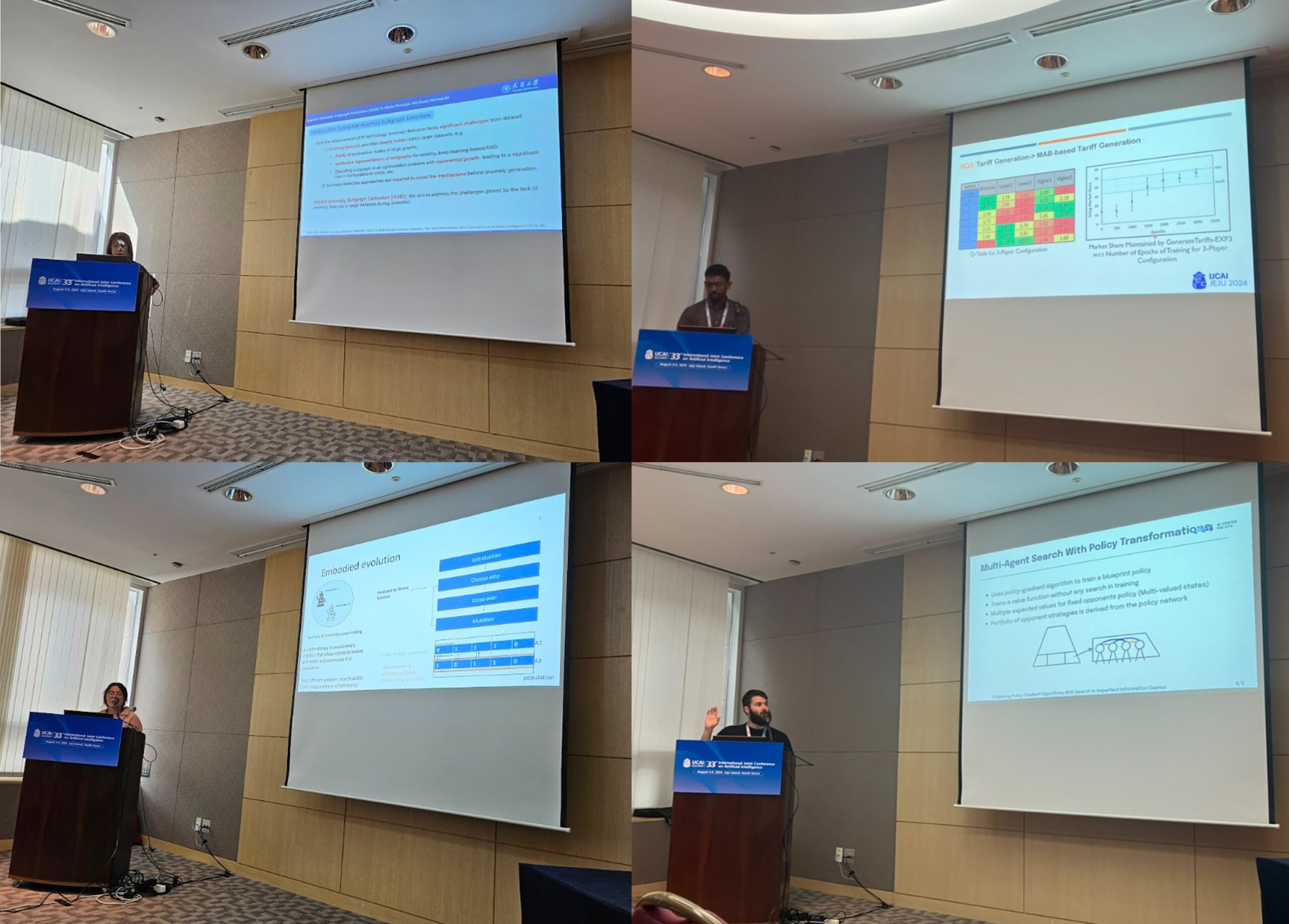 Some of the participants presenting their research.
The program showcased outstanding student presentations covering a broad spectrum of significant AI topics, including the role of background knowledge and causal learning in deep learning, neurosymbolic language models, contrastive learning, multiagent teamwork, decision-focused learning, and computational social choice.
We were also inspired by an invited talk from Professor Michael Wooldridge (University of Oxford) on “Writing for Research.” He emphasized the importance of understanding what to say, creating a narrative flow, and the drafting process, all delivered with an engaging Q&A session.
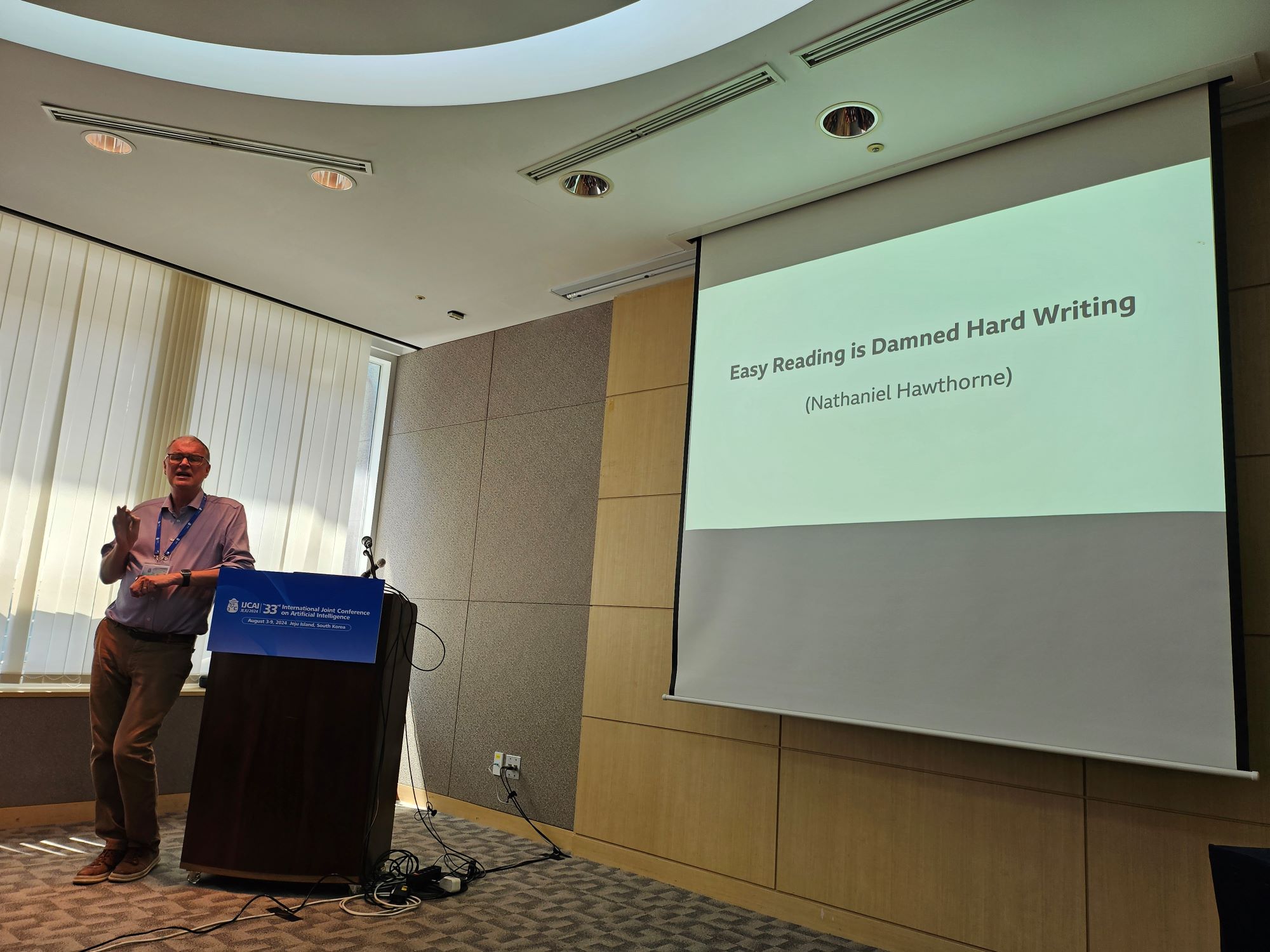 Michael Wooldridge giving his invited talk on “Writing for Research.”
Following this, we had a dynamic career panel, a cherished tradition of the doctoral consortium. The panel featured esteemed scholars such as Professor Ken Forbus (Northwestern University), Professor Kate Larson (University of Waterloo), Professor Peter Stone (University of Texas at Austin), and Professor Caren Han (The University of Melbourne). The discussion covered a range of topics, including common mistakes in early career presentations, transitioning between different AI research areas, successful grant writing, managing interdisciplinary research in AI, and time management.
Both the invited talk and career panel provided students with an excellent opportunity to ask questions about their future careers and other aspects of their graduate and post-graduate journeys.
You can see the program in more detail here.
tags: IJCAI, IJCAI2024, quick read


AIhub is supported by: