
ΑΙhub.org
IJCAI-ECAI 2026 tutorial / workshop round-up part 1
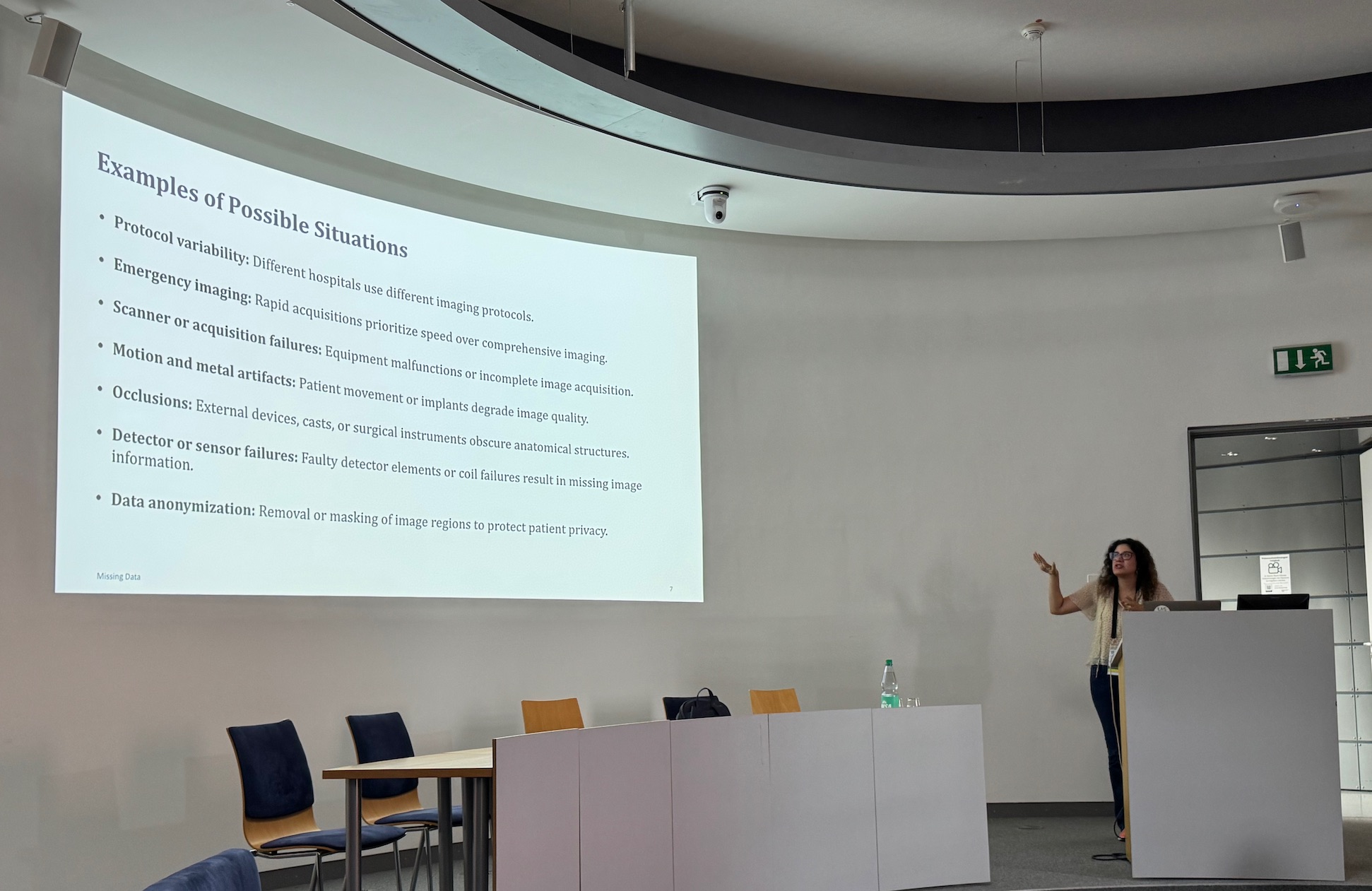
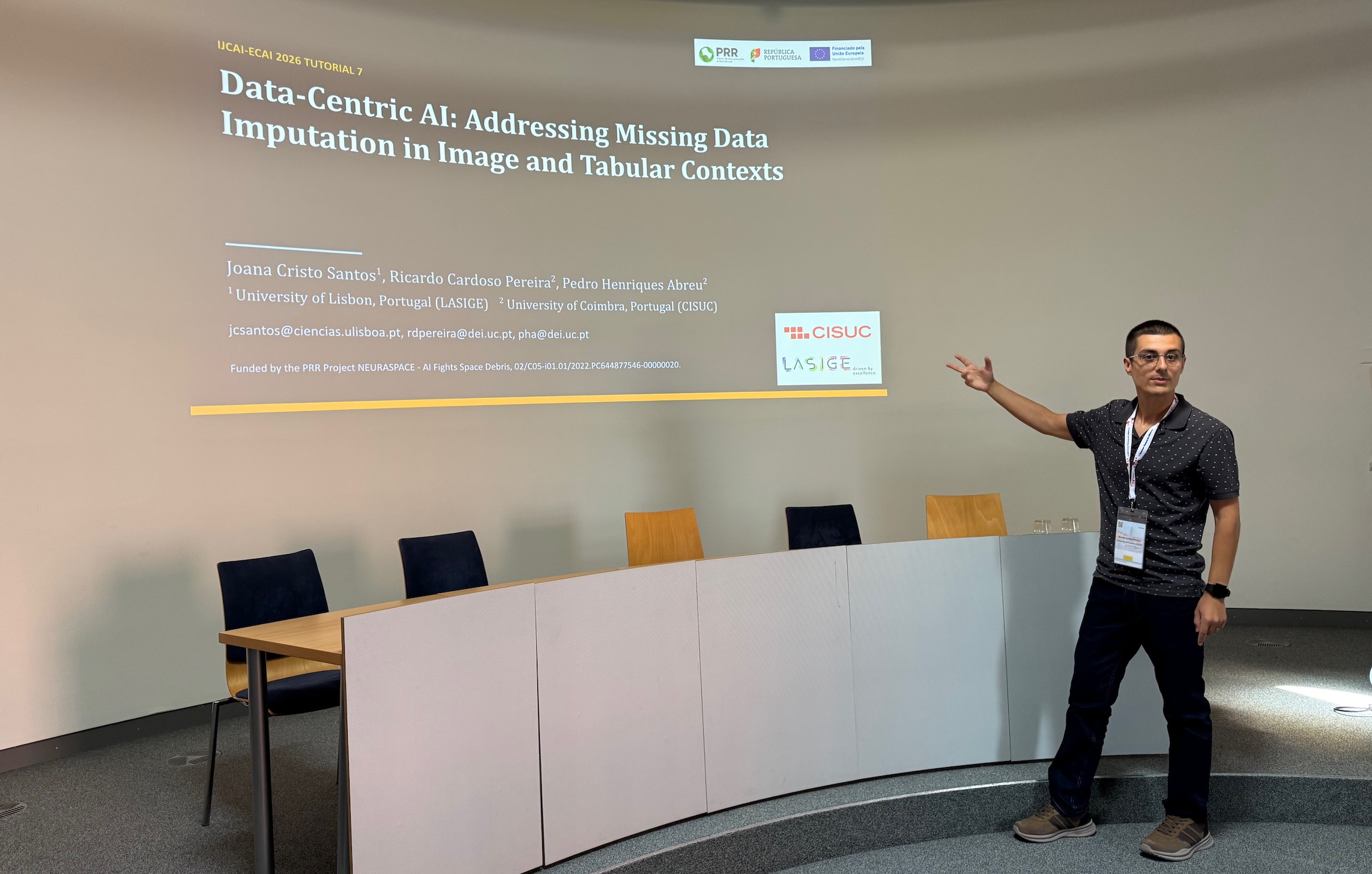
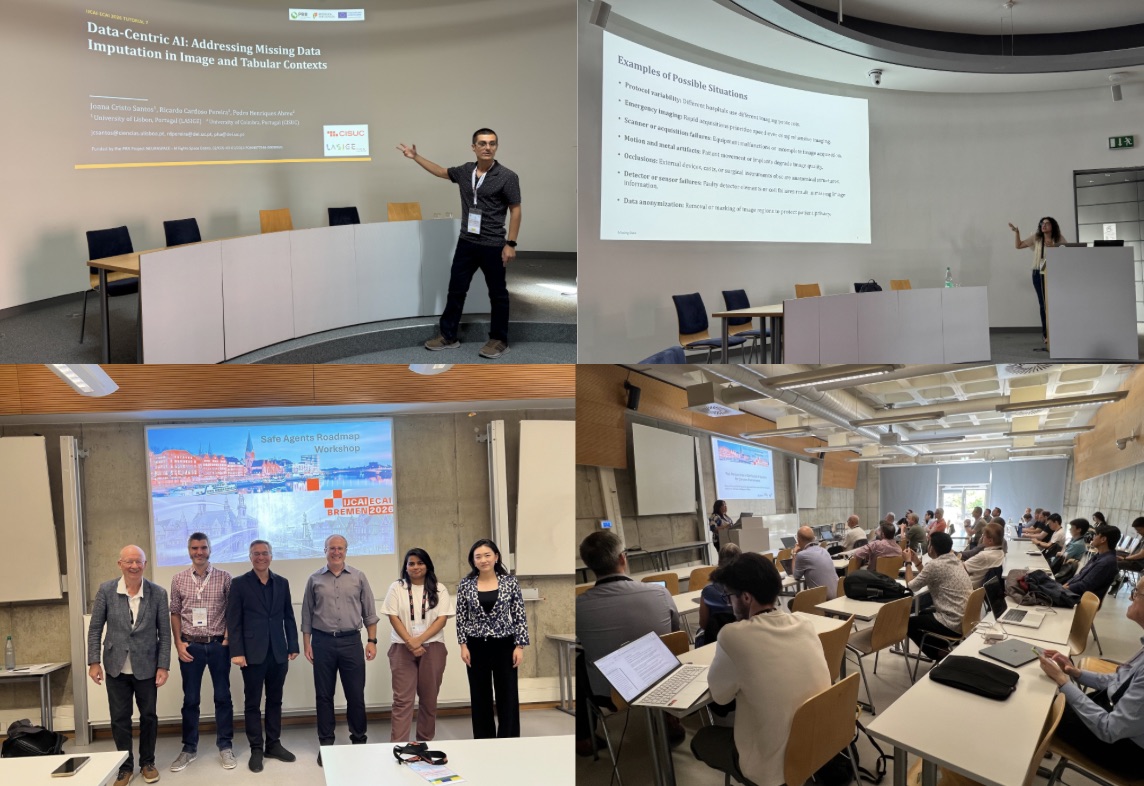 Top two images from the tutorial “Data centric AI: addressing missing data imputation in image and tabular contexts”, bottom two images from the workshop “Safe agentic AI framework and ecosystem roadmapping (SAFER)”.
In this summary article, organisers of a tutorial and a workshop at IJCAI-ECAI 2026 pick their key takeaways from their respective sessions.
Tutorial: Data centric AI: addressing missing data imputation in image and tabular contexts
By Ricardo Cardoso Pereira
Presenters: Joana Cristo dos Santos, Ricardo Cardoso Pereira, and Pedro Henriques Abreu.
This tutorial was a practical, hands-on tutorial on the theory and methods for handling missing data in tabular and imaging settings, from statistical baselines to autoencoders and generative adversarial networks.
Three key takeaways from the tutorial:
- The missingness mechanism is more important than the choice of imputation method. MCAR, MAR, and MNAR settings call for different treatment, and MNAR, the most challenging mechanism, is the one that most methods do not handle well.
- Deep generative imputation is not always better. Participants tested autoencoders and GANs and compared them against simple statistical baselines, which showed that the added complexity only pays off under certain conditions. Moreover, the evaluation should consider both downstream predictive performance and reconstruction error.
- Tabular and imaging missingness are the same problem with different structures. Applying convolutional autoencoders, GANs, or simpler classical methods to reconstruct corrupted patches in healthcare images made clear how much predictive signal is lost when images have missing pixels.
All the details and materials of the tutorial are available here.
Workshop: Safe agentic AI framework and ecosystem roadmapping (SAFER)
By Mark Maybury
Workshop organisers: Mark Maybury (chair), Wolfgang Wahlster, Josephine Liu, Francesca Rossi, and Mihai Christodorescu.
On Sunday August 16, several dozen leading researchers from across the globe joined together in Bremen, Germany at IJCAI-ECAI 2026 for the Safe Agentic AI Framework and Ecosystem Roadmapping (SAFER) Workshop to create a trustworthy agentic AI roadmap. As AI models increase in capability, agency, and autonomy, their impact on individuals and society grows. This interdisciplinary workshop attracted researchers, practitioners, policy makers and students from diverse fields including computer science, sociology, philosophy, and law to collaboratively create a roadmap considering the scientific and technical, security, economic, environmental, regulatory, social and ethical implications of Agentic AI to advance responsible if not beneficent agents and their enabling ecosystem. Critical lanes of necessary progress over the next decade were detailed during the workshop and shaped into an integrated three lane roadmap:
- Confidentiality: One lane in the roadmap recognizes the need to fill confidentiality gaps in areas including privacy leakage, intellectual property theft, model inversion, and copyright violations. Addressing agent confidentiality requires advances in agent identity, secure interagent access, and differential AI privacy to move toward more controllable agents.
- Integrity and availability: A second lane of progress focuses on gaps in integrity and availability including jailbreaking, persuasion, bias, hallucination and model and agent drift. Methods identified to address these vulnerabilities include grounding and alignment, explainable AI, bounded execution and formal methods. Research areas such as neurosymbolic models and verifiable and validated models and agents suggest a future with more robust multiagent collaboration.
- Governance and human-agent interaction: A third lane of progress recognizes gaps in governance and human-agent interaction such as the need for agent and inter agent standards (of communication, performance and conduct), runtime controls, methods for delegation of authority and protection of human psychology and cognition. Research is needed to advance more beneficent agents including computational fairness, sustainability, and multiagent conduct and control.
The workshop participants envisioned a future in which agents were safe (did no harm to others), secure (stop others from harming them) and sovereign (operating locally where appropriate). A collection of extended papers and invited chapters including theoretical and practical guidance to ensure the safety and security and sovereignty of agents is in preparation to be published in 2027.
Following the workshop, a public panel open to the public was held at the University of Bremen, in which the results of the workshop were shared by the organizers and questions were fielded from a sold out auditorium. The audience expressed both excitement about the potential for societal benefits from artificial intelligence simultaneously with serious concern for risks and potential dangers. This open engagement underscored the importance for the scientific community to advance responsible AI to ensure safety and security for all.
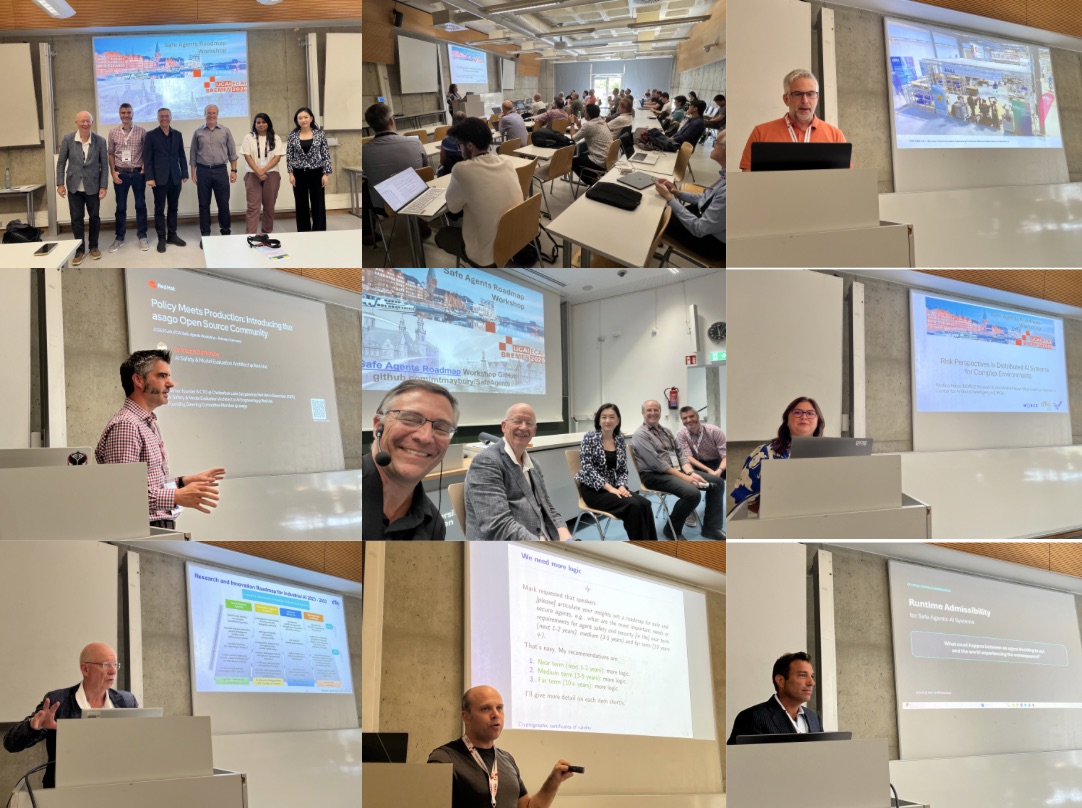 Photos from the workshop. First row, left to right: The workshop organisers, workshop participants, Daniel Porta (DFKI). Second row: Stuart Battersby (Red Hat), public workshop panel, Rodica Mihai (NORCE Norwegian Research Centre). Third row: Wolfgang Wahlster (DFKI founder), Murdoch Gabbay (Heriot-Watt University), Thorsten Bernasco (Aramvolt).
tags: ECAI, ECAI2026, IJCAI, IJCAI2026

AUAI is supported by:








