
ΑΙhub.org
Australia’s vast savannas are changing, and AI is showing us how
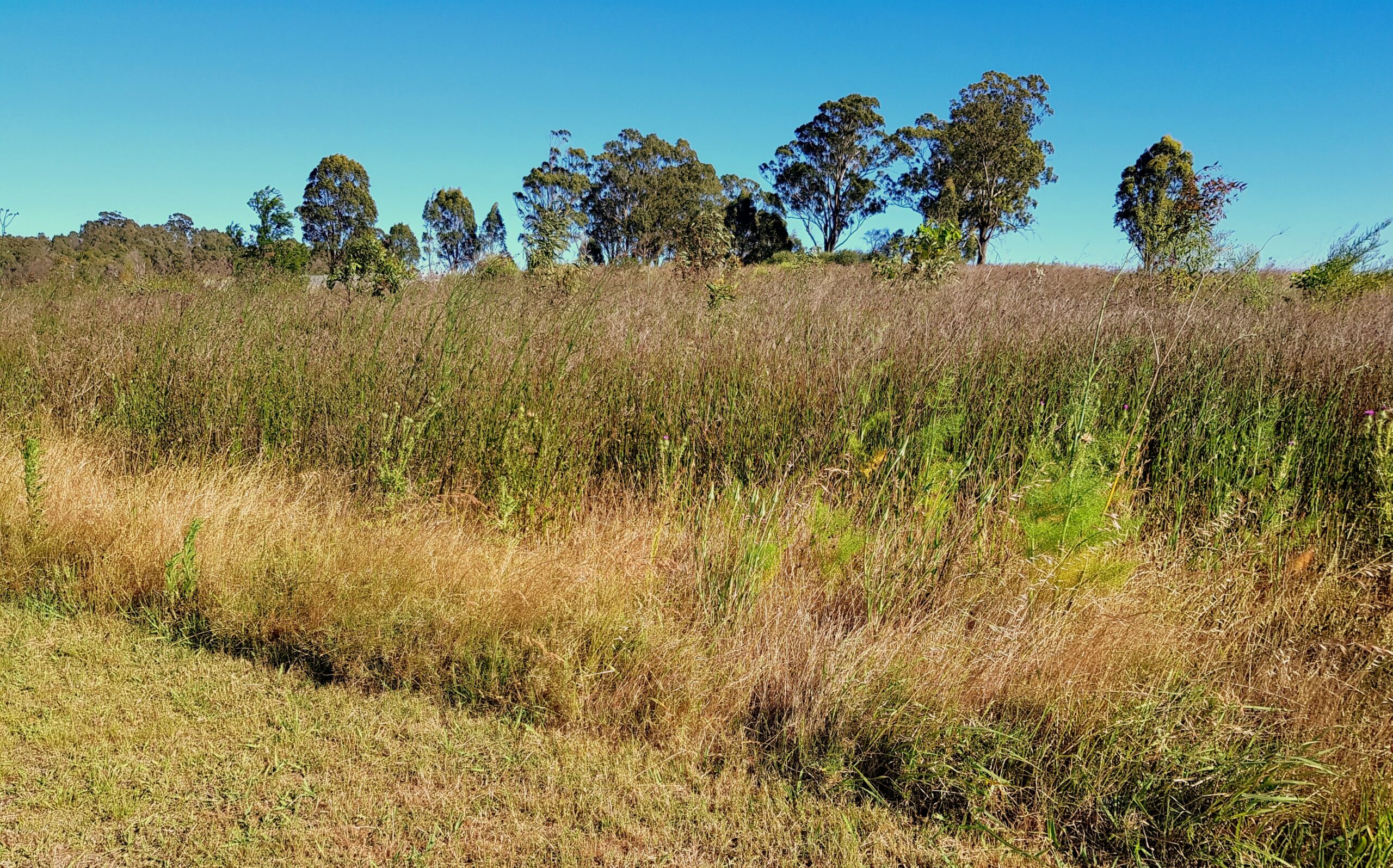 A grassy savannah style woodland in Western Sydney, NSW. By Qumarchi, CC BY-SA 4.0.
By Dr Jessie Wells, Dr Robert Turnbull and Dr Attila Balogh
Australia has the largest intact savannas on Earth. Savannas are an ever-changing mosaic of ecosystems – from the sparse grasslands to dense woodlands, forests and wetlands.
They stretch from Cape York Peninsula in Queensland to the Kimberley in Western Australia, making up almost 25 per cent of Australia’s landmass.
Anticipating how savannas will change in the years ahead is crucial to help inform our decisions about land management and policy that reflect the region’s cultural, environmental and economic values.
To do this, our team created an artificial intelligence (AI) tool we’ve called Themeda, a name inspired by Themeda triandra, an iconic Australian native species known as ‘kangaroo grass’ (as well as an acronym for Thematic Mapping of Ecosystem Dynamics).
Themeda is trained on 33 years of satellite observations across northern Australia, drawing on a wide range of information – including fire scars, elevation, temperature, rainfall and soils.
From this data, it can predict the changing land cover for every 25 by 25 metre patch of Australia’s 1.5 million square kilometre northern savanna – year by year.
This is like creating a personalised prediction for every house-lot-sized patch of land across an area twice the size of Texas – for every year.
Forecasting land cover change means we can anticipate risks like biodiversity loss, erosion and degraded grazing lands – not just react to them.
By learning from the past and projecting into the future with rainfall and temperature forecasts, Themeda can show, for instance, whether low rainfall might push grasslands and wetlands from dense cover to bare ground – harming water quality downstream – or whether wetter years might increase grassland cover or expand woody vegetation.
These forecasts also help fire managers anticipate fuel loads, guiding cool-season burns that reduce the risk of catastrophic wildfires.
By linking ecological dynamics directly to practical decisions, Themeda gives us a new way to support biodiversity conservation, sustainable grazing and prevent habitat loss.
Deep learning for forecasting
We used deep learning, a branch of AI that can learn from huge amounts of data to discover patterns and make predictions.
A deep learning model has millions of parameters which function like ‘dials’ that it adjusts to improve its forecasts.
For each of the 33 years in our training dataset, the model tried to predict the land cover for the following year.
Each prediction was checked against reality, and the dials were nudged to make the model a little more accurate next time. After many rounds across millions of patches of land, the model gradually learned how to forecast the future.
Deep learning works by passing information through many ‘layers’.

The design of these layers – or the model’s architecture – determines how well it can recognise the patterns needed for accurate predictions.
We tested two architectures: a standard design in wide use, alongside a new one we developed to better capture both local details and regional patterns across space and time.
Both performed well, but our new architecture consistently came out ahead. Our hope is that it can be applied to other ecological datasets where space and time interact.
But our model’s output is not just a single answer; it’s a probability for each type of land cover in every 25 by 25 metre square of the landscape.
That means we can map the ‘most likely’ land cover in a given year – or look at the chances of more extreme shifts, like grasslands receding or woody vegetation spreading, which can help anticipate risks of erosion or habitat loss.
From ecological forecasting to decision making
Ultimately, our work on Themeda aims to improve decision-making for dynamic and rapidly changing environments.
It offers a flexible and versatile approach for ecological forecasting. And it’s adaptable to diverse ecosystems and regions, via its open-source pre-processing pipeline and software package.
Our next projects aim to use Themeda’s predictions as inputs for modelling ecosystem services under scenarios for land and fire management as well as climate change.
For example, we can map erosion and sediment movement in streams, so that grazing management and restoration efforts can focus on mitigating accelerated erosion.
From there, we’ll use Themeda’s predictions for scenario modelling of future land use and management.
Large areas of Australia’s savannas are currently designated as grazing lands, and ecological forecasting can enable us to explore management strategies for each part of the landscape.
This could include restoration, fire management and grazing practices – assessing their consequences and trade-offs for production, biodiversity and carbon storage.
Beyond its immediate applications, Themeda opens new possibilities for advancing data-driven environmental monitoring and land change modelling.
Its integration of deep learning with remote sensing can be extended to detect ecological trends, assess the impacts of extreme climate events and improve forecasts of habitat shifts.
The authors wish to acknowledge their colleagues – Dr Damien Mannion, Kabir Manandhar Shrestha and Dr Rebecca Runting, who co-authored the research on which this article is based.

AUAI is supported by:








