
ΑΙhub.org
AI-assisted camera system to monitor seabird behaviour
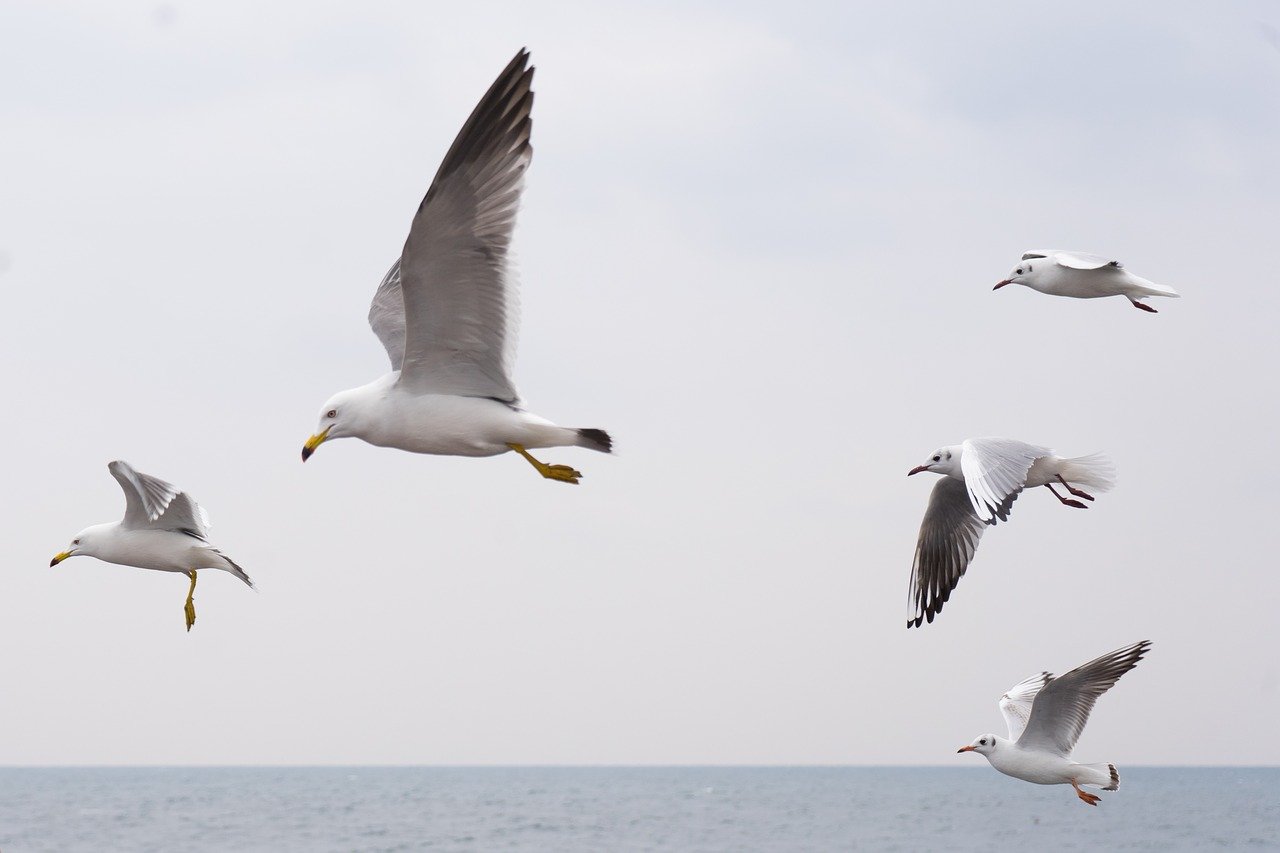
Researchers from Osaka University have combined bio-logging cameras with a machine learning algorithm to help them to shed light on hidden aspects of the lives of seabird species, including gulls and shearwaters.
Bio-logging is a technique involving the mounting of small lightweight video cameras and/or other data-gathering devices onto the bodies of wild animals. These systems allow researchers to observe various aspects of animals’ lives, such as behaviours and social interactions, with minimal disturbance.
However, the considerable battery life required for these high-cost bio-logging systems has proved limiting so far. “Since bio-loggers attached to small animals have to be small and lightweight, they have short runtimes and it was therefore difficult to record interesting infrequent behaviours,” explains study corresponding author Takuya Maekawa.
By using AI-assisted bio-loggers, researchers can use low-cost sensors to automatically detect behaviours of interest in real time, allowing them to conditionally activate high-cost (i.e., resource-intensive) sensors to target those behaviours.
The researchers have put together this video to explain how their system works:
The researchers used a random forest classifier algorithm to determine when to switch on the high-cost sensors. Their model uses accelerometer-based features, which can be used to detect the body movements of the animals with only a small (e.g., 1 second) delay between when data collection begins and when behaviours can first be detected. Features from accelerometers were used to train the model to detect whether the birds were flying, stationary or foraging.
You can see three examples of the camera in action below:
Read the research in full
Machine learning enables improved runtime and precision for bio-loggers on seabirds
Joseph Korpela, Hirokazu Suzuki, Sakiko Matsumoto, Yuichi Mizutani, Masaki Samejima, Takuya Maekawa, Junichi Nakai & Ken Yoda

AUAI is supported by:








