
ΑΙhub.org
Tackling climate change with AI
 By Jessica Montgomery, Senior Policy Adviser
As concerns about the impact of climate change (PDF) grow, so too is the debate about the environmental impact of artificial intelligence (AI) technologies.
At 2019’s International Conference on Machine Learning, leading researchers explored how AI technologies can help tackle climate change. New applications of AI across sectors could help reduce carbon emissions, while new research might offer ways of creating more energy-efficient AI.
This blogpost summarises a few of the research directions highlighted at the conference.
Reducing emissions from current systems
Carbon emissions from energy, transport, and cities could be reduced if energy-intensive processes were more effective. By analysing data and making recommendations to optimise such systems, AI could help reduce energy use across industry sectors.
Examples include:
- Wind turbines
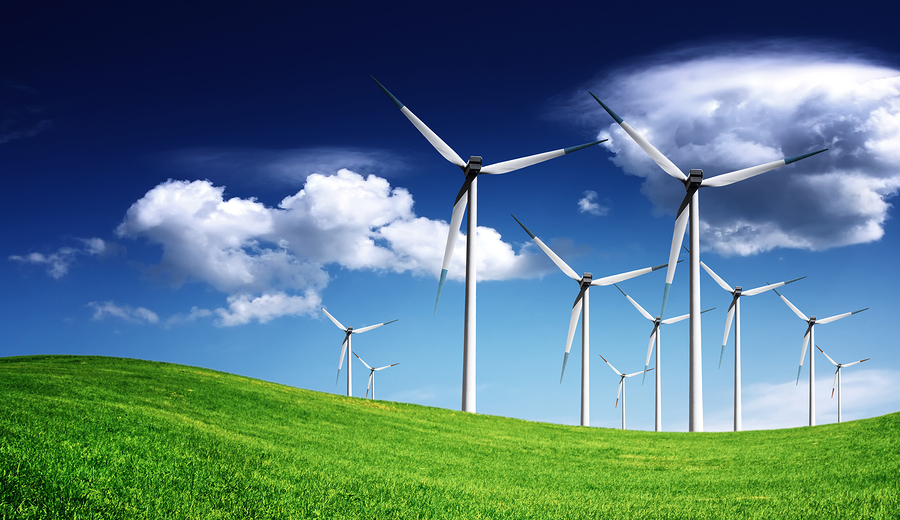
While falling turbine costs are helping to spur the widespread adoption of wind power, the unpredictability of this renewable energy source continues to limit the extent of its use. Analysts rely on predictions of likely power outputs from these turbines in order to manage their use, and AI could help make these predictions more accurate. By analysing weather forecasts and data about past turbine performance, one AI system from DeepMind is able to predict likely wind power output 36 hours ahead. This allows those managing the grid to make more use of renewable energy; as wind power output becomes more predictable, it becomes more valuable. - Energy consumption
Energy consumption in buildings is responsible for a quarter of today’s global energy-related emissions. Intelligent and automated systems could help reduce the carbon footprint of buildings by identifying opportunities for efficiency – adjusting heating and lighting according to the number of people in a room, for example – while smart meters and intelligent control systems could support better integration of low carbon energy into the electricity grid mix, with systems adapting to usage patterns. Insights from AI-enabled analysis can also support more effective urban planning, for example through district-level heating and cooling systems, which can reduce overall local energy consumption (PDF). - Supply chains
For many businesses, the processes of transporting, storing, and cooling goods in the supply chain is a significant source of carbon emissions. By improving the accuracy of demand forecasting, AI could help businesses more accurately predict how many goods need to be transported, and to where. More accurate forecasts could reduce the amount of waste from these systems, and the overall requirements for shipping and storage.
Increasing resilience to change
AI could also provide insights to help develop adaption strategies that could help increase resilience to climate change, for example:
- By helping produce more accurate forecasts or predictions of extreme events, by supporting advanced approaches to modelling local weather systems
- By analysing data to inform biodiversity tracking and management processes, which can build better understandings of the dynamics of pests or disease, as changes to environmental conditions influence their distribution and impacts
- By supporting scientific discovery in materials science, to more effectively capture and store energy (in batteries, for example)
- By helping manage land use, monitoring greenhouse gas emissions from agriculture practices, supporting precision agriculture techniques, and better monitoring and managing forests
What about the environmental impact of AI?
AI methods have made impressive advances in recent years, reaching or exceeding human-level performance at some tasks. However, many of these advances have relied on training larger models on bigger data sets – such approaches require a lot of computer power, which in turn requires more energy.
A recent study from researchers at the University of Massachusetts Amherst looked at the energy required to train natural language processing systems – the approach to AI in which computers learn how to analyse human language. They measured the power requirements for some of the most successful models in the field, and found that training these to publication-ready standard could result in production of as much carbon as the full lifetime running of five cars.
But new research is also pointing to ways of creating more energy-efficient AI, offering routes to reducing its climate impact. For example:
- New approaches to tuning neural networks – the process of optimising a model performance that can be particularly energy-intensive – are making the model development process more efficient
- AI systems are helping make the cooling of data centres more efficient, so the systems to store and manage data require less energy
- Advances in hardware design could make the process of running AI software more energy efficient
Further work across these areas, and more, could develop more effective AI methods, while also reducing their energy-intensity.
Where next?
Many of these technologies have been available for some time, but further work is needed to help ensure they are widely adopted. By advancing research in key areas, developing novel applications, and supporting research collaborations across sectors and disciplines, AI researchers can play an important role in harnessing the power of AI to help tackle climate change.
This blog post summarises just a few of the points at the ICML 2019 workshop on tackling climate change with machine learning. The paper published by workshop leaders gives much more detail and many more examples of the ways in which AI could contribute to reducing carbon emissions and supporting adaptation strategies.

AUAI is supported by: