ΑΙhub.org
Interview with AAAI Fellow Sanmay Das: multiagent systems
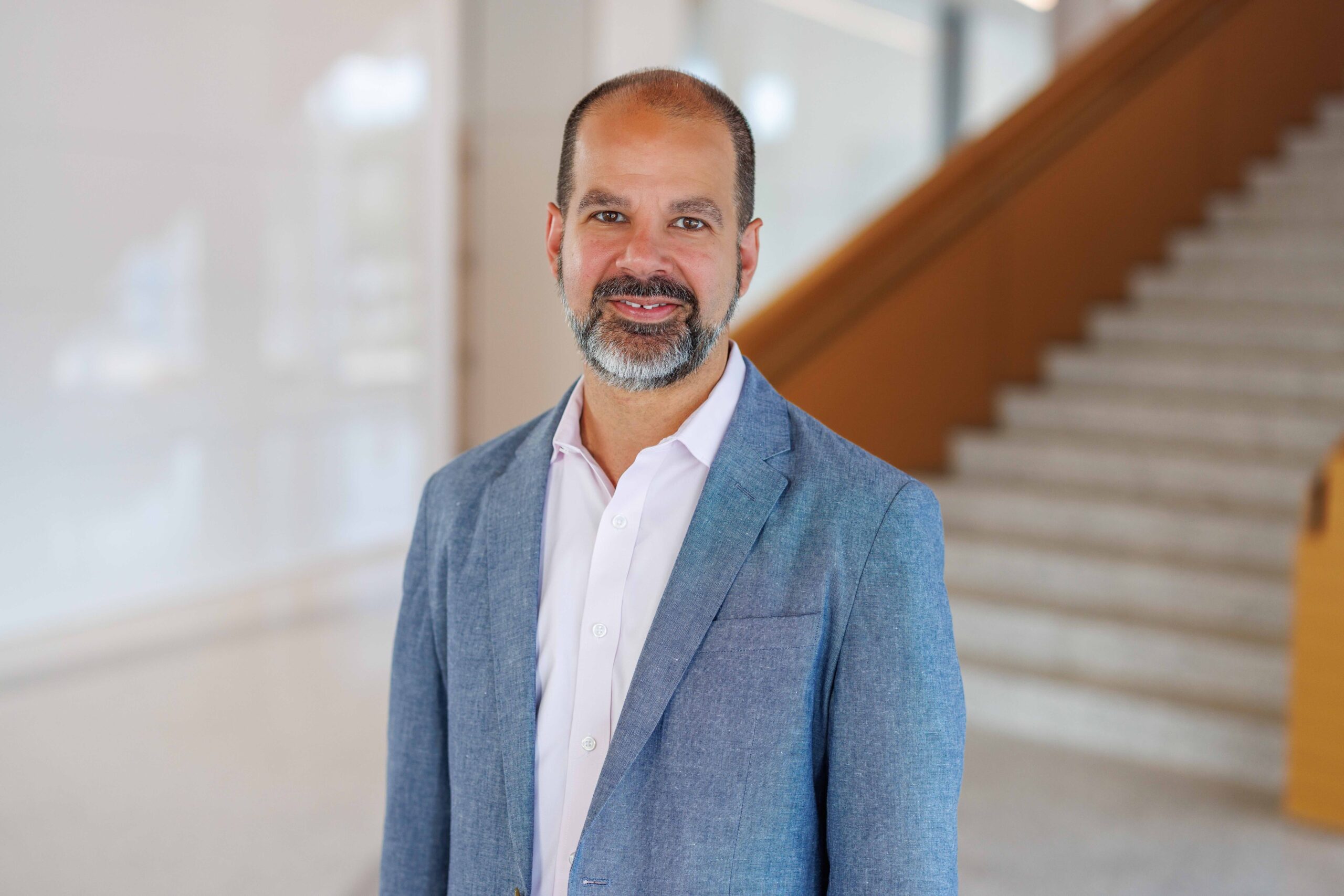
Each year the AAAI recognizes a group of individuals who have made significant, sustained contributions to the field of artificial intelligence by appointing them as Fellows. We’re talking to some of the 2026 AAAI Fellows to find out more about their work. In this interview, we chat to Sanmay Das, who was elected as a Fellow “for development of multiagent interaction mechanisms and learning techniques in the public interest, and for leadership service to the profession”.
Could you start with a quick introduction, where you work, and your general area of research?
I’m Sanmay Das, a professor of computer science at Virginia Tech, where I’m also the Associate Director of AI for Social Impact at the Sanghani Center for AI and Data Analytics. Broadly speaking, I work in multiagent systems. I’ve done a lot of work at the intersection of AI and economics, and over the last decade or so I’ve thought a lot about projects in the AI for social impact and social good space. In particular, my interest has been in the allocation of scarce societal resources, thinking about how AI can be integrated, and what it tells us about systems where we don’t necessarily want full free market resource allocation. It’s all tied together and deeply influenced by thinking about multiagent systems – essentially how you design agents that are able to be intelligent when they’re interacting with other agents, and how you design the rules of interaction for these agents.
When did you start working in the field of agents?
When I was an undergraduate at Harvard, I worked with Barbara Grosz and Avi Pfeffer on various problems in the agent space. In particular, we were thinking about the problem of intention reconciliation and how agents can decide between their commitments to group tasks and what may be more beneficial for them individually.
When I started my PhD, I wanted to do things that were related, but in a somewhat different direction. Initially I worked on a set of problems in computational finance, and in particular thinking about market-making agents. One of the longstanding problems that has existed in markets of all kinds, but in particular when we think about markets like assets and securities, is this problem of market making: how do you provide enough liquidity to keep people coming to that market? You need both buyers and sellers, and they need to know that there’ll be somebody willing to take the other side of any transaction. The way in which markets solve many of those problems is by having designated market makers who are agents that are always willing to buy or sell at some price. If you’re a market agent, the question becomes: how should you set those prices? There are lots of interesting questions, and I started thinking about that in the context of financial markets, and in particular with this idea that if you integrate AI agents into those markets, what should they be doing? That was one big part of my PhD.
The other half of my PhD was actually on matching, where you have agents with different preferences and they need to match with each other. Two-sided matching is this classic problem, and it’s often thought about in terms of heterosexual dating markets where you’ve got men and women and they need to be paired off. But it’s actually very applicable to a whole bunch of different problems in generalized forms, including things like allocating students to schools, and organ transplantation. The canonical versions of that problem had always been about designing the algorithms for agents that know their own preferences. I was really interested in the question of what happens when agents don’t know their own preferences and they have to learn them while operating in these markets. That started a whole separate thread of research on matching markets. Both of these directions have actually featured heavily at different points in my career.
Interesting! So what research did you move on to after your PhD?
A lot of the initial work after my PhD was looking at agent behavior and prediction markets, including a bunch of stuff that actually is coming up again these days with the rise of cryptocurrency and agents transacting cryptocurrencies. We were thinking about problems like market making and prediction markets, of course, but also manipulation. If you have agents that are both trading in the market, but can also affect the outcome that the market is trading on, what kinds of outcomes can you expect? Can you make markets somewhat robust to these kinds of manipulation? What kinds of patterns might you observe that are indicative of that kind of manipulation? And so a lot of my work at that time was really thinking about those kinds of things.
When I moved to Washington University in St Louis, in 2013, I was introduced to my now close colleague and friend, Patrick Fowler, and we started talking about homelessness. I realized that there’s a really interesting capacitated matching problem in this space where you’re trying to figure out how you go about allocating different types of interventions to different types of households that may be experiencing homelessness. We started thinking about that from a matching perspective.
Over the last decade, that’s really evolved into a whole program of research around these questions of scarce societal resource allocation, fairness, distributive justice, balancing efficiency, equity, and other desiderata that society might have in those areas. It’s interesting how the theoretical and conceptual foundation that I started working on has led to paths that I certainly could not have imagined at the time. But it’s been both really fun, and, I think, important. I’m really excited about working on problems where I can feel a relationship to people and to what’s going on in the world and hopefully try to make a difference. And being able to combine the technical things that I’m interested in with important problems has been the most rewarding thing in my career. So that’s just been a fantastic experience.
How do you go about picking the research projects that you work on, because I imagine there are so many that you have in mind?
It’s a great question. For me, it comes out of conversations. When you start off as a PhD student, very often you’re given something to work on. When I started my PhD, there was an ongoing project on market making, and so I read up on market making, found some interesting things in that space, and then kind of went from there. I was lucky in that my PhD advisors, Tommy Poggio and Andrew Lo, gave me a tremendous amount of independence to just follow my own interests, to do what I felt like doing, and really supported me. We never even co-authored a paper during my PhD (although I was fortunate enough to work with Andrew on a different project a few years down the line).
Because of that, I think I had to figure out my own pathway of finding problems, and there’s both good and bad things about this. I’ve picked problems that nobody was interested in at the time, but in some cases, there was a massive resurgence of interest 10, 15 years later. For example, people are rediscovering our two-sided matching work; that problem really gained renewed interest in the community with the rise of things like Uber. The problem of market making gained renewed interest with the rise of cryptocurrency. But at the time, it was actually quite challenging because there weren’t that many people working even at the intersection of computer science and economics.
When I was looking for jobs, most people didn’t really understand what I was doing as it didn’t seem like computer science. I was lucky that Rensselaer Polytechnic Institute, where I had my first job, took a flyer on me because they had faculty who were interested in the specific things that I was working on. I had a fantastic experience in my five years there, really great collaborations, and constant intellectual interest. But what I realized was that the way that I work on problems is that I really like to talk to people and let the ideas evolve from these conversations. I’m not the kind of person who sits in front of a computer or a desk and gets ideas and jots them down on paper. Pretty much every idea that I’ve had has originated in conversations with people and sort of iterated in that manner. Now, often the breakthroughs or the things which make the idea work come to me when I’m by myself, like the shower breakthroughs and the long bike ride breakthroughs, when your mind is just free and wandering. But the ideas themselves arise from random office conversations.
Is there a project you’re working on at the moment that’s particularly interesting?
So, generally, the societal resource allocation problem is very interesting. There are some specific projects that we are thinking about in that space. Many of the current resource allocation models rank people by score to see who gets priority, with the highest scoring people essentially having first dibs on resources, then you go down in order. That essentially becomes a ranking problem, and this has a lot of implications. First of all, different interventions may actually have heterogeneous effects on different types of people who are receiving them. Then this simple prioritization is not necessarily a good way to do things. Even if you think that there’s some universal ordering of how helpful different resources are, the question becomes: what are the downstream effects of using these kinds of prioritization techniques? How are things different if you prioritize in different ways? And one way you could think about prioritizing is by using LLMs to do the prioritization. There’s definitely a big push in the public sector and other places to say, “hey, AI has a lot of information, why don’t I ask it?” And people will often do this naively, even if that’s not necessarily the right thing to do. So, we were thinking about what we could say about how LLMs prioritize in different kinds of socially important contexts, ranging from things like homelessness to medical triage. How would that compare with established points-based systems, and how would it compare with real systems, where the frontline caseworker actually has discretion in how they implement the policy recommendations that come from the scores? What kinds of priorities do they reflect? And if we want to incorporate AI into these kinds of pipelines, what’s the most useful set of tasks to ask them to do? For example, can we get useful scores from them about how at risk a patient is or how at risk a household experiencing homelessness is at a particular point in time?
So, that’s one set of problems, and this can come up in a whole bunch of different areas and in contexts that affect millions of people on a regular basis. For example, prioritization of resource allocation in public schooling systems, or organ transplantation. In all of these situations, one of my foci is on thinking about what we learn about a system from formalizing it to the point where we can understand what AI can do as part of the system.
And then secondly, if we wanted to integrate AI into these kinds of systems as an aid to humans, what’s the best way to do it? What specific subtasks should we give it, and how will that affect the behavior of the humans who are in the loop? How can we make it so that this ends up serving societal goals rather than suddenly creating chaos in a well-established system? So those are the kinds of things that we’re thinking about a lot these days.
How optimistic are you about these systems being integrated and working well in society?
I have to say, I think that they can be and I hope that they will be. I think eventually we’ll get to the place where we are using AI in ways that really help us do better than we’re doing right now. There’s a lot of potential for improvement in many of these systems.
For example, one of the big problems that cities have right now is that when people come in needing help from social services they’re often coming in at a single point of entry. But these cities typically provide or coordinate hundreds of different kinds of services, and there are very few, if any, human experts who actually understand the full range of services being offered. So this is a real problem that was brought to us by the City of Alexandria. If we get it right, AI could really help at integrating and providing information.
Another example is that there are systems where we know that human decision making has been extremely biased or inefficient. There’s an opportunity to move to a different system and improve outcomes by understanding where the biases come from and trying to figure out how to do it in a better way.
I think AI has great potential to help in all of these kinds of things. I work in AI, I have to be an optimist in that sense of thinking we can get this right. At the same time, if you work for a company that’s producing these kinds of tools, there are clear incentives to get stuff out there which really doesn’t go well with making massive changes at scale on human systems. So the thing that I worry about most is that if enough of that gets done there’ll be a real societal pushback against it, and we’ll lose the opportunity to do things that will really help. You can already see the emergence of the anti-AI movement, for reasons that are completely understandable. But I think that it’s polarizing in a way that I would like it not to be. I’m hopeful that if we get enough of a critical mass towards thoughtful integration of AI into these systems, we can make things better and that by making things better, people will be happier and we’ll be able to improve human health, well-being, and all of these kinds of outcomes that we really care about.
There are certainly some specific use cases, for example kidney exchange, where these systems have had a positive impact.
Yeah, exactly. Of course, there’s some sample selection bias; you’re going to hear about the cases that have worked well. But I do think that there’s often pushback against AI in social services because people hear these horror stories about the use of AI. But when you dive deeper you find out that the issue wasn’t with AI at all. The issue was just with the existence of any kind of scoring system, which is going to give benefits to some people and deny benefits to others or subject some people to more scrutiny. It’s just that it happened to be using AI in this instance. But the story would be entirely the same if you were using a traditional bureaucratic scoring system or when people have done a really thoughtless job of integrating AI into what they’re trying to do, like not understanding how default parameter settings on the software work. For example, automatically cutting the number of kids who are eligible for more support in education because the software just had a default saying the top 10% were high risk instead of trying to calibrate on what you know about the population. So I’m a little worried about the horror stories and how easily they propagate, because many of them are not about the fact that AI is being used. They’re about something that is peripheral to the use of AI itself, but it becomes a more hyped story because AI was involved.
What do you think the future holds for your line of research, and what are you excited about for the next few years?
The world has changed dramatically in just the last five years in terms of the AI landscape. There’s no question that AI is enormously capable at a whole bunch of different tasks, and that might change the ways in which we do certain things. If we think about this specifically from the perspective of the LLM era and the upcoming agentic era, I think that there’s some real opportunities in figuring out what the indisputable strengths of these kinds of models are. They can, for example, prototype code really quickly based on human language specifications. They can do excellent jobs of summarization. And if we think about how we can use that, there’s a lot of very good use cases where we can augment our ability to solve problems. If I can go out and collect data and evidence more quickly, or have it analyzed more quickly, or have these summaries provided, what might that enable us to do? For example, a lot of medical risk prediction stuff used to be done based on ontologies, and thinking about codes involved with a particular patient experience. Now we have the opportunity to actually use text and the vast amount of information and knowledge LLMs have about everything that exists in the medical literature to potentially do better prediction or forecasting of future risks for a particular patient. Same kinds of things for those experiencing homelessness or other problems like that. Would this household be a good candidate for a particular type of intervention? I think we might be able to do those things better than we’ve been able to do in the past, and that can open up opportunities to target resource provision more precisely, more fairly, more efficiently. I think that we can get improvements on those fronts.
I also think that there will be really interesting research questions that come out of this. Obviously there’s a whole set of things to be worried about. In particular, what will constant use of AI do to learning? Take apprenticeship models of learning like PhDs in computer science; if you delegate a lot of that work to AI, then are you actually learning the things that a PhD is intended to teach you? I think that we have really reached a point where AI agents and humans are going to be functioning in integrated environments and in extremely collaborative and interacting ways. I think that has some opportunities and some things that we really need to think about. One of the key research and practice questions is going to be how we design environments for these kinds of interactions and how we design the rules of the game for AI agents to make sure that what we get out of this AI-human milieu is good rather than some kind of chaotic catastrophe.
About Sanmay Das
 Sanmay Das is a professor of computer science and associate director of AI for social impact at the Sanghani Center for AI and Data Analytics at the Virginia Tech Institute for Advanced Computing in Alexandria, Virginia. He is a AAAI Fellow and an ACM Distinguished Member. Das is past chair of ACM SIGAI, a member of the DARPA ISAT Study Group, and an emeritus member of the board of directors of the International Foundation for Autonomous Agents and Multiagent Systems. He serves as an arXiv moderator and has served in numerous editorial roles, including as associate editor for the ACM Transactions on Economics and Computation, the Journal of Artificial Intelligence Research, and Autonomous Agents and Multiagent Systems. Das has also served as program co-chair and general co-chair of AAMAS and of the AAAI/ACM Conference on AI, Ethics, and Society, and as associate program chair for IJCAI.
Das has been recognized with awards for research, teaching, and service, including a National Science Foundation CAREER Award, the Department Chair Award for Outstanding Teaching at Washington University, and the Outstanding Service Award from the Computer Science Department at George Mason University. He has also worked with the U.S. Department of the Treasury on machine learning approaches to credit risk analysis and occasionally consults in the areas of technology and finance.
tags: AAAI, AAAI Fellows, AAAI2026

AUAI is supported by: